219
Maintenance
7
9
GENERAL MAINTENANCE
Brakes
Bleeding the air from the rear brake
circuit
Itbecomesnecessarytobleedthecircuitwhenairenters
owingtolackofoilintherelativereservoirorwhenthe
brakesystemisserviced.
Thisoperationshouldbecarriedoutbyspecializedper-
sonnel.If,however,youdecidetodoityourself,proceed
inthefollowingway.
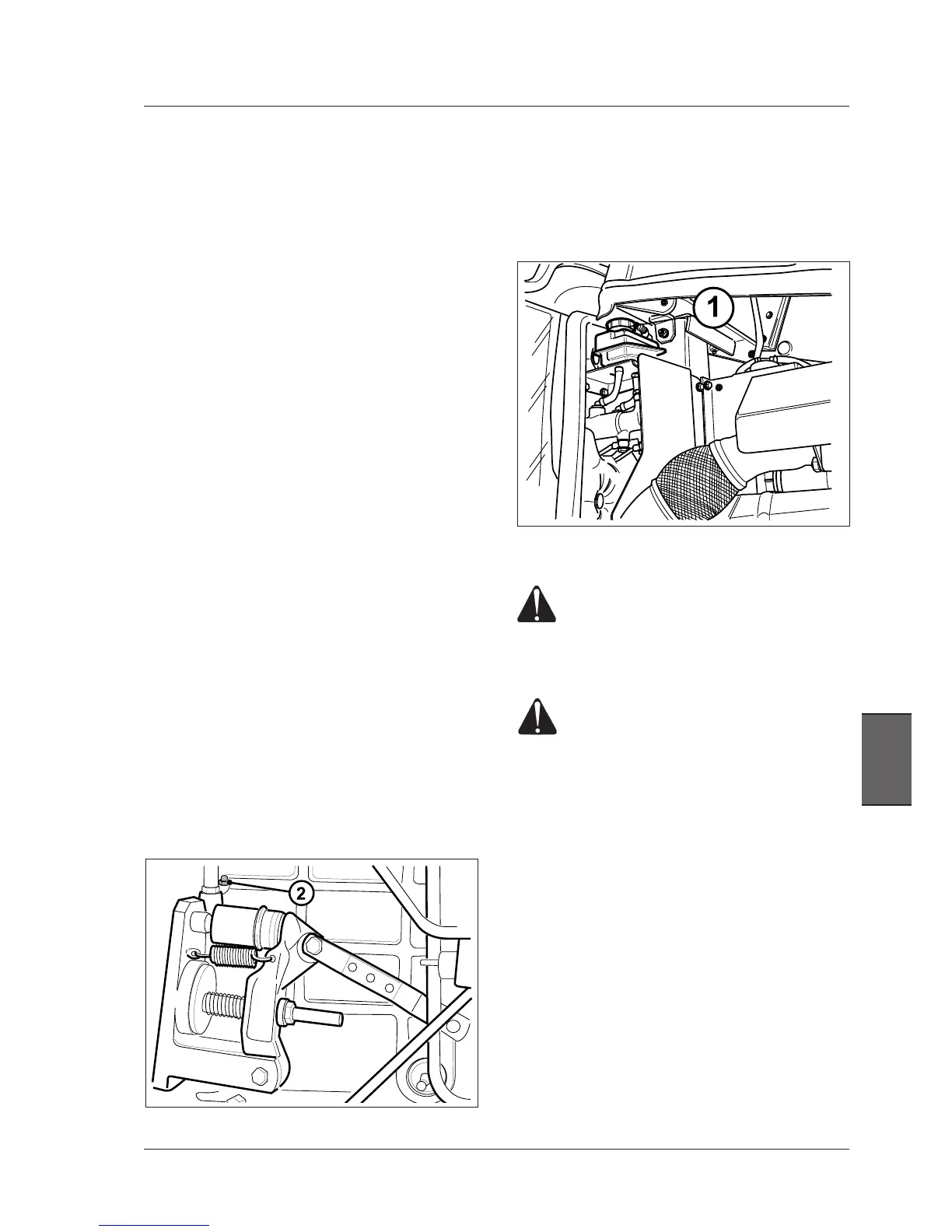
1- Makesurethatthereservoir(1)isfull.
2- Thoroughlycleantheareaaroundthebleedscrew.
3- Fullydepresstheleft-handbrakepedal.
Meanwhile,unscrewthebleedscrew(2)ahalf-turn
andallowanyairandoiltoflowout.Re-tightenthe
bleedscrewandreleasethepedal.
4- Repeatthisoperationuntilbubble-freeoilflowsfrom
thebleedscrew.
5- Makesurethattheclutchpedaltravelisfirmandnot
spongy.
6- Carry out the operations described above for the
right-handbrakepedal.
7-Oncompletionofbleeding,topup thefluid levelin
thereservoir(1).
NOTE: Never reuse previously bled oil without having
first filtered it.
CAUTION: If you need to open the bonnet, follow the procedure indicated under “How to open the bonnet”.
WARNING: Always use specific personal safety devices for each operation.
WARNING: Maintenance operations must be carried out with the engine off. Check that the gear and the par-
king brake are both engaged and that the ignition key has been removed.
WARNING: Beware of burns caused by hot tractor and engine parts. [4.1.n]
WARNING: When changing or topping up the
brake fluid in the reservoir (1), be abso-
lutely sure to use the correct type of fluid as a
mineral-based oil is used on these machines.
Consult the Lubricant and Fuel chart for the
oil type.
WARNING: The oil in the brake circuits has
been studied to operate at a temperature of
100°C but only if not polluted by other sub-
stances, e.g. water in considerable quantities
will turn into vapour and prevent the braking
system from operating in the correct way.
Take the necessary precautions to prevent
water from penetrating into the system: pro-
tect the front axle and the components in the
braking system when the tractor is washed;
store oil in sheltered places where water
cannot infiltrate. If you think that there is
water in the braking system you must con-
tact your dealer’s specialized personnel and
have it removed. In this case, the rear brake
cylinders will have to be demounted and
emptied and particularly the brake housing
of the front axle which, being the lowest part
of the system, is the one most exposed to this
type of fault.



 To Next Page