selling the processor and trying it in the Loop of your amplifier to determine whether it’s a good match.
With short to reasonable-length cables, you should hear very little dierence once the Input (and possibly
Output levels as well) on the processor are set to achieve unity gain (same gain level/no volume dierence
with cables inserted and removed from the Eects Loop’s SEND and RETURN jacks).
If the level drops when you insert the cables, increase the levels on the processor. If the level goes up when
the processing is introduced, reduce the levels on the processor. Ideally, there should be no dierence in
Tone or levels when the cables are inserted and removed – this is “unity gain” and represents little to no
signal loss.
This step (trying before buying) isn’t always easy or convenient, but you probably didn’t choose your
amplifier based solely on convenience either, likely more for its inspiring Tone and performance. Discerning
choices in your outboard gear will honor that decision and keep your amplifier sounding and performing
to its optimum capability.
• Stay Connected! Sound waves transmit through objects and your body. This can be a good thing in the case
of an electric guitar, as those sound waves aect how the instrument feels in your hands. It is preferable
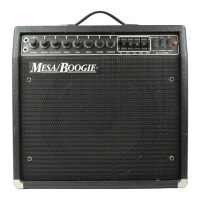
to have at least one speaker cabinet or the combo amplifier sitting on the floor you are standing on while
playing. The transmission, and especially of the low end, will aect how the instrument feels to play. Keeping
one speaker cabinet on the floor helps ensure the instrument, the amplifier, and your body are connecting
and resonating in a harmonious, sympathetic feedback loop that makes playing your amp more emotionally
satisfying and ultimately more expressive.
NOTE: The exception to this advice above can be when you are playing on stages with many live microphones
cranked up and/or there are large monitors and subwoofers nearby (especially if too big and too many) …
or when the stage itself is extremely resonant in the lower frequencies. In any of these cases, it may be
necessary to lift your cabinetry or the combo amplifier o the floor, or sometimes even o of a drum riser,
to de-couple it from the floor and even your instrument to prevent feedback or “runaway resonances.” This
type of feedback usually occurs in the low end. In some cases, and in certain environments, alternatively,
you can trim the low end in the live microphones via the mixing console and then be able to keep the
amplifier coupled to (sitting on) the floor or stage. Having some coupling through the floor will likely always
feel better to you and your hands.
• Speak Accordingly! Cabinetry and speaker choice are hugely important to achieving the sound you want
and optimizing the amplifier to styles of music you may wish to play.
Whether you have chosen a Combo with its own internal speaker, or a Head format without one, remember
that speakers have a giant impact on the sound, as does the cabinetry they are loaded into.
You can add or substitute extension cabinets to tune your amplifier to the stylistic application or environment,
regardless of the package you chose to house your amplifier chassis in, and tune the sound physically to
best fit the music and/or venue(s) you most often play in.
• Open-back cabinetry leans toward beautifully balanced, open-sounding clean sounds, adding three-
dimensionality and clarity in the top end and a low-end character with more “air” in the mix.
• Closed-back cabinetry adds focus and a tighter tracking element, especially in the low end, as well as
definition and punch in the rest of the spectrum. Some players use a combination of both (closed and open
back) at the same time to achieve a balance of the two dierent characteristics. Others lean one way or
another in accordance with their favored musical style, sounds, or favorite artists.
We suggest, at some point, exploring the options in each category to see if perhaps one or the other of
these diering designs unlock sounds and response characteristics you’ve imagined, but have not yet
attained. We feel all our cabinets oer exceptional performance in their category, so whatever you have
now, if it’s a MESA cab, you’ve got Tone. At some point, though, you may want to refine or radically change
PAGE 7





 To Next Page