UV and IR Arc Rays
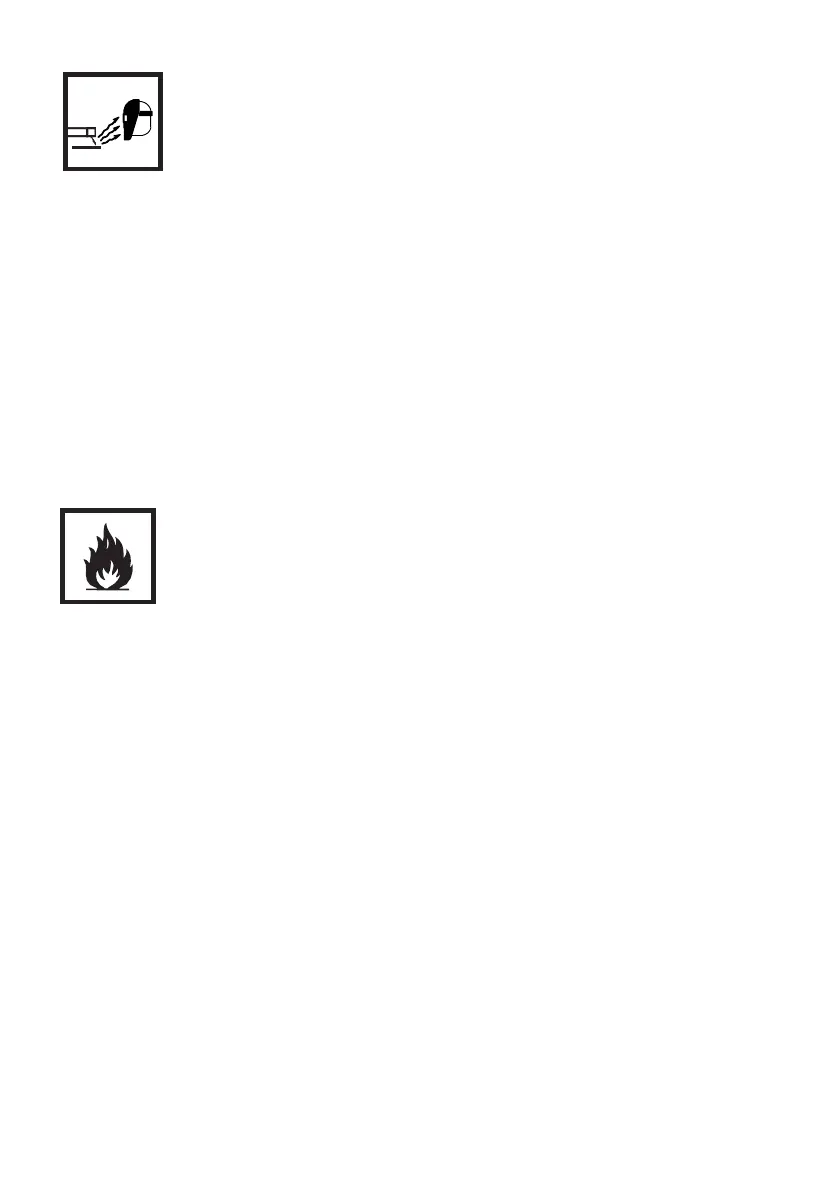
• The welding arc produces ultraviolet (UV) and infrared (IR) rays that
can cause injury to your eyes and skin. Do not look at the welding arc
without proper eye protection.
• Always use a helmet that covers your full face from the neck to top of
head and to the back of each ear.
• Use a lens that meets ANSI standards and safety glasses. For welders
under 160 Amps output, use a shade 10 lens; for above 160 Amps, use
a shade 12. Refer to the ANSI standard Z87.1 for more information.
• Cover all bare skin areas exposed to the arc with protective clothing
and shoes. Flame-retardant cloth or leather shirts, coats, pants or
coveralls are available for protection.
• Use screens or other barriers to protect other people from the arc rays
emitted from your welding.
• Warn people in your welding area when you are going to strike an arc
so they can protect themselves.
Fire Hazards
• Do not weld on containers or pipes that contain or have had
flammable, gaseous or liquid combustibles in them. Welding creates
sparks and heat that can ignite flammable and explosive materials.
• Do not operate any electric arc welder in areas where flammable or
explosive materials are present.
• Remove all flammable materials within 35 feet of the welding arc.
If removal is not possible, tightly cover them with fireproof covers.
• Take precautions to ensure that flying sparks do not cause fires or
explosions in hidden areas, cracks or areas you cannot see.
• Keep a fire extinguisher close in the case of fire.
• Wear garments that are oil-free with no pockets or cuffs that will
collect sparks.
• Do not have on your person any items that are combustible, such as
lighters or matches.
• Keep work lead connected as close to the weld area as possible to
prevent any unknown, unintended paths of electrical current from
causing electrical shock and fire hazards.
• To prevent any unintended arcs, cut wire back to ¼” stick
out after welding.


 To Next Page