EasyManua.ls Logo

Milestone ETHOS UP - User Manual

Milestone ETHOS UP
6 pages
Print Icon
To Next Page IconTo Next Page
Loading...
ETHOS UP
Quick Start Guide
SETUP YOUR ETHOS UP
Setting up your Milestone ETHOS UP is sim-
ple. Just follow the following instructions. Once
completed the setup, take some time to explore
the features of your system. Please refer to User
Manual MA182 for complete guidelines of your
ETHOS UP.
2 - Connect the power cord to the back side of
the unit.
3 - Connect the exhaust tube to the unit and pla-
ce the opposite side into the fume-hood (or any
connection to it).
1 - Plug the terminal cable in the “TERMINAL”
port on the back side of the unit and then the
other side in the “DEVICE” port of the terminal.
4 - Place the USB pen drive into the terminal.
SG005-001• 2019-01
Quick Start Guides - ETHOS UP.indd 1Quick Start Guides - ETHOS UP.indd 1 25/09/20 16:3125/09/20 16:31
Question and Answer IconNeed help?

Do you have a question about the Milestone ETHOS UP and is the answer not in the manual?

Summary

Set Up Your ETHOS UP

Connect Terminal Cable

Plug the terminal cable into the 'TERMINAL' port on the unit and the 'DEVICE' port of the terminal.

Connect Power Cord

Connect the power cord to the back side of the unit.

Connect Exhaust Tube

Connect the exhaust tube to the unit and place the other end into the fume-hood.

Insert USB Drive

Place the USB pen drive into the terminal.

Power On Unit

Switch the 'ON' button on the unit to the 'ON' position.

Configure and Run Software

Navigate to Library

Access the main page and press the Library icon.

Overview

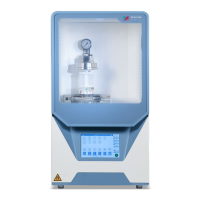
The Milestone ETHOS UP is a sophisticated closed-vessel microwave digestion system designed for laboratory use, enabling efficient sample preparation for various analytical techniques. This quick start guide outlines its setup, operation with different rotors, and software interaction, emphasizing ease of use and adherence to safety protocols.

Function Description:

The ETHOS UP system facilitates the digestion of samples using microwave energy in a closed-vessel environment. This process is crucial for preparing samples for elemental analysis by breaking down complex matrices into a homogeneous solution. The system supports various applications, including the digestion of aquatic plants, baby food, and samples requiring EPA 3051 methods, among others. Its primary function is to provide a controlled and efficient method for sample preparation, ensuring complete digestion and minimizing contamination. The system is designed to be user-friendly, with a clear setup process and an intuitive software interface for method selection and monitoring.

Important Technical Specifications (Inferred from the manual):

  • Power Supply: The unit requires a power connection, indicated by the power cord connection point and a fuse rated OSAT 250VAC.
  • Connectivity: Features a "TERMINAL" port for connecting to a "DEVICE" port on the terminal, suggesting a dedicated communication link. It also includes a USB port on the terminal for data transfer, likely for method storage, updates, or data logging.
  • Exhaust System: Equipped with an exhaust tube connection, indicating the necessity of venting fumes, likely to a fume hood, to ensure laboratory safety and prevent contamination.
  • Microwave Cavity: Houses the rotor plate where samples are placed for digestion. The cavity door must be closed for operation.
  • Rotors: The system is compatible with different rotor configurations, specifically mentioned are the SK-15 eT Rotor, MAXI-44 eT Rotor, and MAXI-24 HP Rotor. These rotors accommodate varying numbers and types of vessels, allowing flexibility based on sample throughput and application requirements.
  • Vessels: PTFE vessels are used for sample containment during digestion, placed within safety shields and secured with covers and safety springs.
  • Torque Wrench: A specialized torque wrench is provided to ensure proper tightening of segment screws, crucial for maintaining vessel integrity and safety during high-pressure digestion.
  • Software Interface: Features a graphical user interface (GUI) on a terminal, displaying real-time digestion parameters such as temperature (T1, T2), pressure (P1, P2), and microwave power (MW). It allows for method selection, parameter adjustment, and monitoring of the digestion process.
  • Safety Features: Includes safety shields for vessels, a secure microwave cavity door, and the requirement for proper fume extraction, all designed to ensure safe operation.

Usage Features:

  • Easy Setup: The guide emphasizes a simple setup process involving cable connections, power cord attachment, exhaust tube installation, and USB drive placement.
  • Administrator Access: The software features an administrator login for accessing and managing the Milestone library of digestion methods, ensuring controlled access to critical settings.
  • Method Selection: Users can access a library of pre-programmed methods categorized by application (e.g., Officials, Cleaning, Agriculture, Ceramics, Chemicals, Clinical, Environment, Food & Feed, Geochemistry, Industrial, Metals, Petrochemical, Pharmaceutical, Pigments, Polymers). This allows for quick and appropriate method selection based on the sample type.
  • Parameter Monitoring: The software displays real-time graphs of temperature, pressure, and microwave power, enabling users to monitor the digestion progress and ensure parameters are within specified limits.
  • Vessel Preparation: Detailed steps are provided for preparing vessels, including weighing samples on an analytical balance, adding reagents according to Milestone guidelines, introducing PTFE vessels into safety shields, and securing them with covers and springs.
  • Rotor Loading: Instructions cover placing prepared segments or closed vessels into the rotor plate within the microwave cavity.
  • Post-Digestion Handling: After digestion, the system guides users to allow vessels to cool to a safe temperature (e.g., 80°C) before removal from the microwave cavity and transfer to a fume hood for gentle opening, rinsing, and solution transfer to volumetric flasks.
  • Online Resources: The "milestone connect" platform offers additional support, including application notes, tips, techniques, a Milestone library, video tutorials, special offers, news, and online help, enhancing the user experience and providing comprehensive support.

Maintenance Features (Inferred):

  • Exhaust System: The need to connect an exhaust tube to a fume hood implies regular checks and maintenance of the fume hood system to ensure efficient removal of corrosive fumes, protecting the instrument and laboratory environment.
  • Vessel Integrity: The use of a torque wrench for tightening vessel segments suggests that proper assembly and periodic inspection of vessels, covers, and springs are necessary to maintain their integrity and prevent leaks or failures during high-pressure digestion.
  • Software Updates: While not explicitly stated as a maintenance feature, the USB drive functionality could be used for software updates, ensuring the system operates with the latest features and bug fixes.
  • Cleaning: Although not detailed, the nature of chemical digestion implies that regular cleaning of the microwave cavity and external surfaces of the unit would be necessary to prevent corrosion and maintain hygiene.
  • Fuse Replacement: The presence of a fuse (OSAT 250VAC) indicates that it is a replaceable component, suggesting a maintenance task in case of electrical issues.

Milestone ETHOS UP Specifications

General IconGeneral
BrandMilestone
ModelETHOS UP
CategoryLaboratory Equipment
LanguageEnglish

Related product manuals