8
4. Using a digital guitar tuner, check the tuning of each string when
unfretted and when fretted at the harmonic (12th fret). If the
tuning is different on any string, that string needs to have the
intonation adjusted.
Refer to the
BAR TAILPIECE
,
HARDTAIL BRIDGE
, or
WILKINSON
BRIDGE
sections for details on how to adjust the intonation for
each individual model.
STRING REPLACEMENT
Over time the strings will wear out, resulting in a dull and lifeless sound, or
even buzzing or inaccurate pitch. Replace the strings when they begin to
rust, become discolored, sound bad, or fail to hold tune. All of the strings
should be replaced as a set at the same time. Do not use strings that have
been bent, twisted, or otherwise damaged. Take care that the string does
not cross over itself. Replace the strings one at a time. Removing all strings
at once can cause stress on the neck or affect tremolo balance.
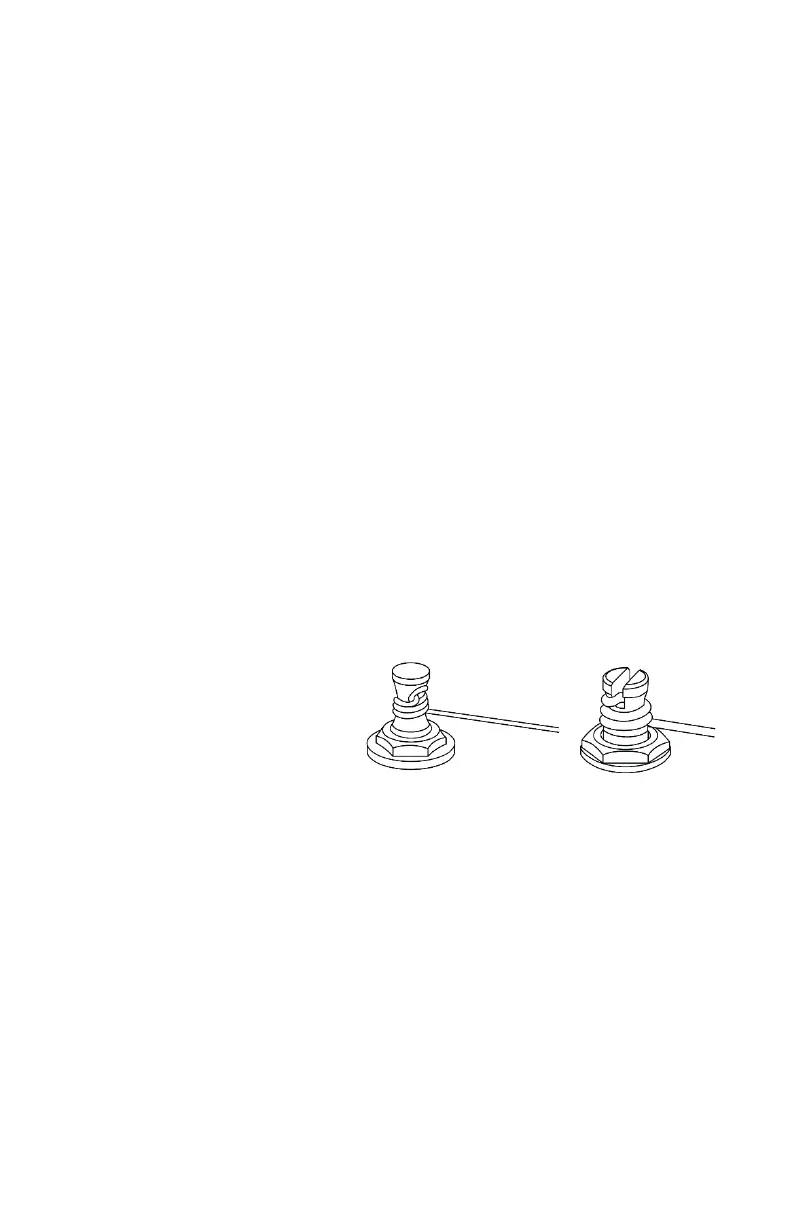
Feed the string through the
bridge, then wind the string
around the tuning machine
post two or three times from
above, using about 2-3 inches
of length.
New guitar strings will stretch and will easily lose tune during normal
playing, especially when doing bends. You can simply retune each time the
strings get out of tune or you can stretch the strings manually to get
through most of the stretch range before playing.
To do this, tune the guitar, then gently pull each string away from guitar
several times. Be careful not to pull too much, especially on the thinner
strings. Repeat this process of tuning and stretching several times until
pulling the strings does not change the tuning by any substantial amount.



 To Next Page