APPENDIX II
Application Note APNE-0017
Plate Self Decay of Charged-Plate Monitors
Introduction
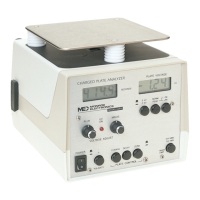
Charged-Plate Monitors (CPM's) evaluate the ability of air ionizers to neutralize static
charge. A CPM charges an isolated, conductive plate that is charged to a known level. Then
the air ions produced by the ionizer neutralize the charge on the isolated plate, and the time
required to discharge the isolated plate is measured.
In an ideal, traditional CPM, the plate is perfectly isolated from ground and represents a
perfect capacitor. Once the plate is charged to a known level, it would hold that charge
indefinitely. The only cause for the isolated plate to discharge would be by impingement of
air ions.
In practice, other factors may exist that cause the isolated plate to discharge. In the absence
of air ions, any discharge of the isolated plate is known as plate self decay or plate isolation.
The Problem
As the isolated plate in a traditional CPM is supported from ground by one or more insulating
supports, a common cause of self decay is leakage through these insulative supports.
The two major contributors to leakage across these supports are:
• High humidity, and,
• Lack of cleanliness.
Any substance (contamination) that is deposited on the surface of the insulative supports,
such as salts and oils from fingers, and dust, may increase the conductivity of the support
and increase the leakage from the isolated plate to ground. Moisture in the air can be
absorbed into the surface layers of the support and further increase the surface conductivity
of the material. Moisture may also activate ionic impurities within the insulating supports.


 To Next Page