The ESD Association Standard Test Method STM3.1 recognizes that a small amount of self
decay may be unavoidable. This test method allows a maximum self-decay rate of 10% in
five minutes. Self decay shortens decay time measurements. A small amount of self decay
doesn't impact a CPM decay measurement enough to matter. Higher self-decay rates
present an error in decay time measurements that may be significant to your evaluations of
ionizers.
Minimizing Plate Self Decay
Relative humidity becomes a problem when it rises above 60%. Keeping your CPM clean
and storing it in a warm, dry area are the most effective ways to manage plate self decay.
The warm air lowers the relative humidity.
When the CPM is stored in areas with higher humidity, use a heat gun to warm the insulative
supports and drive out any moisture that has been absorbed by those supports. This will
offer a temporary solution if the relative humidity and plate self-decay rate are too high.
When this method seems to ineffective, clean the supports with a solution of de- ionized
water and isopropyl alcohol and allow the plate to dry for 24 hours.
Another Solution
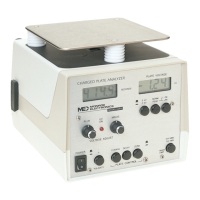
Monroe Electronics' newer CPM, Model 288, uses a high-voltage follower (electrometer)
technology that is much more resistant to the effects of high humidity. We recommend this
model for high-humidity areas where CPM measurements are made.


 To Previous Page