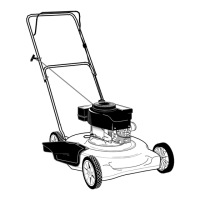
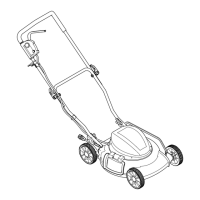
This document serves as the Operator's Manual for a 20" Rotary Lawn Mower, covering models 020, 021, and 022. It provides comprehensive instructions for assembly, safe operation, and maintenance to ensure optimal performance and longevity of the unit. The manual emphasizes safety as a paramount concern, detailing important practices to prevent personal injury and property damage.
Function Description
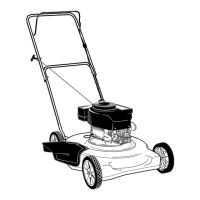
The primary function of this device is to mow grass using a rotating blade. It is designed as a walk-behind rotary lawn mower, meaning the operator walks behind the unit to guide it across the lawn. The mower is equipped with an internal combustion engine that powers the cutting blade. A blade control handle acts as a safety device, requiring the operator to depress it to engage the blade and engine, and releasing it to stop them. The unit features adjustable cutting heights, allowing the operator to customize the grass length according to their lawn care preferences. It is capable of discharging grass clippings, and the manual mentions components like a discharge chute and grass catcher, suggesting options for side discharge or bagging.
Usage Features
Before operation, the manual stresses the importance of reading and understanding all instructions, becoming familiar with controls, and ensuring the unit is properly assembled. Key usage features include:
- Starting the Engine: The mower is started using a recoil starter handle. For engines equipped with a primer, priming instructions are provided. The blade control handle must be depressed and held against the upper handle to engage the engine and blade.
- Stopping the Engine and Blade: Releasing the blade control handle immediately stops both the engine and the blade, serving as a critical safety mechanism. The manual warns that the blade continues to rotate for a few seconds after the engine is shut off.
- Cutting Height Adjustment: The mower offers multiple cutting heights, adjusted by reattaching the wheels to different holes on the deck. It is recommended to use the same hole location for all four wheels to ensure an even cut. For higher cuts, lower holes on the deck are used, and for lower cuts, upper holes.
- Operating on Slopes: Extreme caution is advised when operating on slopes. The manual includes a slope gauge to help determine safe operating angles (not exceeding 15 degrees). Operators are instructed to mow across the face of slopes, never up and down, and to maintain sure footing.
- Fuel and Oil: The unit requires gasoline and oil, and operators are directed to the separate engine manual for specific instructions on filling and servicing. A warning is given against refueling indoors, with a hot engine, or overfilling the fuel tank.
- Pre-Operation Checks: Before each use, the operator should inspect the mowing area for foreign objects, ensure the discharge cover or grass catcher is in place, and check for any abnormal vibration during operation, which could indicate damage.
- Mowing Practices: For best results and a healthy lawn, it is recommended not to cut wet grass and to avoid cutting more than one-third of the total grass length at any one time. The mower is designed to operate at full throttle.
Maintenance Features
Regular maintenance is crucial for the mower's performance and safety. The manual outlines several maintenance tasks:
- Deck Care: The underside of the mower deck should be cleaned after each use to prevent grass clipping build-up, which can lead to rust, corrosion, and uneven discharge. Tilting the mower and scraping the deck clean is recommended, always with the spark plug wire disconnected. Pressure washers or garden hoses are not recommended for cleaning the unit.
- Lubrication: Pivot points on the blade control handle and the brake cable should be lubricated at least once a season with light oil. If wheels are removed, the axle bolt and inner wheel surface should be lubricated.
- Blade Care: The blade adapter should be periodically inspected for cracks, especially after striking foreign objects, and replaced if necessary. When sharpening or replacing the blade, heavy gloves or a rag should be used to protect hands. The blade must be balanced after sharpening to prevent excessive vibration. Instructions for removing and reassembling the blade, including torque specifications for the center bolt, are provided.
- Engine Maintenance: Operators are directed to the separate engine manual for detailed instructions on engine maintenance and lubrication schedules.
- Safety Device Checks: All safety devices, including the blade control handle, discharge cover, grass catcher, and trail shield, should be checked regularly for proper operation and replaced if damaged.
- Hardware Tightness: All nuts, bolts, and screws should be checked periodically for correct tightness to ensure the equipment remains in safe working condition.
- Off-Season Storage: For long-term storage, the mower should be thoroughly cleaned and lubricated. The cutting blade should be coated with chassis grease to prevent rusting. The engine should be prepared for storage according to its separate manual. The unit should be stored in a dry, clean area, away from corrosive materials.
- Troubleshooting Guide: A troubleshooting section helps diagnose common issues such as engine failure to start, erratic running, overheating, or uneven cutting, providing possible causes and corrective actions. For repairs beyond those listed, contact an authorized service representative.


 To Next Page
 General