Transmission Gear Oil
Check the transmission gear oil after every 30 hours of operation
or whenever you notice any oil leak. Operating the tiller when
the transmission is low on oil can result in severe damage.
To Check the Transmission Gear Oil Level:
1. Check the gear oil level when the transmission is cool. Gear
oil will expand in warm operating temperatures and this
expansion will provide an incorrect oil level reading.
2. With the tiller on level ground, pull the Depth Regulator
Lever all the way up.
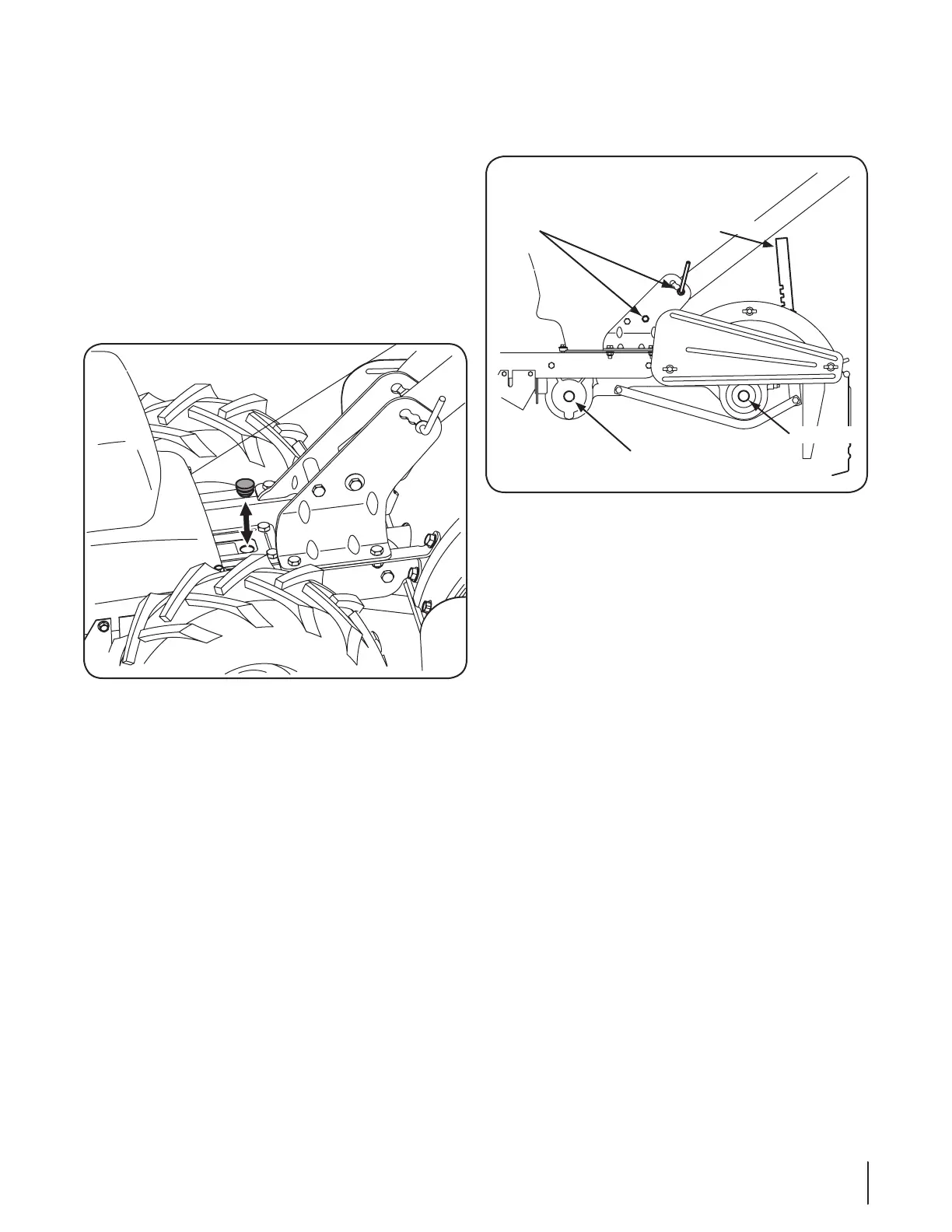
3. Remove the oil fill plug from the transmission housing and
look inside the oil fill hole to locate the main drive shaft
situated below the hole. See Fig. 6-1.
4. The gear oil level is correct if the gear oil is approximately
halfway up the side of the main drive shaft.
5. If the gear oil level is low, add gear oil as described next. If
the gear oil level is okay, securely replace the oil fill plug.
6. If adding only a few ounces of gear oil, use API rated GL-4
or GL-5 gear oil having a viscosity of SAE 140, SAE 85W-140
or SAE 80W-90. If refilling an empty transmission, use only
GL-4 gear oil having a viscosity of SAE 85W-140 or SAE 140.
7. While checking frequently to avoid overfilling, slowly add
gear oil into the oil fill hole until it reaches the halfway
point on the drive shaft.
8. Securely replace the oil fill plug.
Lubrication
After every 10 operating hours, oil or grease the lubrication
points shown in Fig. 6-2 and described below.
Use clean lubricating oil (#30 weight motor oil is suitable)
and clean general purpose grease (grease containing a metal
lubricant is preferred, if available).
• Remove the wheels, clean the wheel shaft and apply a thin
coating of grease.
• Grease the back, front and sides of the depth regulator
lever.
• Remove the tines and clean the tine shaft. Use a file or
sandpaper to gently remove any rust, burrs or rough spots
(especially around the holes in the shaft). Apply grease to
the ends of the shaft before installing the tines.
• Oil the threads on the handlebar height adjustment screws
and the handlebar attaching screws.
Off-Season Storage
When the tiller won’t be used for an extended period, prepare it
for storage as follows:
1. Clean the tiller and engine.
2. Do routine tiller lubrication and check for loose parts and
hardware.
3. Protect the engine and perform the recommended engine
maintenance by following the storage instructions found
in the Engine Maintenance section. Be sure to protect the
fuel lines, carburetor and fuel tank from gum deposits
by removing fuel or by treating fuel with a fuel stabilizer
(follow the engine maintenance recommendations).
4. Store the tiller in a clean, dry area.
5. Never store the tiller with fuel in the fuel tank in an
enclosed area where gas fumes could reach an open flame
or spark, or where ignition sources are present (space
heaters, hot water heaters, furnaces, etc.).
Figure 6-1
Handlebar
Hardware
Wheel Shaft
Tine Shaft
Depth Regulator
Lever
Figure 6-2
17Section 6 — Maintenance & adjuStMentS


 To Next Page