Need help?
Do you have a question about the NAD 3100 and is the answer not in the manual?
Specifies impedance, sensitivity, signal/noise ratio, and THD for MM/MC phono inputs.
Details input impedance, sensitivity, max signal, S/N ratio, frequency response, output impedance and level.
Covers Baxandall tone controls (treble/bass) and switchable infrasonic filter parameters.
Details continuous output power (8Ω), clipping power, and IHF dynamic power across different impedances.
Specifies input impedance, sensitivity, frequency response, signal/noise ratio, and THD for the power amplifier.
Includes damping factor specification and impedance selector details for speaker connection.
Provides dimensions (W x H x D), net weight, and shipping weight of the amplifier unit.
Specifies the power consumption in VA for a given voltage and frequency range.
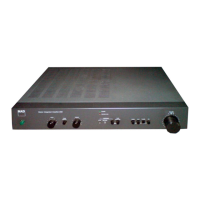
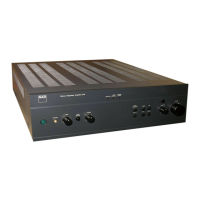
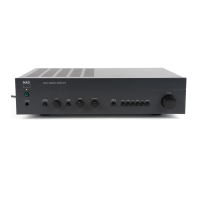
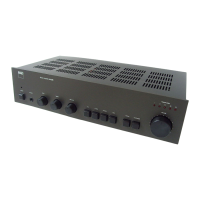
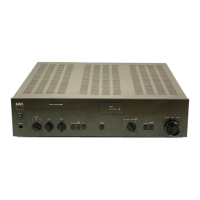
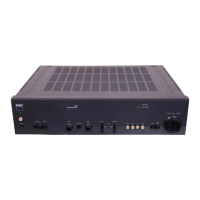
The NAD 3100 Integrated Amplifier is a sophisticated audio component designed to deliver high-quality sound by combining robust power amplification with refined preamplifier circuitry. Unlike many manufacturers who reserve their best designs for separate components, NAD integrates advanced technologies across its product lines, ensuring that even an integrated amplifier like the 3100 benefits from top-tier engineering. This approach makes the 3100 a versatile and high-performing choice for audiophiles seeking a comprehensive solution without the need for multiple separate units.
At its core, the 3100 functions as a central hub for an audio system, capable of receiving signals from various sources, amplifying them, and sending them to loudspeakers. Its design philosophy emphasizes modularity, meaning that many of the same high-quality circuits found in NAD's standalone preamplifiers and power amplifiers are incorporated into the 3100. This integration results in a device that offers the convenience of an all-in-one unit without compromising on audio fidelity.
A key usage feature of the NAD 3100 is its modular construction, which allows for significant flexibility in system configuration. The preamplifier and power amplifier sections are joined by removable external jumpers. This thoughtful design enables users to easily insert external processors into the signal path. For instance, one could integrate a surround-sound unit to expand the system's capabilities for home theater applications, or an electronic crossover for bi-amping. Bi-amping involves using separate amplifier channels for different frequency ranges of a loudspeaker, which can lead to improved sound clarity and dynamics. This adaptability ensures that the 3100 can evolve with a user's audio needs and preferences, making it a long-term investment rather than a static component.
The power amplifier section of the 3100 is a testament to NAD's innovative engineering. It incorporates several proprietary NAD technologies designed to deliver exceptional power and dynamic performance. While conservatively rated for continuous sine-wave test tones, its true strength lies in handling the dynamic waveforms of music. The Power Envelope circuit is a prime example of this, allowing the amplifier to produce significantly higher short-term power for musical peaks, ensuring that even demanding passages are reproduced with authority and impact. This capability is crucial for maintaining the realism and excitement of live music. Furthermore, the high-current output stage, coupled with an impedance selector and heavy-duty speaker terminals, ensures that the 3100 can drive a wide range of loudspeakers, regardless of their impedance characteristics, delivering maximum power efficiently and safely. This versatility in speaker compatibility is a significant advantage for users who may wish to experiment with different speaker models or have specific preferences.
The preamplifier section of the 3100 is equally impressive, drawing directly from NAD's finest standalone preamplifiers. It features a low-noise MM/MC phono stage, making it suitable for both moving magnet (MM) and moving coil (MC) cartridges. This inclusion is particularly valuable for vinyl enthusiasts, as it eliminates the need for a separate phono preamplifier and ensures that the delicate signal from a turntable is handled with utmost care and precision, preserving the warmth and detail of analog recordings.
Beyond phono input, the preamplifier offers a range of other useful features. A switchable Infrasonic Filter helps to remove very low-frequency rumble and unwanted noise, often present in vinyl playback, which can otherwise muddy the sound and waste amplifier power. Flexible two-way tape connections provide convenience for users who still utilize tape decks for recording or playback, or for integrating other line-level devices. The Bass EQ function allows for subtle adjustments to the low-frequency response, enabling users to tailor the sound to their room acoustics or personal taste without over-emphasizing the bass.
A notable maintenance and usage feature is the ultra-quiet feedback-operated volume control. This sophisticated design ensures that volume adjustments are smooth and precise, minimizing any audible noise or degradation of the audio signal, even at very low listening levels. This attention to detail contributes to a cleaner and more enjoyable listening experience.
The tone controls of the NAD 3100 are another example of its refined design. Instead of simple, broad adjustments, the amplifier employs Baxandall bass and treble circuits. These circuits are carefully selected to allow substantial adjustments at low and high frequencies without altering the neutrality of the midrange. This means users can fine-tune the sound to compensate for room acoustics or personal preferences without introducing unwanted coloration or harshness to vocals and instruments that reside in the critical midrange frequencies. This nuanced approach to tone control ensures that the amplifier remains musically accurate even when adjustments are made.
In summary, the NAD 3100 Integrated Amplifier is a meticulously engineered audio component that combines the best aspects of NAD's preamplifier and power amplifier technologies into a single, versatile unit. Its modular design, robust power delivery, high-quality phono stage, and refined tone controls make it an excellent choice for audiophiles seeking a flexible, high-performance solution. The ability to integrate external processors, drive a wide range of loudspeakers, and preserve the integrity of both analog and digital sources underscores its commitment to superior sound reproduction and user adaptability.
 General
| Power Output | 50 watts per channel into 8Ω (stereo) |
|---|---|
| Input Sensitivity | 150mV (line) |
| Speaker Load Impedance | 4Ω |
| Input Impedance | 47kΩ (line) |
| Frequency Response | 20Hz to 20kHz |

 To Next Page