EasyManua.ls Logo

NEC AT-50P - User Manual

NEC AT-50P
19 pages
Print Icon
To Next Page IconTo Next Page
Loading...
AT-50P USER GUIDE
GVT-090879-001
Issue 1.0
January, 2019
Caller ID Business Telephone
Question and Answer IconNeed help?

Do you have a question about the NEC AT-50P and is the answer not in the manual?

Summary

IMPORTANT NOTICE

Liability Disclaimer

NEC Corporation reserves the right to change specifications, functions, or features without notice.

Package Contents

Lists the items included in the telephone package: telephone set, line cord, and quick reference guide.

SAFETY INSTRUCTIONS

FACE LAYOUT, KEY AND PARTS

Key and Part Identification

Details the function of each numbered key and component on the telephone, including the LCD display.

INSTALLATION

Connecting the Telephone Network

Instructions for connecting the telephone to the network, including important notes on compatibility.

Wall Mounting

Steps and diagram for mounting the telephone on a wall using screws.

INITIAL SETUP

Setting the Calendar

Procedure to set the Year, Month, Day, Hour, and Minute on the telephone's calendar display.

Setting the LCD Contrast

Instructions for adjusting the display contrast using the VOLUME key.

Selecting the Ringing Volume

Guidance on adjusting the ringer volume using the switch on the rear of the telephone.

Selecting the Ringing Tone

How to choose between three different ringing tones using dial codes.

Selecting the Dialing Mode

Instructions for setting the signaling type (DP/Pulse or MF/Tone) via the switch.

Setting the Flash Time

Procedure to set the hook flash timing for PBX compatibility using dial codes.

Setting the PBX DIAL Code

How to set or clear the trunk access code required for PBX extensions.

BASIC OPERATION

Making a Call using the Handset

Steps for initiating a call by picking up the handset and dialing a number.

Receiving a Call using the Handset

Instructions on how to answer an incoming call by lifting the handset.

FEATURES

FLASH Key

Explains the function of the FLASH key for call termination, hold, or accessing PBX features.

PAUSE Key

Describes how to use the PAUSE key to insert a delay in dialing sequences.

Last Number Redial

Procedure to redial the last dialed number using the REDIAL key.

Memory Redial

How to redial numbers stored in the outgoing call memory using the SEARCH key.

Microphone Mute

Instructions for temporarily muting the handset microphone during a call.

Message Waiting Lamp

Information on the visual indicator for waiting messages and incoming calls.

Temporarily Switching Pulse to Tone Dialing

How to switch from Pulse to Tone dialing temporarily for specific services.

Caller ID (CID)

Details on displaying, reviewing, and dialing back received Caller ID information.

TROUBLESHOOTING

Troubleshooting Guide

A table listing common problems like no dial tone or no ring and their solutions.

Care and Maintenance

Guidelines for keeping the telephone in good working condition and cleaning instructions.

Stored data management

Information on restoring the telephone to factory settings and clearing stored data.

SPECIFICATIONS

QUICK REFERENCE

Feature Access Code

Lists dial access codes and option codes for various telephone functions like ring tone and flash timing.

Stored Data in the Telephone

Details stored data types such as phone numbers, call history, and LCD contrast settings.

Operations

Summarizes operations for LCD Contrast, Handset Volume, and Mute Handset based on telephone state.

Overview

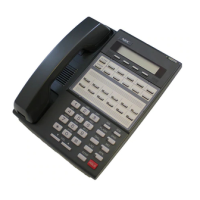
The NEC AT-50P is a Caller ID Business Telephone designed for use in business environments, offering a range of features for efficient call management and communication.

Function Description

The primary function of the AT-50P is to provide reliable telephone communication with integrated Caller ID capabilities. It allows users to make and receive calls, manage call history, and utilize various network functions. The telephone is designed to connect to a Private Branch Exchange (PBX) system, rather than directly to the public telephone network, ensuring compatibility with business communication infrastructures.

Key functions include:

  • Caller ID (CID): The telephone displays incoming Caller ID information, including the caller's telephone number, date, and time. It stores up to 30 incoming Caller ID numbers (up to 21 digits each) in its memory, allowing users to review, delete, or dial back these numbers. The display indicates "NEW" for unanswered calls and "REPEAT" if the same number has called multiple times. If CID is restricted, "NO CID" is displayed, and "OUT OF AREA" for international or payphone calls.
  • Call Making and Receiving: Users can make calls by lifting the handset and dialing the desired number, or by previewing the number on the LCD before lifting the handset. Receiving calls is straightforward: lift the handset when the phone rings and converse with the caller.
  • Last Number Redial: The phone stores the last dialed number (up to 32 digits), which can be redialed automatically by pressing the REDIAL key. This feature is useful for quickly re-establishing a connection.
  • Memory Redial (Outgoing Call Memory): The AT-50P stores the last 10 outgoing telephone numbers (up to 21 digits each). Users can search through this memory using the SEARCH key and dial back desired numbers.
  • Flash Key: This key functions similarly to a hook switch, allowing users to terminate a call, place a call on hold, or access special network functions like call waiting and conference calls, depending on the PBX configuration.
  • Pause Key: The PAUSE key inserts a 3.6-second pause in the dialing sequence, which can be useful for automatic dialing (Redial) when waiting for a dial tone or a computer tone from automated systems (e.g., banking, voice mail). Multiple presses can create longer pauses.
  • Microphone Mute: The MUTE key temporarily switches off the handset microphone, allowing users to consult with another person without the called party hearing the conversation. An LED indicates when mute is active.
  • Message Waiting Lamp: This lamp provides a visual indication of a message waiting in the PBX system. It also flashes to signal an incoming call.
  • Temporarily Switching Pulse to Tone Dialing: For networks using Pulse dialing, this feature allows temporary switching to Tone (DTMF) dialing to access services that require tone input, such as answering machines or telephone banking.

Usage Features

The AT-50P offers several customizable settings to enhance user experience:

  • Calendar Setting: The telephone displays the Year/Month/Day/Hour/Minute when idle. Users can set the calendar manually, though incoming calls from the system will automatically overwrite this with the system's time and date.
  • LCD Contrast Adjustment: There are six display contrast settings, allowing users to adjust the readability of the LCD.
  • Ringing Volume Selection: A switch on the rear of the telephone allows selection from three ringing volume levels: low, mid, or high.
  • Ringing Tone Selection: Users can choose from three distinct ringing tones (low, mid, or high pitch).
  • Dialing Mode Selection: A switch on the rear of the telephone allows selection between DP (Pulse) or MF (Tone) dialing modes, to match the requirements of the connected PBX.
  • Flash Time Setting: The hook flash timing can be adjusted to match the PBX requirements, with options ranging from 95ms to 600ms.
  • PBX DIAL Code Setting: For PBX extensions, a trunk access code (0-9) can be programmed. This code is automatically inserted before external numbers dialed from the IN List (Caller ID) or during preview dialing. This code can also be cleared if no longer needed.
  • Handset Volume Control: A slide switch on the side of the telephone allows adjustment of the handset's receive volume.
  • Wall Mounting: The telephone can be mounted on a wall using two screws, with a hanger hook that can be reversed to secure the handset when wall-mounted.

Maintenance Features

To ensure the longevity and optimal performance of the AT-50P, specific care and maintenance guidelines are provided:

  • Environmental Considerations: Avoid placing the telephone near heating appliances or devices that generate electrical noise. Protect it from direct sunlight and moisture.
  • Handling: Handle the handset and telephone with care, avoiding dropping or rough treatment.
  • Cleaning: Clean the telephone with a soft cloth moistened with a mild cleaning solution, then wipe away any residue with a damp cloth.
  • Prohibited Cleaners: Do not use cleaners containing alcohol, strong chemicals that may corrode plastic, or abrasive powders, as these can damage the finish.
  • Stored Data Management (Restore to Factory Settings): The telephone stores various data, including dialed numbers, Caller ID history, calendar settings, and display information. If the telephone is no longer being managed, it is recommended to restore it to factory settings to clear all recorded data. This can be done using a specific Feature Access Code (99).
  • Data Retention: Note that some stored data (marked with an asterisk in the manual) will be deleted if the line cord is disconnected. Users should record any important data before disconnecting the line cord.
  • Troubleshooting Guide: A basic troubleshooting guide is provided to help users resolve common issues such as no dial tone, the phone not ringing, or being unable to be heard by the other party. Solutions typically involve checking connections, dialing mode settings, and the MUTE key status.

NEC AT-50P Specifications

General IconGeneral
Number of Handsets1
Caller IDYes
Call WaitingYes
SpeakerphoneYes
TypeCordless

Related product manuals