EasyManua.ls Logo

NEC SV 8100 - User Manual

NEC SV 8100
17 pages
Print Icon
To Next Page IconTo Next Page
Loading...
NEC SV-8100
Multiline Telephone User Guide
Digital or IP Phones
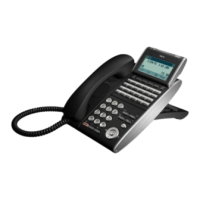
NEC SV-8100 - User Introduction for Display Phone
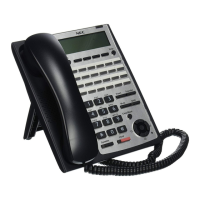
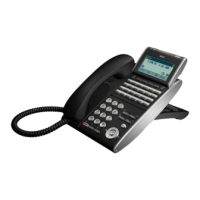
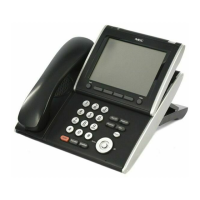
HOLD. The red HOLD button at the bottom of the phone is used to put calls on hold.
TRANSFER. The TRANSFER button is used to transfer calls to another phone. To
transfer a call, press the TRANSFER button, then dial the extension number of the
phone you want to send the call to. When the person answers, you can either
announce the call or just hang up. If the voice mail answers by mistake, dial *** and
the voice mail will disconnect.
SPEAKER. The SPEAKER button activates the speakerphone.
ANSWER. The ANSWER button is used to answer a second call, like call waiting
CONFERENCE. The Softkey under CONF button is used to set up a conference call by
adding on callers. Press CONF, then dial 9 and another number. After the person
answers, press CONF or the Softkey BEGIN to add them in. Repeat this until all
parties are on the line. As an option, we have a dedicated conference card that will
adjust levels for up to 16 callers.
RECALL. The RECALL button is used to transfer calls if you have Centrex or Centranet
lines only. Otherwise this button can be used to disconnect a call and give you fresh
dial tone.
FEATURE. The FEATURE button is used for programming.
MIC. The MIC button turns on/off the built in microphone. Most prefer to leave the
microphone on (light on) so you can use the speakerphone and talk back intercom.
Either UP and DOWN arrows or a Joystick are located at the bottom right of the
phone. Use these buttons to change ring volume, speaker volume, handset volume,
and contrast on the LCD screen, depending on what your phone is doing at the time.

Other manuals for NEC SV 8100

Question and Answer IconNeed help?

Do you have a question about the NEC SV 8100 and is the answer not in the manual?

Summary

Call Placement and Management

Making Internal and Outside Calls

Step-by-step guide for making internal extension calls and external calls.

Call Forwarding and Do Not Disturb Setup

Setting up call forwarding (All, Busy, No Answer) and Do Not Disturb features.

Advanced Dialing and Programming

Speed Dial Programming and Usage

Programming and dialing system, group, and station speed dial numbers.

Speakerphone and Call Handling Features

Call Transfer Procedures

Forwarding active calls to another extension.

Conference Calls and Call Parking

Advanced Call Pickup and Paging

Phone Customization and Special Features

Programmable Function Keys Configuration

Assigning features to line keys using specific function codes and data.

InMail Voice Messaging System

Voice Mail Initial Setup Procedures

Setting up greetings, name, security codes, and notification options for voicemail.

Voicemail Access and Call Forwarding

Transferring calls to voicemail, checking messages from outside, and setting up call forwarding.

Summary

Call Placement and Management

Making Internal and Outside Calls

Step-by-step guide for making internal extension calls and external calls.

Call Forwarding and Do Not Disturb Setup

Setting up call forwarding (All, Busy, No Answer) and Do Not Disturb features.

Advanced Dialing and Programming

Speed Dial Programming and Usage

Programming and dialing system, group, and station speed dial numbers.

Speakerphone and Call Handling Features

Call Transfer Procedures

Forwarding active calls to another extension.

Conference Calls and Call Parking

Advanced Call Pickup and Paging

Phone Customization and Special Features

Programmable Function Keys Configuration

Assigning features to line keys using specific function codes and data.

InMail Voice Messaging System

Voice Mail Initial Setup Procedures

Setting up greetings, name, security codes, and notification options for voicemail.

Voicemail Access and Call Forwarding

Transferring calls to voicemail, checking messages from outside, and setting up call forwarding.

Overview

The NEC SV-8100 is a multiline telephone system designed for use with both digital and IP phones, offering a comprehensive suite of features for call management, programming, and communication.

Function Description

The core function of the NEC SV-8100 is to facilitate various types of calls and manage communication within an organization. It supports internal calls between extensions, external calls to outside lines, and advanced features like conference calls and call transfers. The system integrates a voice mail (InMail) system for message management and provides options for call forwarding and do-not-disturb settings. Paging capabilities, both internal and external, allow for announcements across different zones. The system also includes features for call pickup, message waiting, and tone override for busy extensions.

Usage Features

The NEC SV-8100 offers a wide range of usage features, accessible through dedicated buttons, softkeys, and service codes:

  • Call Handling:

    • HOLD: A dedicated red button allows users to place calls on hold.
    • TRANSFER: The TRANSFER button enables users to transfer calls to another extension. This can be done by dialing the extension number and either announcing the call or hanging up. If voice mail answers, dialing *** disconnects it.
    • SPEAKER: Activates the speakerphone for hands-free communication.
    • ANSWER: Used to answer a second incoming call, similar to call waiting.
    • CONFERENCE: A softkey under the CONF button allows users to set up conference calls by adding multiple callers. The system supports up to 16 callers with a dedicated conference card.
    • RECALL: Primarily used to transfer calls with Centrex or Centranet lines. Otherwise, it disconnects a call and provides a fresh dial tone.
    • PLACING CALLS:
      • Internal Calls: Lift the handset, dial a station number or 0 for the attendant, or press a Direct Station Select button. Voice announce is available after a tone burst. Dialing 1 after a multiline station number can switch between ringing and voice. To access a personal voice mailbox directly, dial 8 after the station number.
      • Outside Calls: Lift the handset, typically dial 9 or press an idle Outside Line key, then dial the telephone number.
    • LAST NUMBER REDIAL: Press the Redial key without lifting the handset to display the last dialed number. Press # to redial, or use the Redial Softkey or VOLUME UP/DOWN keys to search the Redial List. Lift the handset or press Speaker to place the call.
    • CALL PICKUP:
      • Group Call Pickup: To answer a call ringing in your Pickup Group, lift the handset or press Speaker, then press the Group Call Pickup key or dial 756 or *#. *# can pick up any call in the group, including Ring Group calls, while 756 cannot.
      • Pickup from Another Group: To answer a call ringing in another Pickup Group when the number is unknown, lift the handset or press Speaker, then press the Group Call Pickup key or dial 769. If the group number is known, press Group Call Pickup key + group number or dial 768 and the group number (01-64).
      • Directed Call Pickup: To intercept a call to a co-worker's extension, lift the handset or press Speaker, dial **, then dial the extension number.
    • HOLDING CALLS: Held calls can be retrieved by pressing the flashing Line key or Conf key (for internal calls). Calls on System Hold can be retrieved from any multiline telephone with the held line appearance. Held calls will recall to the originating station after a preprogrammed time.
    • TRANSFERRING CALLS: Press the Transfer key, dial the station number, optionally announce the call, and replace the handset. If the called station is busy, replacing the handset initiates a camp-on. Unanswered camp-ons and unscreened transfers recall to the transferring station. To return to the original party, press the flashing Line key or Conf key. DSS keys can also be used for transfers. To transfer directly to a personal voice mailbox, dial 8 after the station number.
    • CALL PARK - SYSTEM: To park a call in a system orbit, press the Park key (Service Code 752: *04 + orbit) or press Transfer, dial #6 and the Park orbit (01-64). Use paging to announce the call. The call will recall if not picked up. To pick up a parked call, lift the handset and press the Park key or dial *6 and the Park orbit.
    • STATION BUSY/NO ANSWER OPTIONS:
      • Callback: To place a callback for a busy or unanswered extension, dial # and hang up. Lift the handset when the extension calls back. To cancel, press the idle Speaker key and dial 770.
      • Message Waiting: To leave a message for a busy or unanswered extension, dial 0 or press the MW softkey and hang up. To answer a message, press the softkey under MW or press Speaker and dial *0. To cancel all messages, press Speaker, dial 773, and hang up. To cancel messages left at a specific extension, press Speaker, dial 771, dial the extension number, and hang up.
      • Tone Override: To send off-hook signals to a busy extension, dial * or 709, or press the Off-Hook Signaling key (Service Code 751: 33).
      • Repeat Redial: For unavailable or busy outside parties, place a trunk call, press Feature + Redial keys, and hang up. The system will periodically redial. To cancel, press Feature, then Redial or the Repeat Redial Key (Service Code 751: 29).
  • Programming and Customization:

    • FEATURE: The dedicated FEATURE button is used for programming various settings.
    • RING VOLUME: Press SPEAKER, then dial 729 to make the phone ring, allowing adjustment of the ring volume using the up/down arrows or joystick.
    • SOFT KEYS: The four gray buttons below the LCD screen are context-sensitive and used for various functions. Press Exit when done.
    • LIST: Pressing LIST, then the Redial softkey, shows a list of the last five dialed numbers. Speaker or handset can be used to redial. CID (Caller ID) allows scrolling through recent calls.
    • DIR (Directory): Scroll through SPD (System Group Speed Dial), STA (Your speed dial), and EXT (phones by name). Press Exit to return to the main screen.
    • PROG (Programming):
      • Cfwd (Call Forward): Set up call forwarding options: All (all calls), Both (calls forwarded but still ring at your phone - requires tech programming), Busy (calls forwarded when on the phone), N/A (No Answer - sends calls elsewhere when you don't answer, typically to voice mail after 3-4 rings), Flw (Follow Me - sends calls to your current location).
      • DND (Do Not Disturb): Press SET to set DND for Ext (external calls), Icm (inter-com calls), All (all calls), or Cfwto (incoming calls forwarded to you).
      • STA (Station Speed Dial): Program personal speed dial numbers (1-10). Enter a buffer number, then the number to be dialed (typically including 9). Press Hold to write, then enter a name using the keypad (e.g., 2 twice for B). Use # to move the cursor for duplicate letters, ## for a space, CONF to back up. Press Speaker when finished.
      • SPD (System Speed Dial): Use the down arrow to get to SYS. Program system speed dial numbers (100-999). Enter a buffer number, then the number. Press Hold to write, then enter the name. Use # for cursor movement, ## for space, CONF to back up and erase. Press Hold to write, then Speaker when finished.
      • TELBK: Program a telephone directory.
      • FCTN (Function Programming): Program buttons on your phone. Press Fctn, then the button to program, then dial 01 (one-touch buttons code). Press HOLD to write, then dial the extension number to see status and transfer calls. Press HOLD again to write the number. Press speaker to exit. Other codes include 05+Headset, 20=external paging, 21=internal zone paging (Groups 01-64), 22=internal all call.
      • ALM (Alarm): Use the down arrow to ALM. ALM1 rings once for an appointment (enter time in military time). ALM2 rings daily (enter 0000 to clear).
    • Line Keys/Programmable Function Keys: These keys can be assigned various functions based on Class of Service. To program, press Speaker, dial Service Code 751, press the Line Key, then dial the code for the desired feature plus any additional data. Service Code 00 erases the function.
  • Communication Modes:

    • MIC: Turns the built-in microphone on/off. Most users keep it on for speakerphone and talk-back intercom.
    • GROUP LISTENING: To initiate, place or answer a call with the handset, then press Speaker twice (do not hang up). The speaker will flash slowly. You can talk through the handset, and co-workers hear the caller's voice through your phone's speaker. Pressing Speaker once turns on speakerphone; a second press turns on Group Listen; a third press cancels it.
    • PAGING:
      • Internal Page: Press the zone's Internal Paging key plus 01-64 (00 for All Call), or lift the handset, dial 701 and the Paging Zone number (0-9 or 00-64). Dial *1 and the Combined Paging Group code 1-8 or 0 for Internal/External All Call. Make an announcement, then press the hookswitch to disconnect quietly.
      • External Page: Lift the handset, press External Paging key or dial 703 and the External Paging Zone code (1-8 or 0 for All Call). Or dial *1 and the Combined Paging Group code (1-8 or 0 for Internal/External All Call). Make an announcement, then press the hookswitch to disconnect quietly.
    • MEET-ME ANSWER:
      • Internal Page: Lift the handset, dial 763 (if in the called zone) or 764 and the zone number (if not in the called zone), or press the Meet Me Conference/Paging Pickup key (if in the called zone).
      • External Page: Press Speaker or lift the handset, dial 765, then dial the announced External Paging Zone (0-8).
    • BACKGROUND MUSIC: To turn on/off, press Speaker, dial 725, then press Speaker to hang up.
  • Voice Mail (InMail) Features:

    • Access: Press the MESSAGE button or dial the VM# (e.g., 200). Softkeys facilitate navigation.
    • Initial Setup:
      • Personal Greeting: Press MESSAGE or dial VM#, then 0 for Main Menu, G(4) to record a greeting, 1 for the first greeting, R(7) to record, # to stop, 1 to activate Greeting #1.
      • Name for Mailbox: Dial 0 for Main Menu, then 76. Press R(7) to record your name, then # to stop.
      • Security Code: Dial 0 for Main Menu, then 67. Press S(7) to change, enter a 4-digit code, then C(2) when finished.
      • Notification Options: Set up special notification options (67) for calls to cell phone etc.
    • Call Forwarding to Voice Mail (Recommended):
      • Busy or No Answer: Press Speaker, dial 744, 1 to Set, dial VM Pilot Number (e.g., 200), hang up. To cancel, dial 744, then 0.
      • All Incoming Calls (Extended Time Away): Press Speaker, dial 741, 1 to Set, dial VM Pilot Number, hang up. To cancel, dial 741, then 0.
      • Only When Busy: Press Speaker, dial 742, 1 to Set, dial VM Pilot Number (e.g., 200), hang up. To cancel, dial 742, then 0.
      • Only When No Answer: Press Speaker, dial 743, 1 to Set, dial VM Pilot Number (e.g., 200), hang up. To cancel, dial 743, then 0.
    • Transfer Call Directly to Mailbox: Press Transfer, dial extension number + 8, hang up.
    • Check Messages (From Outside): Dial Automated Attendant number, wait for greeting, dial # followed by mailbox number, enter Security Code.
    • Record Quick Message (From Outside): Dial Auto Attendant number, wait for main greeting, dial *, followed by mailbox number, leave message, hang up.
  • Display and Navigation:

    • JOYSTICK/ARROWS: Located at the bottom right of the phone, these are used to change ring volume, speaker volume, handset volume, and LCD screen contrast. If a joystick is present, pressing the center button shows Missed Calls (with Caller ID).
    • CALLER ID: Displays calling party's name or number.
    • Temporary Memory (Call History): An unanswered call causes the Call History key to flash. The display shows "CHECK LIST". Press Call History or LIST Softkey and CID. Use ARROW DOWN to scroll, DEL Softkey to delete. To call back, with the number displayed, press a line or Speaker key.

Maintenance Features

The manual primarily focuses on user-level operation and programming rather than system-level maintenance. However, some features contribute to the ongoing usability and configuration of the device:

  • SET RELOCATION: Allows exchanging two terminals. Pick up handset or press Speaker, dial Extension Data Swap Service Code (needs advance setup), dial Extension Data Swap Password, dial the extension to swap with or relocate to. Confirmation tone and display indicate success. Press Speaker twice to finish.
  • PROGRAMMING FUNCTION KEYS: The ability to program various functions to line keys allows for customization and adaptation to specific user needs or changes in workflow. This includes setting up DSS, DND, headset controls, transfer, conference, call log, day/night mode, call forwarding, message setup, paging, call pickup, speed dial, override, camp on, and more. This flexibility helps maintain the system's relevance and efficiency over time without requiring extensive re-cabling or hardware changes.
  • SYSTEM SPEED DIAL: Programming system-wide speed dial numbers (100-999) allows for centralized management of frequently called numbers, which can be updated as needed.
  • EXTENSION NAME CHANGE: Service code 700 allows for changing the name associated with an extension, which is useful for organizational changes or user reassignments.
  • ALARM CLOCK: The alarm feature (721) can be used for reminders, helping users manage their daily schedules.

The NEC SV-8100 is designed to be a highly adaptable and user-friendly communication tool, providing a robust set of features for diverse business environments.

NEC SV 8100 Specifications

General IconGeneral
VoIP SupportYes
Analog LinesYes
Digital LinesYes
Supported ProtocolsSIP, H.323
Power Supply100-240 VAC, 50/60 Hz
Humidity10% to 90% non-condensing
TypeIP PBX
NetworkingEthernet
FeaturesVoicemail, Call Forwarding, Conference Calling
Operating Temperature0°C to 40°C

Related product manuals