PERITONE Instruction Manual - GB
6
Introduction
EMG (Electromyography) biofeedback is a method by which muscle
activity is recorded and displayed on a unit to assist in the retraining
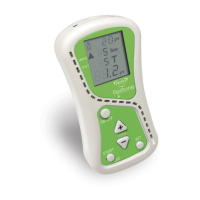
of muscles. The PERITONE is a simple to operate, single channel
EMG unit. It has been designed for use in a variety of applications,
in particular for diagnosing continence problems and for
biofeedback of pelvic floor muscles. It can also be used very
effectively for Sports and General Physiotherapy applications.
The PERITONE is an accurate and sensitive single channel EMG
unit that measures muscle activity down to as low as to 0.2 µV
(microvolts) and up to 2000 µV. The diverse range enables the
unit to measure even very weak muscle activity. It displays the
biofeedback by way of bright LED lights on the front of the unit
and also gives audio feedback.
As well as measuring muscle activity, it is important to follow an
individual patient’s progress. By locking the unit, it records the
average work/rest, onset and muscle release parameters and time.
All session data will be added together to form the overall average
reading for the given period. This includes the number of trials
performed and average muscles activity, ideal for when patients
take PERITONE home and return to clinic.
Conditions known to respond to EMG:
•
Incontinence
•
Pelvic pain
•
Patella femoral pain
•
Neck and shoulder girdle pain
•
Lower Back pain
•
Spinal conditions
•
Chronic tension headache
•
Phantom limb pain
•
Asthma
•
Post-traumatic stress disorders
•
Neuro feedback
•
Repetitive strain injury


 To Next Page