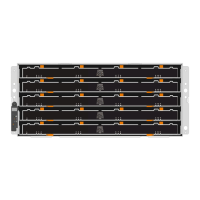
are powered on.)
• Verify that no volumes are in use or that you have a multipath driver installed on all hosts using these
volumes.
• From SANtricity System Manager, verify the details in the Recovery Guru to confirm that you have a failed
HIC and to ensure no other items must be addressed before you can remove and replace the HIC.
What you’ll need
• Two HICs that are compatible with your controllers.
For duplex configurations (two controllers), the HICs installed in the two controller canisters must be
identical. The presence of mismatched HICs causes the controller with the replacement HIC to lock down
when you bring it online.
• An ESD wristband, or you have taken other antistatic precautions.
• A #1 Phillips screwdriver.
• Labels to identify each cable that is connected to the controller canister.
• A management station with a browser that can access SANtricity System Manager for the controller. (To
open the System Manager interface, point the browser to the controller’s domain name or IP address.)
Step 1: Place controller offline (duplex)
If you have a duplex configuration, you must place the affected controller offline so you can safely remove the
failed HIC.
Steps
1. From the Details area of the Recovery Guru, determine which of the controller canisters has the failed HIC.
2. Back up the storage array’s configuration database using SANtricity System Manager.
If a problem occurs during this procedure, you can use the saved file to restore your configuration. The
system will save the current state of the RAID configuration database, which includes all data for volume
groups and disk pools on the controller.
◦ From System Manager:
a.
Select Support
› Support Center › Diagnostics.
b. Select Collect Configuration Data.
c. Click Collect.
The file is saved in the Downloads folder for your browser with the name, configurationData-
<arrayName>-<dateTime>.7z.
◦ Alternatively, you can back up the configuration database by using the following CLI command:
save storageArray dbmDatabase sourceLocation=onboard contentType=all
file="filename";
3. Collect support data for your storage array using SANtricity System Manager.
If a problem occurs during this procedure, you can use the saved file to troubleshoot the issue. The system
will save inventory, status, and performance data about your storage array in a single file.
103



 To Next Page