Possible loss of data access — If a volume is already in a Degraded state, and you remove
drives from the drive drawer, the volume can fail.
What you’ll need
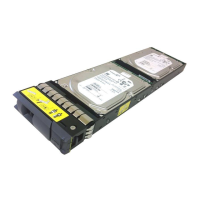
• A replacement drive that is supported by NetApp for your controller shelf or drive shelf.
• An ESD wristband, or you have taken other antistatic precautions.
• A flashlight.
• A permanent marker to note the exact location of each drive as you remove the drive from the drawer.
• Access to the storage array’s command line interface (CLI). If you do not have access to the CLI, you can
do one of the following:
◦ For SANtricity System Manager (version 11.60 and above) — Download the CLI package (zip file)
from System Manager. Go to Settings
› System › Add-ons › Command Line Interface. You can then
issue CLI commands from an operating system prompt, such as the DOS C: prompt.
◦ For SANtricity Storage Manager/Enterprise Management Window (EMW) — Follow the instructions
in the express guide to download and install the software. You can run CLI commands from the EMW
by selecting Tools
› Execute Script.
Step 1: Prepare to replace drive drawer (60-drive)
Prepare to replace a drive drawer by determining if you can perform the replacement procedure while the drive
shelf is online or if you need to stop host I/O activity and power off any of the shelves that are powered on. If
you are replacing a drawer in a shelf with Drawer Loss Protection, there is no need to stop host I/O activity and
power off any of the shelves.
Steps
1. Determine if the drive shelf is powered on.
◦ If the power is off, you do not need to issue the CLI command. Go to
Step 2: Remove cable chains.
◦ If the power is on, go to the next step.
2. Type the following command on the command line, and press Enter:
SMcli <ctlr_IP1\> -p "array_password" -c "set tray [trayID] drawer
[drawerID]
serviceAllowedIndicator=on;"
where:
◦
<ctlr_IP1> is the identifier of the controller.
◦
array_password is the password for the storage array. You must enclose the value for
array_password in double quotation marks ("").
◦
[trayID] is the identifier of the drive shelf that contains the drive drawer that you want to replace.
Drive shelf ID values are 0 to 99. You must enclose the value for
trayID in square brackets.
◦
[drawerID] is the identifier of the drive drawer that you want to replace. Drawer ID values are 1 (top
drawer) to 5 (bottom drawer). You must enclose the value for drawerID in square brackets. This
command ensures you can remove the top-most drawer in drive shelf 10:
60



 To Next Page