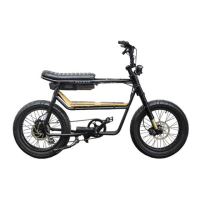
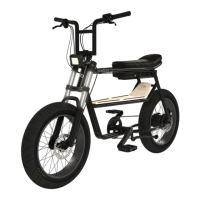
We recommend having your 345-E checked by a reputable bike shop before
taking it out for its rst ride.
Extreme care should be taken when using the pedal assistance, which is activated by the
cadence sensor in the bottom bracket (or by an optional thumb throttle). Make sure you
understand and are prepared for the assistance to engage as you start pedalling.
Users must understand the operation of the pedal assistance before using the bike and
take ample care when riding it, particularly in respect to travelling at speeds appropriate
to the location, surface, riding conditions, and user experience level. Always use the
lowest assist level until you are comfortable with the bike and feel condent controlling it.
Check the following before riding:
ELECTRICAL SYSTEM
Make sure you are familiar with the information on your bike’s display and understand the
function of the buttons before operating the bike. Please consult the Operating Your 345
section overleaf and read the Display section of this manual (p.17) for more details.
WHEELS & TYRES
Check each tyre is the correct pressure of 20psi (1.4 Bar). Lift each wheel off the ground
and make sure it spins smoothly without any lateral movement. The brake rotors should
not rub signicantly against the brake pads. If a wheel seems to be loose, wobbles or a
brake rubs heavily, please contact us or take the bike to a bike shop to be checked.
HEADSET & HANDLEBARS
To check the headset is fully secure, stand in front of your bike with the front wheel
rmly between your legs. Turn the handlebars from side-to-side to check they can’t move
independently of the front fork. Secondly, apply the front brake and rock the bike forwards
and backwards. If anything appears loose, tighten the headset and stem bolts.
BRAKES
Check the brakes by pulling both brake levers. You should feel an obvious pressure point.
Standing next to the bike, rock it back and forth making sure the brakes stay locked and
the bike does not roll forward or back. The brake levers should not touch the handlebar.
PREPARATION FOR RIDING
345


 To Next Page