c. Ensure the chimney is plumb. Square up the flashing plate and nail in place to the roof deck. Use 12 nails and
neoprene washers or cover the heads with a suitable waterproof mastic,
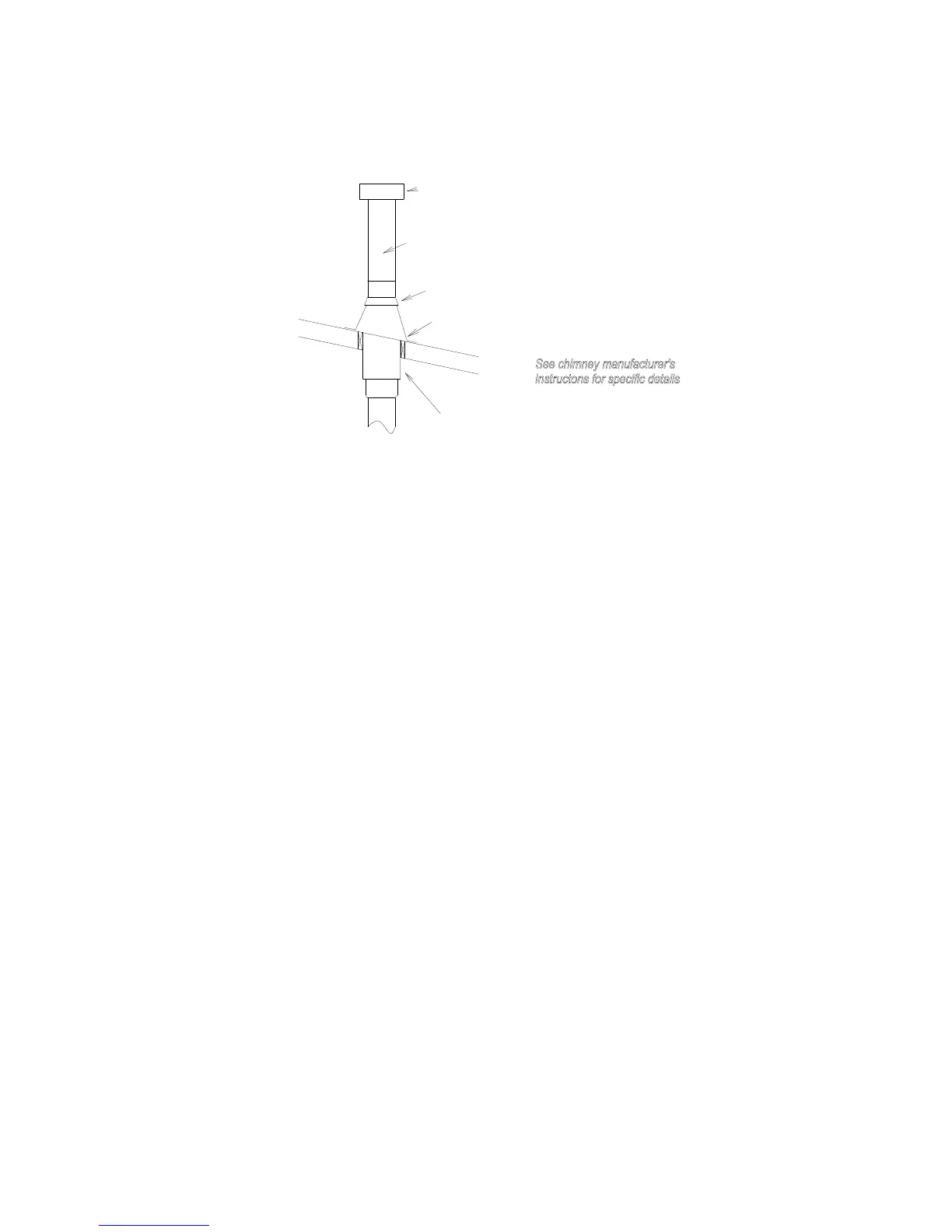
Rain Cap
Chimney section
Storm collar
Roof flashing
Ceiling Support Box
Overlap roof shingle
Spark Arrestor
TYPICAL CHIMNEY INSTALLATION
d. Wrap the Storm Collar around the chimney above the flashing. Secure the ends together loosely with the nuts
and bolts supplied. Slide the collar down the chimney until it contacts the flashing guides and/or draw band.
Tighten the nuts and bolts and seal the Storm Collar to the chimney with suitable waterproof non-combustible
mastic. After installation check to ensure that the flashing guides maintain an air space between the Storm
Collar and the cone flashing.
WARNING: Do not block the air space between the storm collar and the cone flashing.
e. The flashing and storm collar should be painted to match the roof shingles. This will extend its life and improve
the appearance. Clean and paint with suitable painting products.
f. Continue adding chimney lengths until the proper height is achieved. Install a rain cap (standard or deluxe
model) and lock it in place by turning clockwise until tight.
g. If the chimney extends more than 5’ (1600mm) above the roof deck, roof guys are required. GSW Model J6RG
roof guy kit is used this application. The draw band must be clamped around the chimney and the two legs
bolted to the roof. Seal the roof with a suitable waterproof mastic. Tighten the two leg clamps to fix the position
of the telescopic legs.
CHIMNEY REMOVAL FOR MOBILE HOME TRANSPORTATION
Before transportation of the mobile home, the chimney connector should be disconnected and the chimney removed
according to the chimney manufacturer’s instructions. It should be replaced, secured and re-sealed before the heater is
used.
USING HEATER FOR EMERGENCY COOKING – NS220 (Newmac Status) and NC100 (Newmac Classic) ONLY
This heater is designed so that the cabinet top can be lifted and cooking vessels set on top of the firebox for emergency
cooking or water heating.
NOTE: This lift top feature is intended for emergency cooking only, such as when regular cooking facilities are
temporarily out of service. When it is being used as a heater, the cabinet top must be in place. The automatic
thermostat will only work properly when the cabinet top is in place and the cabinet door is closed. When the top is open
it is necessary to operate the thermostat manually.



 To Next Page