EasyManua.ls Logo

NGH GF150R5 - User Manual

NGH GF150R5
7 pages
Print Icon
To Next Page IconTo Next Page
Loading...
1
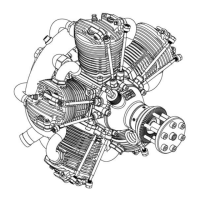
GF150R5 Five-cylinder of radial configuration/4-stroke RC gasoline egnine
Operation instruction manual
Thank you for purchasing NGH products. This product is a Five-cylinder of radial configuration four-stroke gasoline engine specially designed
by NGH engineers for the model enthusiasts and the user of UAVs. It has high-rise stability, the output torque , ultralow vibration, sufficient
combustion of mixed gas, low fuel consumption, low noise, high wear resistance, and power to weight ratio greater. The structure is tight and
the appearance is exquisite. It is very suitable for the real aircraft and long-endurance UAV power during World War II, and we hope that this
engine will give you a pleasant and safe flight experience.
Security Warning and Instruction:
Please kindly read this operating manual carefully before operating and maintaining the engine to familiarize you with the performance.
Improper operation may damage the engine and even cause great loss to private property and personal injury.
The engine is a precision product developed and manufactured by NGH. The operator needs to have some common sense of internal
combustion engine and basic mechanical knowledge, and must be cautious in the operation; please do not use any accessories that are not
approved by our company when repairing and maintaining the engine. Please kindly read the manual carefully and follow the instructions in
the manual to ensure use it correctly and avoid danger before assembling, debugging and using the engine.
Age recommendation: RC engines are not toys! Not suitable for the children under 15 years old.
This engine is designed for the radio-controlled model aircraft and long-endurance Uavs. If you use this engine for any other purpose, we are
not responsible for ensuring its stability and safety. When installing engines on RC models, please read the RC model manual carefully. The
RC model manual contains helpful advice when installing engines.
NGH and its distributors are not responsible for the property damage and the injury caused by negligent use.
Please keep away from the rotating area of the propeller when operating the engine.
Do not wear loose clothing when go near the engine or propeller.
Do not start the engine on the ground of loose materials such as dirt
gravel
ropes
sand
etc.
Operate the engine in a good ventilated environment, as the engine may produce harmful carbon monoxide gas during the operation.
Make sure that the propeller is firmly fixed to the engine crankshaft before each flight and also make sure that all parts are in place and
fastened.
When running or debugging the engine, stand on the back of the propeller, and make sure to keep your face and body out of the path which
the propeller blades pass. Do not allow others to stand in front or on the side of the propeller.
Make sure that small parts are out of the reach of children to prevent children from swallowing.
Please always check whether the nut fastening the propeller is locked.
Gasoline is flammable. Be careful of sparks which come into contact with the engine (eg fire stars, battery chargers, etc.) causing fires.
Stop and cool the engine before touching or refueling it. The surface of the running engine is hot enough to cause burns and other injuries.
Before flying, be sure to check for loose bolts. When installing the muffler, screw the muffler into the thread of the engine exhaust until it
stops, it is recommended to use screw glue.
Make sure the engine and muffler have cold air passing through the aircraft fairing environment to ensure engine cooling.
The product specifications
TypeFive-cylinder of radial configuration/4-stroke air-cooled gasoline engineIt’s only use for fixed wing model airplane and long-endurance UAV)
Bore36mm
Stroke29.4mm
The dimensions149.55cc5 x 29.91cc
CarburetorWalbro WT
The maximum power8.2 HP/6500rpm
Range of the speeds1000-6500rpm
IgniterNGH automatic advance angle R5 igniter (RoHS and CE certificate)
Igniter power supplyDC 6V-9.6V/1000mAH
Spark plugCM6
Fuel: 92# unlead gasoline + Fully synthetic 2T lubricants
Lubricating ratio: GasolineLubricating = 35:1
Recommended propeller26x1628x14 30x12two-bladed
23x16 26x14three-bladed
Engine Weight: 4.6kg
Igniter weighta: 0.43kg

Question and Answer IconNeed help?

Do you have a question about the NGH GF150R5 and is the answer not in the manual?

Overview

The NGH GF150R5 is a five-cylinder radial configuration, four-stroke gasoline engine designed for RC aircraft. It offers a combination of power, reliability, and ease of maintenance, making it suitable for enthusiasts and users of UAVs.

Function Description:

The engine operates on a four-stroke cycle, utilizing gasoline as fuel. It features a CDI electronic igniter for reliable starting and consistent performance. The five-cylinder radial configuration helps to reduce vibration at high speeds, contributing to smoother operation in RC aircraft. The engine is designed to be installed on a suitable mounting base within the RC aircraft, ensuring a firm and reliable setup.

Important Technical Specifications:

  • Engine Type: Five-cylinder radial configuration/4-stroke gasoline engine
  • Bore: 36mm
  • The Dimensions: 149.55cc (5 x 29.91cc)
  • The Maximum Power: 8.2 HP/6500rpm
  • Igniter: NGH automatic advance angle R5 igniter (RoHS and CE certificate)
  • Igniter Power Supply: DC 6V-9.6V/1000mAH
  • Fuel: 92# unleaded gasoline + Fully synthetic 2T lubricants
  • Recommended Propeller: 26x16, 28x14 (30x12 (two-bladed))
  • Carburetor: Walbro WT
  • Range of the Speeds: 1000-6500rpm
  • Spark Plug: CM6
  • Lubricating Ratio: Gasoline: Lubricating = 35:1
  • Engine Weight: 4.6kg
  • Igniter Weight: 0.43kg
  • Dimensions (approximate): 258mm (width), 200mm (length), 65mm (height)

Usage Features:

  • Starting Procedure:
    1. Firmly install the engine on the RC aircraft, lock the propeller, and ensure the carburetor is in its factory setting. Connect the spark plug, electronic igniter, sensor, and fill the fuel tank. Turn on the power and radio control equipment.
    2. Turn off the electronic igniter and the carburetor's choke valve. Rotate the propeller quickly to draw fuel into the carburetor, being careful not to over-fuel.
    3. Open the carburetor's choke door, turn on the electronic igniter, and use a motor starter to start the engine. Once running, the carburetor can be adjusted as needed.
  • Safety Warning: Always ensure bystanders, especially children, maintain a distance of at least 50 meters from the rotating engine.
  • Break-in Procedure:
    • Use high-quality full synthetic 2T oils with gasoline at a mixing ratio of 35:1.
    • NGH recommends using smaller propellers during the initial break-in period (approximately 10 flights).
    • Run the engine at medium speed (no more than 5000rpm) for 30 minutes after starting.
    • Follow with high-speed running (5500rpm) for 3 minutes.
    • Then, medium speed running for 10 minutes, and high-speed running for 3 minutes.
    • Repeat the medium/high speed cycle 3-5 times for a complete break-in.
    • A careful break-in will extend the engine's life. Ensure the engine is fully broken in before using larger load propellers.
  • Fuel Tank Connection: The fuel tank (1000cc) connects to the carburetor oil nozzle via a fuel line, incorporating an anti-bubble filter to ensure consistent fuel flow.
  • CDI Electronic Igniter Connection: When connecting the CDI electronic igniter, pay attention to the number marked on the CDI control box, which corresponds to the order of the engine cylinder number. Incorrect connections will prevent the engine from running.
  • Ignition System: The system includes a pick-up sensor on the engine, a tachometer wire for RPM signal output, an ignition control switch wire, spark plugs with high voltage caps, and a battery wire. An indicator light shows the status: red for magnet reset, green for cylinder ignition.

Maintenance Features:

  • Engine Cooling: If the engine is installed in a fairing, ensure sufficient airflow for cooling. The exit area should be 3-5 times the inlet area. If necessary, divert air to the rear cylinder to keep the rear tank cool.
  • Troubleshooting (Difficult Start, Unstable Idle, Flameout):
    • Check the electric circuit and oil line for issues.
    • Verify the electronic ignition's functionality and power supply.
    • Inspect the spark plug for flameout; replace if necessary.
    • If a cylinder isn't working at low speed, slightly increase the throttle.
  • General Maintenance:
    • To reduce fuel consumption and extend engine life, adjust the engine's highest speed to run at 90% of its maximum output when the throttle is fully open.
    • Empty the fuel from the carburetor after each flight to prevent rubber aging and performance issues.
    • Periodically clean carbon deposits from the spark plug and maintain a gap of 0.7mm to 0.8mm between electrodes. Replace spark plugs if starting is difficult, idle is unstable, or flameout occurs at high speed due to carbon deposits.
    • Clean the engine surface after each use to improve cooling.
    • Use a consistent brand/type of lubricating oil to prevent carburetor blockage. Consider a better fuel filter if blockage occurs.
    • Long-term low-speed operation can cause carbon deposits on the spark plug.
    • Regularly check the fuel system for oil and air leaks.
  • Valve Clearance Adjustment:
    • Remove the gearbox cover from the back.
    • The first adjustment is after 4 hours of engine running, then every 8 hours of flight.
    • Ensure the valve mechanism moves freely without jamming.
    • Perform adjustments when the engine is completely cooled, due to thermal expansion.
    • Adjust valve clearance during the compression stroke (both intake and exhaust valves fully closed).
    • Manually rotate the propeller to align TDC marks on the gears.
    • Insert a plug (thickness 0.06 - 0.1mm) between the rocker arm and valve. Adjust with a hexagonal wrench, then tighten the hex nut (do not overtighten).
    • Proper valve clearance is crucial; excessive clearance affects performance, causes wear, and abnormal sound. Small or no clearance affects performance, leads to compression leakage, and makes starting difficult.
  • Engine Installation: The engine should be installed firmly and reliably on a suitable mounting base in the RC aircraft.
  • Installation Note: Ensure the firewall's back is equipped with a metal flat washer or a pawl nut to prevent bolts from falling into the plywood. Always check for loose bolts before flying.

Engine Guarantee:

NGH provides a free change within one year and a guarantee within two years from the purchase date for performance defects caused by process, material, or manufacturing flaws. The guarantee applies only to the original purchaser and does not cover: normal wear, damage from maintenance failure, damage from over-speed operation (using small propeller), bearing rust, crashes, inappropriate fuel, foreign body damage, unreasonable installation/operation, improper dismantling, or any modifications.

NGH GF150R5 Specifications

General IconGeneral
BrandNGH
ModelGF150R5
CategoryEngine
LanguageEnglish

Related product manuals