© National Instruments Corporation 55 NI cDAQ-9178/9174 User Guide and Specifications
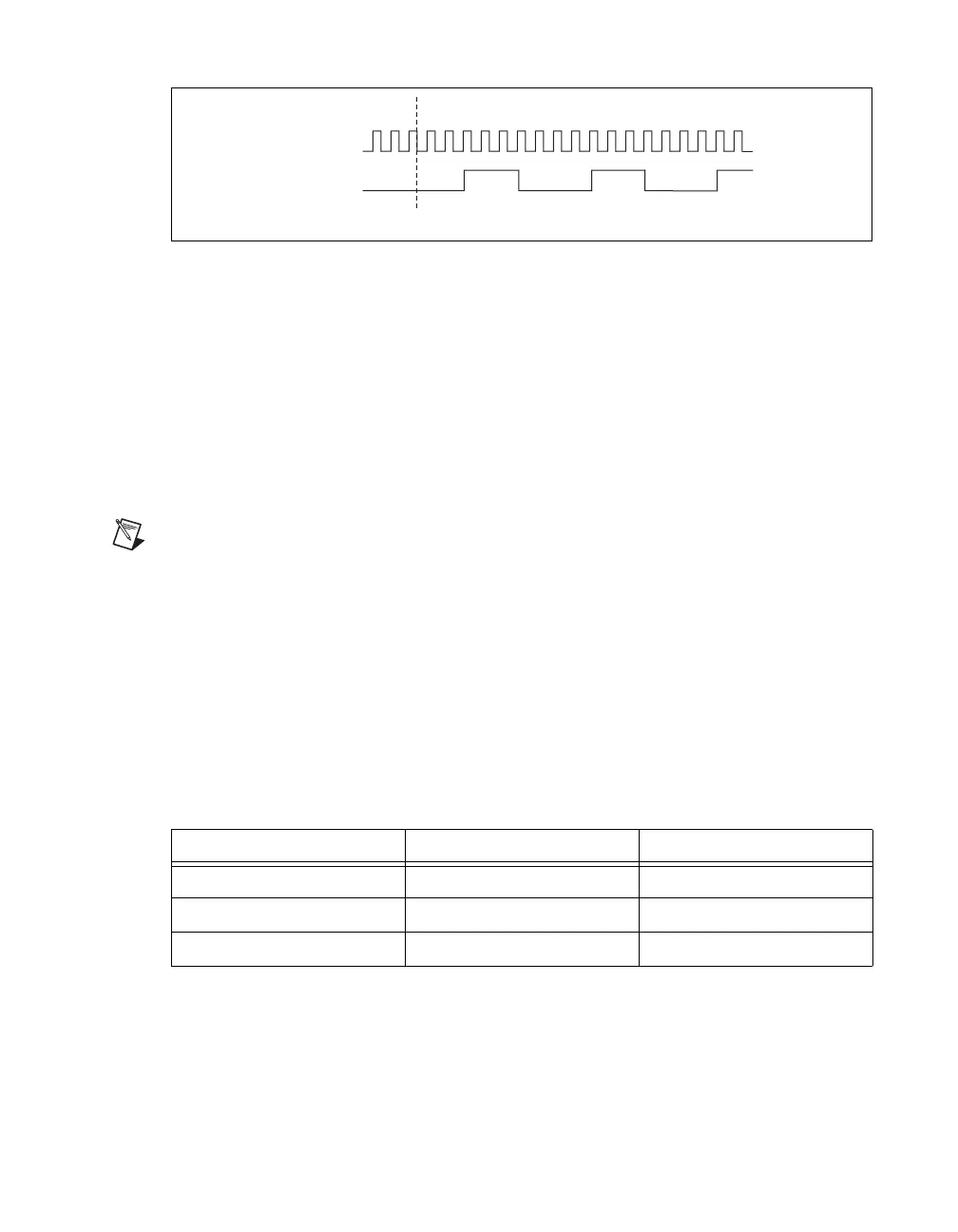
Figure 50 shows a continuous pulse train generation (using the rising edge of Source).
Figure 50. Continuous Pulse Train Generation
Continuous pulse train generation is sometimes called frequency division. If the high and low pulse
widths of the output signal are M and N periods, then the frequency of the Counter n Internal Output
signal is equal to the frequency of the Source input divided by M + N.
For information about connecting counter signals, refer to the Default Counter/Timer Routing section.
Buffered Pulse Train Generation
NI cDAQ-9178/9174 counters can use the FIFO to perform a buffered pulse train generation. This pulse
train can use implicit timing or sample clock timing. When using implicit timing, the pulse idle time and
active time changes with each sample you write. With sample clocked timing, each sample you write
updates the idle time and active time of your generation on each sample clock edge. Idle time and active
time can also be defined in terms of frequency and duty cycle or idle ticks and active ticks.
Note On buffered implicit pulse trains the pulse specifications in the DAQmx Create Counter
Output Channel are ignored so that you generate the number of pulses defined in the multipoint write.
On buffered sample clock pulse trains the pulse specifications in the DAQmx Create Counter Output
Channel are generated after the counters starts and before the first sample clock so that you generate
the number of updates defined in the multipoint write.
Finite Implicit Buffered Pulse Train Generation
This function generates a predetermined number of pulses with variable idle and active times. Each point
you write generates a single pulse. The number of pairs of idle and active times (pulse specifications)
you write determines the number of pulses generated. All points are generated back to back to create a
user defined pulse train.
Table 9 and Figure 51 detail a finite implicit generation of three samples.
Table 9. Finite Implicit Buffered Pulse Train Generation
Sample Idle Ticks Active Ticks
1 2 2
2 3 4
3 2 2
SOURCE
OUT
Counter Armed



 To Next Page