Ensure the gas is turned off at the propane tank.
Remove the cooking grates, flame tamers.
Lift each burner up and out.
Clean the inside of the burner using a stiff wire. A straightened coat hanger will work.
An alternative is to use compressed air. Always wear eye protection if using this method.
Never enlarge the burner ports during cleaning.
Brush the outer surface of the burner.
Ensure all ports (holes) are free of debris.
Inspect the burners. Replace any that have cracks or enlarged ports.
Replace flame tamers and cooking grates.
Perform a Leak Test described earlier in this guide.
1.
2.
3.
4.
5.
6.
7.
8.
9.
CLEANING THE BURNERS
BURNER FLAMES
WARNING:
Small insects and spiders may enter the burner tubes. Sometimes they will build nests
or spin webs that can block or reduce the amount of gas flowing through the burner. You
will usually see a smaller flame, or a flame that is mostly yellow rather than blue, coming
from the burner when this happens. Other signs include the grill uneven or low heat, or
difficulty igniting the burners. In cases of severe blockage, this can cause the flame to
burn backwards, and outside of the burner tubes, which can cause damage to your grill
and/or personal injury. IMMEDIATELY SHUT OFF THE FLOW OF PROPANE
GAS AT THE TANK BY TURNING THE HAND WHEEL ELOCKWISE SHOULD
THIS HAPPEN. Wait for the grill to cool, and then clean all burners.
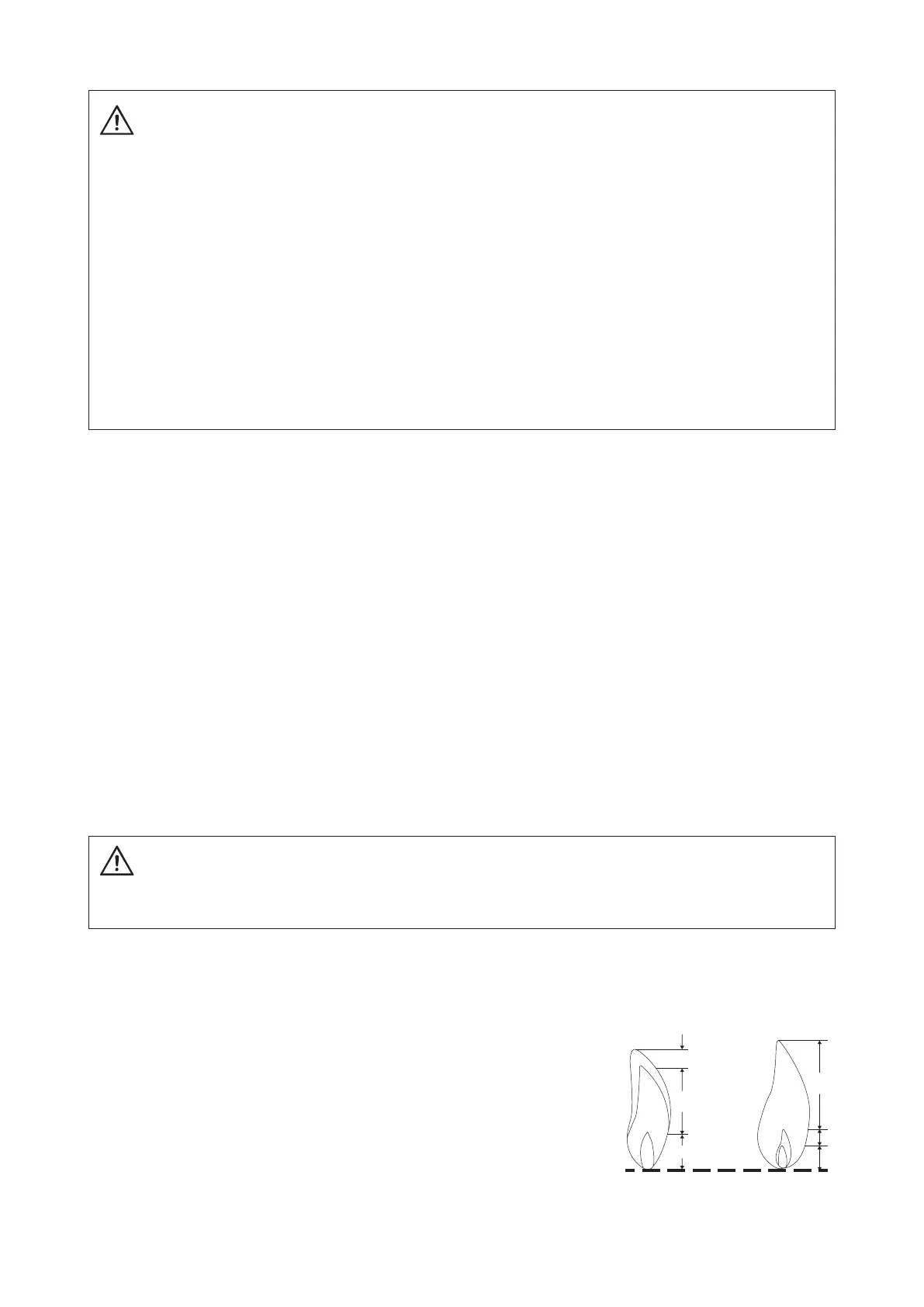
Always evaluate the burner flame patterns after lighting. A good
flame should be primarily blue with a yellow tip and have Goad Bad
a minimal amount of noise. Some yellow tips are OK if they are
smaller than 1 inch(2.5 cm). New burners sometimes have oil
residue, which will cause yellow flame when burning off.
Variations in gas supply, altitude, weather, and other factors can
all impact burner performance. Older grills can also show more
yellow flame as food deposits, oils and fats can build up.
WARNING:
Properly place the burner and valve is vital for safety.
- 23 -
Yellow
Yellow
Light Blue
Light Blue
Blue
Blue
GOOD BAD



 To Next Page