7
NOTE: The bikini line may be extra-sensitive to temperature.
If it becomes uncomfortably warm during treatment, lower
the treatment level or work on a different site for a while.
Do not go further than the bikini line.
Watch the Light
The signal light by the Thermicon™ Tip will guide you
throughout your no!no! hair removal experience. It lets you
know when you are working at the right speed and warns you
if the Thermicon™ Tip is torn, damaged or no longer working.
The Signal Light is visible only during the Slow Glide part of
treatment.
While gliding on the skin, the Signal Light should always
be facing you. When working at the right speed, the light
will remain steady. If the light flickers, adjust your speed
accordingly. If it turns red, replace your Thermicon™ Tip.
Meaning Blue Red
Correct gliding speed On and steady Off
No Thermicon™ Tip in
socket Off On
Depleted Thermicon™ Tip Off On
Damaged Thermicon™ Tip Off On
Incorrect gliding speed Flickering Off
No movement Off Off
Charge no!no! Flickering
Table 3: Signal Light
Master the Buffer
You’ve tried everything but your skin still doesn’t feel smooth?
Did you remember to buff? Without buffing, crystallized
hair remains in place, giving your skin a prickly feel. These
treated hairs will eventually fall out – but why wait? Buffing
exfoliates your skin, removes crystallized hair and leaves
your skin feeling silky smooth.
To Buff:
Hold the Buffer flaps1.
Firmly rub the buffer in either a 2.
circular or back and forth motion over
the treated area.
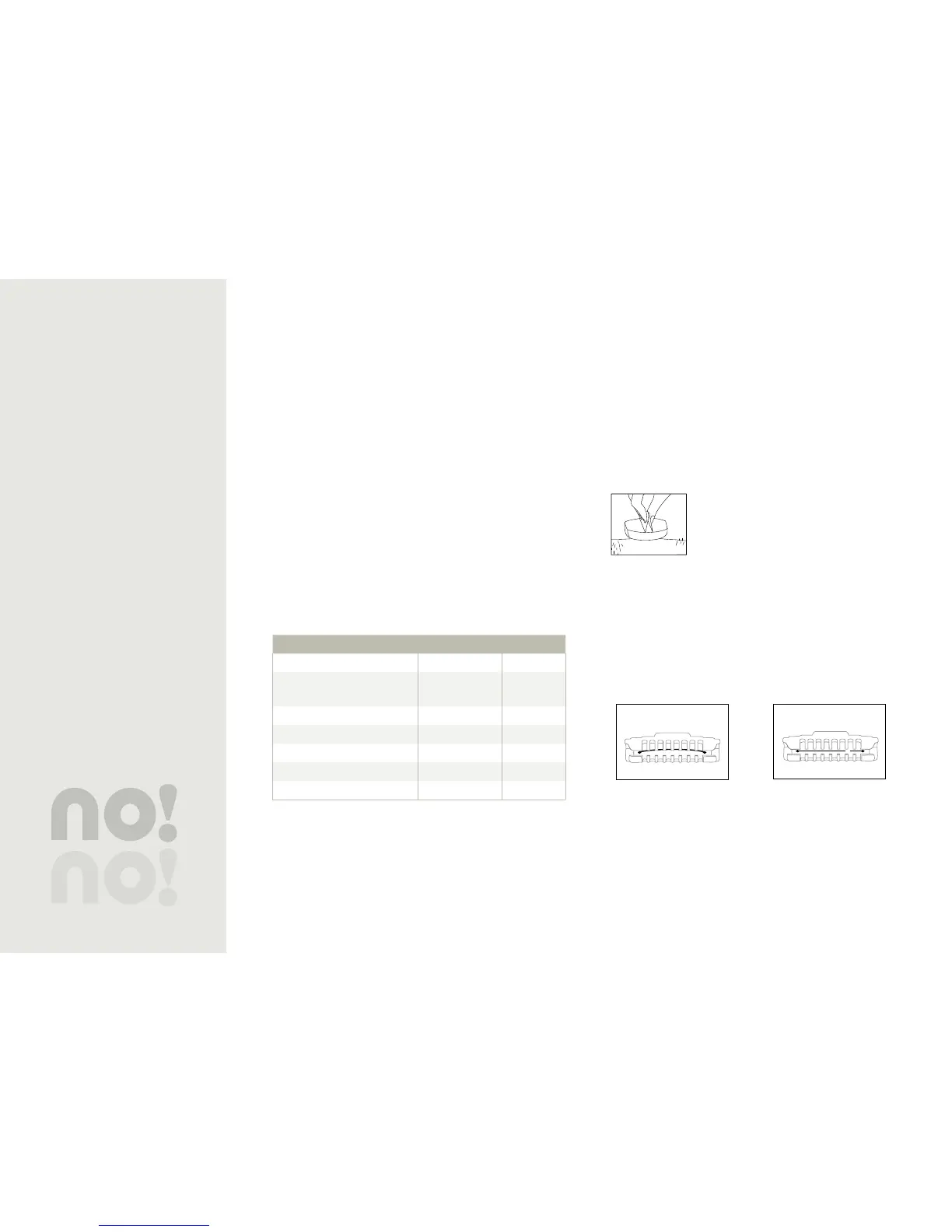
Thermicon™ Tips
To avoid possible malfunction or harm, make sure to •
gently push the Thermicon™ Tip all the way into the
socket.
WARNING! Always check the wire in the Thermicon™ Tip •
before. Never use a Thermicon™ Tip if the wire is bent
(Figure 10), torn (Figure 11) or damaged in any way.
Figure 10:
Bent thermodynamic wire
Figure 11:
Torn thermodynamic wire


 To Next Page