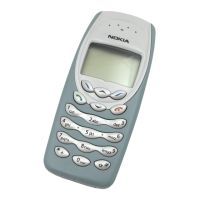
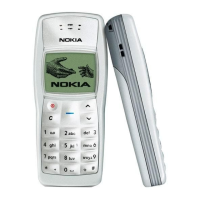
This document provides troubleshooting instructions for the NME-2A Series Transceivers, which are part of the Programmes After Market Services (P.A.M.S.) Technical Documentation. The manual, dated August 1997, is designed to help identify fault blocks and pinpoint broken components through a systematic approach using simple measurements.
Function Description
The NME-2A Series Transceiver is a radio communication device, likely for GSM or similar cellular networks, given the mention of a GSM tester (HP8922G/H) and various RF components. The device consists of several key functional blocks:
- Baseband (BB) Section: Handles the digital signal processing, control logic, and communication with the main microcontroller (MCU) and digital signal processor (DSP). This includes flash programming, EEPROM initialization, and MBUS registration.
- Radio Frequency (RF) Section: Comprises the Receiver (RX), Transmitter (TX), and Synthesizers (UHF and VHF). The RF section is responsible for transmitting and receiving radio signals, frequency generation, and signal conditioning.
- Audio Section: Manages microphone and earphone signals, utilizing an audio codec.
- Display Section: Provides user feedback and self-test results.
- Power Management: Includes components related to power supply and button functionality (PWR Button).
The device's operation involves complex interactions between these blocks, managed by the MCU and DSP. For instance, the DSP handles clock oscillation, memory access (ERAMHI, EROM), and data transfer (RWN, EXM, RSTB). The ASIC (Application-Specific Integrated Circuit) plays a crucial role in controlling various RF functions, including synthesizer power (SYNTHPWR), transmit power (TXP, TXPPWR), and receiver/transmitter enable signals (SENAT, SENAR).
Important Technical Specifications
While specific numerical specifications for all components are not explicitly listed as "technical specifications" in a dedicated section, the troubleshooting instructions reveal several important parameters:
Power Supply:
- Required for servicing: 12 V 5 A.
- Logic circuits power supply: +5 V.
- VBATT pins (4, 16): Expected to be +5 V after power on.
- N101 pin 2: +6.2 V.
- N100/PSL pins (5, 20): +6.2 V when XPWRON is low or IGNS is high.
- D250/pin 5, 42 (VL1): +5 V when XPWRON is pushed high.
- N100/PSL pin 9 (XPWROFF): Pulses from 0 to +5 V after power on.
- D251/FLASH pin 11: +12 V during programming.
- D251/FLASH pin 12 (PWD): +5 V after power on.
- V902 or C903 (VHF Synthesizer supply): 5 V.
Clock Frequencies:
- D300/pin 119 (26 MHz clock): 26 MHz.
- MCU/D250 pin 69 (MCUCLK): 26 MHz.
- VCXO (Voltage Controlled Crystal Oscillator) frequency: 26 MHz.
- High tuning: 26 MHz +400 Hz ±100 Hz.
- Low tuning: 26 MHz –400 Hz ±100 Hz.
- Mid tuning: 26 MHz ±50 Hz.
- UHF Synthesizer frequencies:
- Channel 1: 1006.2 MHz.
- Channel 124: 1039.8 MHz.
- J902 (26MHz ref): 26 MHz, >2 Vpp.
- VHF Synthesizer frequency: 232 MHz (prescaler divides by 2).
- J902 (26MHz ref): 26 MHz, >2 Vpp.
RF Signal Levels (RX Part):
- RSSI calibration input: –57 dBm, channel 60, 947.06771 MHz.
- Offset value for total gain in RX: -37 < Offset < 49 dB (calibration values between ±2 dB).
- RXI and RXQ (13 MHz signal): >0.3 Vpp at 12.93 MHz.
- J702 input to 13 MHz filter: >0.5 Vpp.
- RXPWR J705: 5 ±0.1 V.
- 8.5 RX TX SW J703: 7.7 ±0.1 V.
- N701, 71/13 MHz mixer pin 15: 4.8 ±0.2 V.
- AGC5: <0.5 V (<2.5 V in burst).
- J702 output (71/13 MHz mixer): 2.75 ±0.1 V.
- LO (71/13 MHz mixer pin 6): >-10 dBm, 232 MHz.
- AGC1 to AGC4: Low (AGC4<2.5 V in burst).
- N702 pin 1 and pin 14: 4.8 V ±0.2 V.
- Input (71 MHz signal pin 12, 13): –50 dBm, 71 MHz.
- Output (71 MHz signal pin 4, 5): –10 dBm, 71 MHz.
- LO C934 (UHF mixer): +9 dBm ±3 dB, 1014 MHz.
- Signal in C722 (UHF mixer): –50 dBm (–57 dBm input) or –30 dBm (–37 dBm input) at 947.07 MHz.
- Signal out C726 (UHF mixer): –57 dBm at 70.93 MHz.
- Output to filter (71 MHz amp): –35 dBm at 70.93 MHz.
- Burst mode RXI and RXQ output: About 30 mVpp.
- Sensitivity: < -103 dBm.
- SNR: > 20.
- Clipping + SNR: > 50.
- I-Q difference: < 1 dB.
RF Signal Levels (TX Part):
- Power level 10 (23 dBm) output burst: Peak amplitude at 23 dBm ±3 dB, center at 902 MHz.
- Power level 2 (39 dBm) to level 15 (13 dBm).
- Power tuning coefficients: 0.8 at level 2 to 0.1 at level 15 (tolerance ±0.1 at level 2, ±0.050 at level 15).
- Control signal for RF amplitude: Max 4 to 6 V at level 2, 2 to 2.5 V at level 15.
- RF input to power amp pin 1: 3 to 5 dBm.
- Output of modulator on T802: –10 dBm ±5 dB.
- Input to modulator (wanted signal): About –10 dBm, 15 dB higher than other two discrete frequencies.
- UHF LO: 5 dBm ±5 dB, 1014 MHz.
- VHF RX PLL: –5 dBm ±5 dB, 116 MHz.
- Modulating input (I and Q): About 1 Vpp for every signal, d.c. at 2.4 V.
- RF signals from synthesizers (active): About 6 dBm.
- Modulation spectrum: Signal at +67 kHz should be >30 dB down, signal at +135 kHz should be >50 dB down relative to mainslope.
- VHF Synthesizer output level at C914/R911: –10 dBm.
Usage Features
The NME-2A transceiver is designed for use in a communication system, likely a cellular network.
- Network Registration: The device attempts to register to the system (indicated by "MBUS registration OK?" and "No Registration to the System (no serv)").
- Call Functionality: The device supports making calls ("no call" is a troubleshooting state).
- Power Button: A physical PWR button initiates power-on sequences.
- Display: Provides self-test results and other operational information.
- Audio Interface: Supports microphone and earphone functionality.
- RF Control: The device's RF section can be controlled for various modes (continuous, burst), power levels, and channels.
Maintenance Features
The manual primarily focuses on maintenance through troubleshooting.
- Systematic Troubleshooting Flow: The "BB Troubleshooting Flow Diagrams" guide technicians through a logical sequence of checks. If a question's answer is "YES," proceed to the next level; if "NO," follow the sub-branch to identify the fault.
- Required Servicing Equipment:
- PC for PCLocals (a software tool for local control and diagnostics).
- Power supply (12 V 5 A).
- Digital multimeter.
- Oscilloscope with 10:1 probes.
- Spectrum analyzer (capable of 10 W input, e.g., with an external attenuator).
- Signal generator.
- Test SIM.
- RF cables with BNC or N connectors.
- Modular cable.
- RS232/M2BUS adapter DAU-2.
- HP8922H (likely a GSM test set, also referred to as HP8922G/H).
- PCLocals Software: This tool is crucial for diagnostics and control:
- Used to "find out a reason" for display selftest failure.
- Performs MCU internal tests (RAM bus, ROM bus, IMEI).
- Monitors radio status (F8).
- Controls RF functions (Active unit RX/TX, Operation mode continuous/burst, channel selection, AGC, power level).
- Enables power tuning and I/Q tuning.
- Self-Test Functions: The device performs various self-tests, including display selftest, EEPROM initialization check, and MCU/DSP code download checks.
- Component-Level Checks: The instructions detail specific voltage, frequency, and signal level measurements at various pins and test points of integrated circuits (e.g., D250, D300, N100, N150, D251, D253, N701, V701, V904, V906), resistors (e.g., R106, R259, R263), capacitors (e.g., C114), and other components.
- Joint and Foil Checks: Instructions include checking for "short circuits in data data lines," "data line disconnected," "check joints and foils," and "check all soldered joints."
- Calibration: The manual describes RSSI calibration and AFC (Automatic Frequency Control) checks, including tuning voltage measurements and frequency deviation measurements.
- Performance Monitoring: SNR (Signal-to-Noise Ratio), sensitivity, clipping level, and I-Q difference are measured to assess overall RX performance.
- Network Simulation: Using a GSM tester like HP8922G/H, technicians can simulate a network environment to check camp-on functionality, RX level, and decoding of neighbor information.
- Dynamic Operation Checks: PCLocals allows operating parts individually and dynamically to check switching between different modes, helping to confirm RF functionality.

 Need help?
 General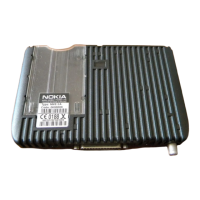

 To Next Page