WARNING: High fluid pressures and temperatures are developed in hydraulic log
splitters. Hydraulic fluid escaping through a pin hole sized opening can burn or puncture
skin, resulting in wounds that could cause blood poisoning, infection, disability,
gangrene, amputation, or death. Therefore, the following instructions should be heeded at
all times when inspecting or servicing the hydraulic components of the log splitter.
1. NEVER check for leaks with your hand. Leaks can be located by holding a piece of
cardboard or wood (at least two feet long) with your hand at one end and passing the
other end over the suspected area (wear eye protection). Look for discoloration of the
cardboard or wood.
2. NEVER adjust the pressure of the pump or valve.
3. If injured by escaping fluid, no matter how small the wound is, see a doctor at once.
A typical injection injury may be a small wound that does not look serious.
However, severe infection or reaction can result if proper medical treatment is not
administered immediately by a doctor who is familiar with injection injuries.
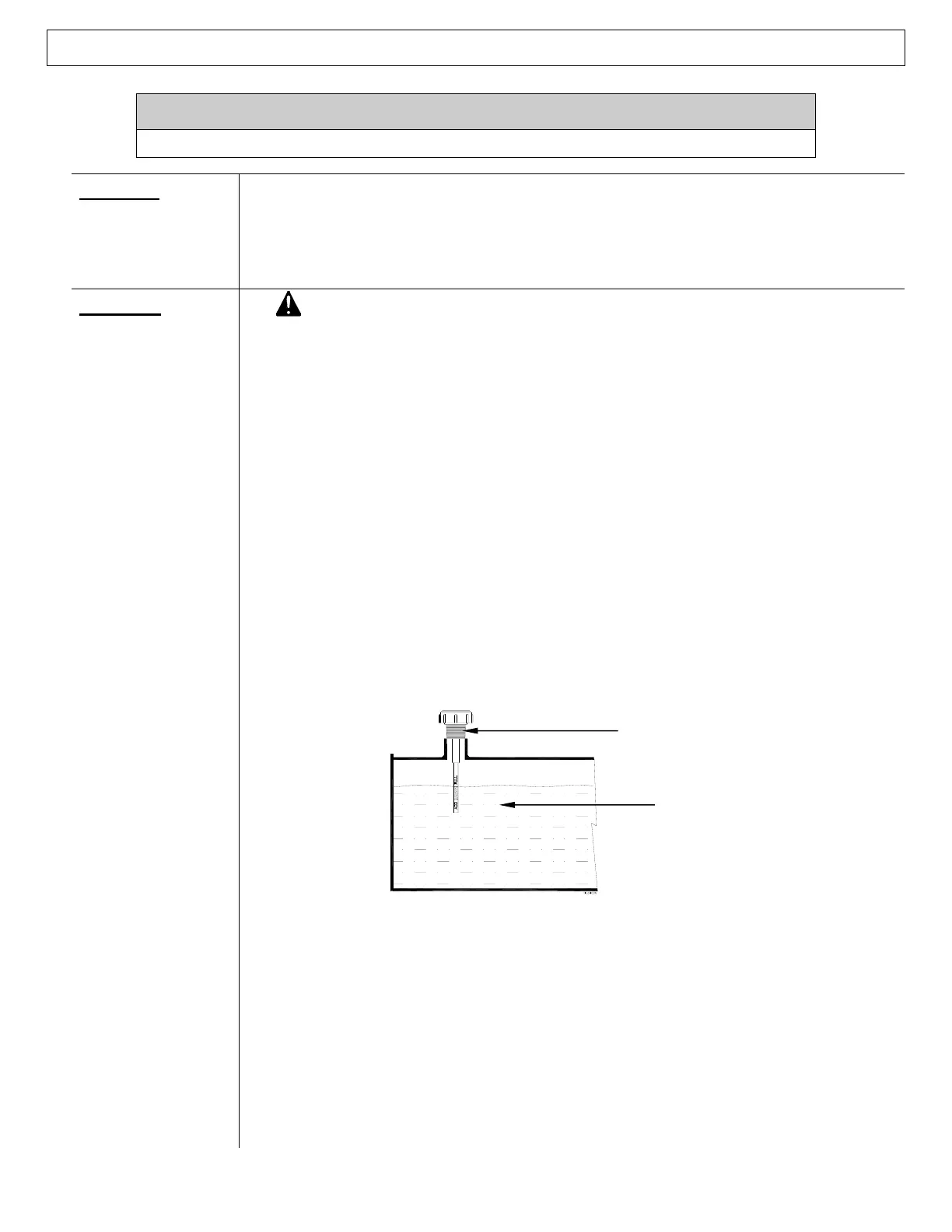
4. Remove hydraulic oil dipstick.
5. Refer to the Specifications section for approximate hydraulic oil capacity.
6. Fill reservoir with 10 wt. AW32, ASLE H-150, or ISO 32 oil. Use a funnel
7. Replace hydraulic oil dipstick and check that oil level reads full. Note: Do not
thread in dipstick when checking oil level.
8. Turn motor on and use control valve handle to extend and retract wedge 5 (five)
times to remove air from the high-pressure lines.
9. With wedge retracted, check oil level again.
10. Replace hydraulic oil fill/vent cap.



 To Next Page