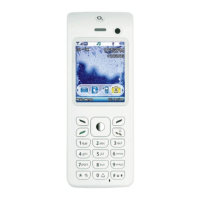
Need help?
Do you have a question about the O2 XM and is the answer not in the manual?
Mobile phone radiation, SAR compliance, and health authorities' instructions.
Potential interference with electronic devices and usage restrictions.
Advice for users with pacemakers, hearing aids, or other medical devices.
Potential health effects from excessive SMS use and ergonomic tips.
Warnings regarding battery disassembly and contact with battery liquid.
Warning about small parts like SIM cards being a choking hazard.
Precautions for earpiece volume and child safety.
Risks associated with combustibles and internal micro sparks.
Warning about magnetic fields affecting data storage media.
Instructions for connecting the phone to external devices via USB.
Testing and requirements for body-worn accessories to maintain FCC compliance.
Government requirements for radio wave exposure and SAR limits.
Table showing battery life in different usage scenarios.
Advice on daily charging and low battery alerts.
Notes on how low temperatures can affect battery capacity and phone function.
Information on the phone's rechargeable battery and initial charging.
Detailed instructions on how to charge the phone's battery.
Instructions for handling the removable memory card.
Guides on formatting memory cards in the phone or via a card reader.
How to copy files between the phone and PC using the memory card.
Details about the phone's main and sub displays, including resolution and color depth.
Explains the status icons and information shown in the main display.
Overview of the phone's keys and their general functions.
Description of the alphanumeric keypad and its special functions like voice mail and shortcuts.
Explanation of the navigation controls like the Navigator key and softkeys.
Describes icons, pop-up boxes, and text editor appearance.
How to enter information into fields like phonebook or calendar.
How to access the main menu and navigate through its options.
How to navigate within submenus and use the action bar.
How softkey commands change dynamically based on the menu context.
Explains scroll bars, checkboxes, radio buttons, and icons.
How the text editor works for SMS, MMS, and entry fields.
Detailed explanation of text input modes (ABC, T9, 123) and character availability.
Simple text entry using multi-press key strokes.
Using predictive text for faster and easier message composition.
How to add custom words to the T9 dictionary.
Accessing symbols, brackets, and punctuation.
Inputting numbers directly using number keys.
Switching between lower and upper case text input.
Step-by-step guide to composing and sending SMS messages.
How to send an SMS to multiple recipients simultaneously.
How to read incoming SMS messages and handle alerts.
Accessing and reading stored SMS messages.
Managing saved SMS messages in drafts and archive folders.
How to delete SMS messages to free up memory.
Configuring SMS settings like Service Centre number and validity.
How broadcast messages appear and are managed.
Enabling broadcast reception and managing channels and language.
Creating MMS messages with text, photos, and sounds.
Setting duration, receipts, subject, and priority for MMS.
How to insert audio, video, or images into multimedia messages.
Entering recipient details and sending the MMS.
How to read incoming MMS messages and notifications.
Accessing and managing sent and received MMS messages.
How to delete MMS messages to free up memory.
Checking memory usage for messages.
How to access the O2 menu and navigate its submenus.
Connecting to the O2 homepage and basic browsing actions.
Options for managing browsing history, bookmarks, and pages.
Managing browser cache and cookies.
Configuring how non-requested WAP messages are handled.
Obtaining and configuring network parameters for WAP access.
Storing and managing up to 250 contacts with multiple numbers and details.
How to search and find contacts alphabetically.
Step-by-step guide to adding new contacts with names, numbers, and groups.
How to associate an image with a contact entry.
Instructions for copying contacts between the phone and SIM card.
Options for resetting memory or deleting specific contacts.
How to create and manage contact groups for ring tones and SMS.
Customizing contact settings like shortcut dialing.
Assigning keys for quick access to frequently used contacts.
Using lists to restrict or allow calls from specific numbers.
How to save your own phone number for reference.
Displaying used and free memory for contacts.
How to view missed, received, and dialed calls.
Steps to delete individual or all call records.
Viewing total call time and duration of the last call.
Navigating daily and monthly views, viewing, adding, and deleting appointments.
Steps to create new appointments with details like subject, time, and reminders.
How to delete all entries or specific entries based on age.
How to add new tasks with subjects, due dates, and reminders.
Options for editing, deleting, or adding new tasks.
How to set up to three different alarms with time, type, and sound.
Customizing alarm settings like daily recurrence, sound, and snooze options.
How to record speech for later playback and save clips.
How to select and play recorded audio clips.
How to enable/disable flight mode and its implications.
Customizing wallpaper, backlight time, and LED lights.
Setting personalized greetings and startup/shutdown animations.
Accessing audio settings for calls and messages.
Adjusting alert tunes, modes, and volumes for calls and messages.
Configuring keypad type, volume, and tones.
Managing call divert options, call waiting, and call barring.
Notifying of incoming calls during an active conversation.
Settings for redial, any key answer, and call barring.
Options to conceal your identity when making calls.
Enabling DTMF tones and changing phone language.
Manual or automatic network selection and adding new networks.
Configuring USB or Modem connections for data transmission.
Managing embedded and downloaded ring tones.
Viewing, managing, and setting photos as wallpaper.
Managing video clips taken with the camera.
Storing and managing recorded voice messages.
Accessing files not stored elsewhere in the media centre.
Formatting memory cards and checking memory status.
How to use the camera to take still photos, including preview and saving.
Sending photos, setting wallpapers, deleting, and renaming.
Viewing and managing photos in the image library.
How to record video sequences, including preview and saving.
Playing video clips, sending as MMS, and saving with custom names.
How to download new games from O2 and install copied games.
Updating installed games and starting a game for play.
Rules for avoiding damage, unauthorized disassembly, and exposure to heat or moisture.
Guidelines for maintaining battery performance and longevity.
Precautions for handling the memory card to ensure data safety and card life.
Answers to common problems like phone not turning on or SIM card errors.
Solutions for "NO NETWORK" display, call processing errors, and call forwarding.
Information on T9 input, network support, and using the mobile in a car.
Details on phone size, weight, and display characteristics.
Information on network compatibility, standby, and talk times.
Specific Absorption Rate values and FCC RF exposure compliance.
List of connectors, SMS/MMS capabilities, and call features.
Summary of key features like GPRS, Music Player, Camera, and Games.
Guide to configuring network profiles for WAP and MMS services.
Customizing WAP connection details like server name, IP address, and CSD settings.
Selecting bearer and connect modes for WAP browsing.
Configuring CSS, refresh, rendering, images, MIME objects, and history.
Managing browser cache for performance and testing purposes.
Creating or modifying MMS network settings.
Configuring own address, validity period, and download preferences.
Selecting how MMS messages are played back (manual, automatic, ask).
Setting up notifications for read and delivery reports for MMS messages.
 General
| Network | GSM |
|---|---|
| 2G bands | GSM 900 / 1800 / 1900 |
| GPRS | Class 10 |
| EDGE | No |
| SIM | Mini-SIM |
| Camera | VGA |
| Loudspeaker | Yes |
| 3.5mm jack | No |
| Games | Yes |
| SAR | 0.65 W/kg (head) |
| Type | TFT |
| Size | 1.8 inches |
| Resolution | 128 x 160 pixels |
| Memory Card slot | No |
| Alert types | Vibration; Downloadable polyphonic ringtones |
| Messaging | SMS, MMS |
| Battery | Removable Li-Ion |


 To Next Page