This document is the owner's manual for Off Grid Trailers, an off-road teardrop trailer designed for engaging with nature and off-grid camping. The manual provides comprehensive information on the proper and safe operation, maintenance, and specifications of their trailers, including the Expedition 2.0, Pando 2.0, and Switchback models.
Function Description:
Off Grid Trailers are recreational vehicles designed for off-road and off-grid camping. They are equipped with various systems to support extended stays in remote locations, including plumbing, electrical, and propane systems, as well as appliances like furnaces, water heaters, and refrigerators. The trailers are built with robust frames and independent suspensions to withstand the rigors of off-road travel. Optional features such as awnings, roof-top tents, and solar panels enhance their utility for outdoor adventures.
Important Technical Specifications:
- Hitch Height: 21" (for tow vehicle hitch preparation).
- Tongue Weight: Loaded trailers tongue weight should be within 12-15% of the loaded trailer weight.
- Axle Load: Should not exceed the Gross Axle Weight Rating (GAWR).
- Combined Weight Rating: Total tow vehicle and trailer load should not exceed the Gross Combined Weight Rating (GCWR) of the tow vehicle.
- Trailer Wiring: 7-pin trailer harness provides connections for turn signals, brake lights, running lights, brake control, and 12V power.
- Brakes: Equipped with electric brakes and an emergency brake away system.
- Suspension: Timbren Axle-less independent suspension.
- Main suspension bracket bolts torque: 170 ft/lbs.
- Spindle mount bolts torque: 160 ft/lbs.
- Camber: 0° +/-1°.
- Toe-In: 0 - 1/16 inch toe in (measured at 30 inch hub centric span).
- Wheels & Tires: Wheel lug nuts require a final torque of 100 ft/lbs. Re-check torque after 50 and 100 kms (30 and 60 miles).
- Electrical System:
- 12-volt circuits protected by automotive type fuses.
- 110-volt circuits operated by a power inverter.
- Main BUS master power off switch located in the unit front box with batteries.
- All interior and exterior lights are LED fixtures.
- Shore power charging: Standard 15-amp power cord.
- Base unit is NOT equipped with an on-board solar charge controller; solar port is configured for portable panels with integrated charge controllers only.
- Tank Capacities (Fresh Water):
- Expedition 2.0: 31 GAL
- Switchback: 31 GAL (Optional)
- Pando 2.0: 14 & 19 GAL (Optional)
- Propane System: Tanks should not be filled to more than 80% capacity. Heater cabinet doors must be fully open during operation.
- Furnace (Propex HS2211): Minimum operating voltage 10V, maximum 15V.
Usage Features:
- Quick Set-Up: Includes steps for installing license plate, preparing tow vehicle hitch (21" height), installing hitch ball/yoke, attaching safety chains and breakaway cable, plugging in 7-pin trailer cable, and checking lights/brakes.
- New Trailer Check List: De-winterizing/sanitizing water system, charging batteries, turning on main circuit breaker, checking tire pressure, filling propane bottle, re-torquing wheels (suspension bolts after 1st week).
- Loading: Store heavy gear first on camper floor, distribute items for 12-15% tongue weight, store light items on high shelves, secure loose items.
- Towing: Ensure vehicle hitch and receiver capacities meet/exceed trailer weight, use matching hitch ball, properly seat coupler with locking latch and pin, use crossed safety chains.
- Trailer Jack: Manual jack for raising/lowering trailer. Wheel(s) on jack for delivery assistance only.
- Door Operation: RV grade side entry doors with either single-stage or dual-stage latch systems. Deadbolts must be engaged while traveling. Dual-stage latches have a secondary safety mechanism and emergency latch cable access.
- Plumbing:
- Fresh Water System Sanitization: Procedure involves draining, adding chlorine bleach solution (0.5 cup bleach per 30 gallons water), filling with water, shaking, running pump to all faucets/shower until bleach smell is evident, allowing to sanitize for 4 hours, draining, refilling, and flushing until bleach smell is gone.
- Demand Pump: Automatically maintains pressure when switched on. Located on the front of the hot water on-demand unit. Shut off when tank is empty or when traveling.
- Fresh Water Filling: Remove fill cap and fill with hose.
- Fresh Water Draining: Drain cock located near the freshwater tank.
- Electrical System:
- Shore Power Charging: Plug a standard 15-amp power cord into the exterior port.
- Power Inverter: Operates 110-volt circuits.
- Main BUS Master Power Off: Depress to turn off all unit power.
- Propane System: DO NOT disconnect or remove tank while valve is open. DO NOT store flammable liquids near appliances. Propane tanks should not be left open while traveling. Never fill with natural gas. Never fill to more than 80% capacity. DO NOT tow with wall-mounted tanks. Perform walkaround for leaks and ventilate.
- Appliance Operation: Refer to individual component manufacturer's manuals for specific operating instructions.
- Furnace: Reset switch located below wiring harness (yellow/red boot) in the side-mounted aluminum box.
- Stove: Maintain at least 30 inches clearance from combustibles above the stove. Ensure proper ventilation. Never leave oven pilot or range burners on unattended or while sleeping.
- Hot Water Heater: On-demand water heater must be operated with heater compartment door fully open.
- Winterizing: Drain all holding tanks, fresh water tank, and hot water heater. Remove hot water heater drain plug (release pressure by opening hot water tap first). Leave dump valve open. Flush system with NON-TOXIC RV anti-freeze. Lift cushions/mattress for air circulation. Close windows/vents. Cover unit with a trailer cover. Periodically check for snow load.
Maintenance Features:
- General Maintenance:
- Interior: Use mild cleaning agents. Cushions are foam-backed and can be professionally cleaned.
- Exterior: Wash regularly with mild soap and water. Wax the jack every 6 months. Check roof sealant and silicone annually. Rinse windows well before cleaning. Ensure window latches are locked before traveling.
- Maintenance Schedule (Key Items):
- Coupler/Safety Chains: Inspect each use.
- Wheels and Tires: Check tire pressure weekly. Inspect for wear/damage weekly. Check lug nut torque (re-inspect at 50/100km) every 3 months or 5000 kms/3000 miles.
- Brakes: Test trailer brakes each use. Test breakaway system switch/battery charge each use. Brake adjustment every 3 months or 5000 kms/3000 miles. Inspect brake magnets/current draw every 6 months or 10000 kms/6000 miles. Inspect brake drum/linings/wiring every 12 months or 20000 kms/12000 miles.
- Wheel Bearings: Inspect for play/lash, check seals for leaks, repack/replace as required once at 4 months then every 12 months.
- Suspension: Check torque of all nuts/bolts within first week of use, then once at 4 months then every 12 months. Inspect all components for damage/cracks once at 4 months then every 12 months. Check wheel alignment once at 4 months then every 12 months. Grease suspension bushings every 12 months or 20000 kms/12000 miles.
- Frame: Inspect for damage/cracks each use. Check fasteners for tightness every 6 months.
- Locks and Hinges: Lubricate every 12 months.
- Window and Door Seals: Inspect, repair/replace as required every 12 months.
- Sealant: Inspect, repair/replace as required every 12 months.
- Water Heater: Descale every 6 months. Clean inlet air/water filter monthly. Inspect burner/exhaust/water/gas system every 12 months.
- Trailer Heater/AC: Gas system & combustion system inspection every 12 months.
- Stove: Inspect hoses/connections, check for leaks every 12 months.
- Gas System: Inspect gas bottle connection for leaks each use. Inspect hoses/connections, check for leaks every 12 months.
- Fire Extinguisher: Inspect, replace or service if expired each use.
- Smoke, CO, Gas Detectors: Test for proper function, replace if expired every 12 months.
- Leak Check: All wiring, liquid propane, plumbing fittings for leaks, wear and tear every 12 months.
- Warranty: 12-month Component Warranty Period for trailer components. 60-month Frame Warranty Period for the trailer frame chassis. Warranty requires registration within 30 days of purchase. Repairs must be done by authorized dealers or the manufacturer. Warranty is void if unauthorized modifications or repairs are made, or if the trailer is not maintained reasonably.
The manual emphasizes the importance of regular inspections and adherence to maintenance schedules, especially for off-road use, to ensure safety and prolong the life of the trailer. It also directs owners to individual component manufacturer's manuals for specific operating and maintenance instructions for appliances and optional equipment.

 Need help?
 General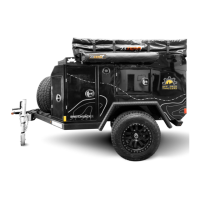

 To Next Page