THREE > FIT
18
THREE > FIT
>> NOTE: Correct fit and properly adjusted components are
essential for maximum performance, safety and comfort while
riding your OHM bicycle. Your dealer can assist in ensuring you
have the right sized frame. Making adjustments to your bicycle
to ensure the correct fit for your body and riding conditions
requires appropriate skills, special tools and experience.
Always have your dealer make the adjustments on your bicycle.
If you have the necessary skills, tools and experience and
prefer to make the adjustments yourself, have your dealer
check your work before riding.
Ensure you have an OHM bicycle that ‘fits’ you properly. This
means that the frame is the right size and the components/parts are
adjusted to your preference. A bike that is too big, too small and/or
not set up properly is harder to control and can make for
an uncomfortable ride.
WARNING: If your bicycle does not fit properly, you
may lose control and fall.
3.1 STANDOVER HEIGHT
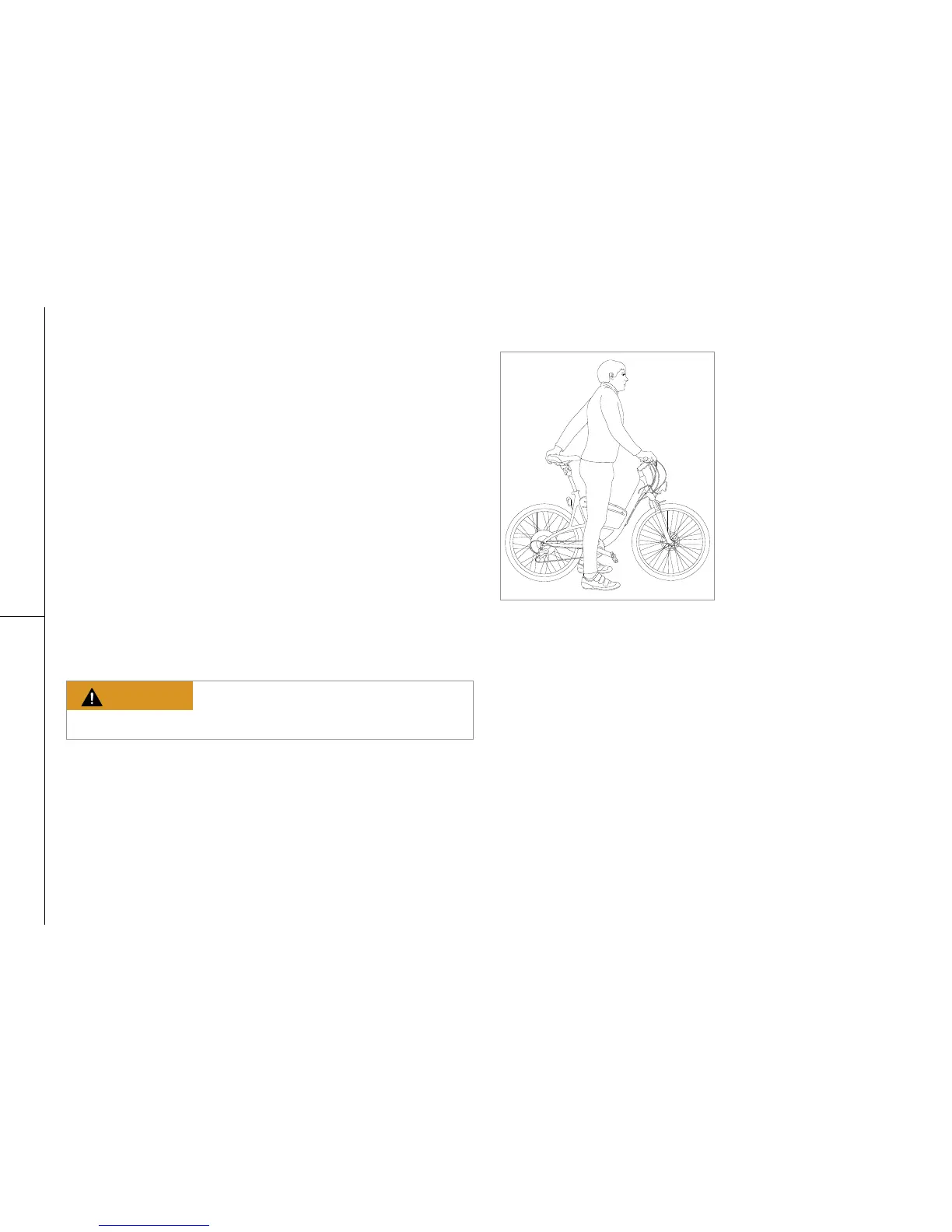
Standover height is the basic element of the bike fit (see Fig 3.1). For
most bikes, it is the distance from the ground to the top of the bicycle’s
frame at that point where your crotch would be if you were straddling
the bike and standing half way between the saddle and the handlebars.
However, your OHM frame
does not have a top tube.
Instead, you can follow the
same protocol as with other
bikes but use the top of the
battery container as your
guide. Therefore, to check
for correct standover height,
straddle the bike while wearing
the kind of shoes in which
you’ll be riding and bounce
vigorously on your heels. If
your crotch touches the top
of the battery container, the
frame is too big for you.
A bike which you ride on paved surfaces and never take off-road should
give you a minimum standover height clearance of 7 centimeters
(2.8 inches). A bike that you’ll ride on unpaved surfaces should give
you a minimum of 10 Centimeters (4 inches) of standover clearance.
If in doubt, have your dealer assist you in finding the ideal frame for
your size and riding style.
Fig 3.1



 To Next Page