6
Location, Mounting and Enclosure
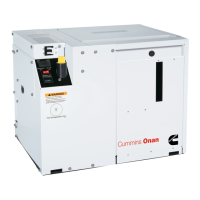
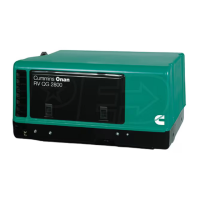
These gensets are designed for installation inside a
steel compartment that forms the cooling air plenum
of the genset (Figure 1). The cooling air inlet and hot
air discharge openings are both in the bottom of the
genset. The genset has mounting flanges and is
meant to be lifted up to the bottom of the vehicle
frame outriggers and bolted.
1. The location must be such that the tailpipe
clears the back of the coach body by at least
1 inch (25.4 mm) when installed (Figure 3).
2. Support the genset on a structure able to resist
the dynamic weight of the genset: cyclic forces
of at least 300± lbs (± 3 g-force) vertical and
100
±lbs (± 1 g-force) horizontal.
WARNING
The genset can fall from the
vehicle if the supporting structure is too
weak and cause severe personal injury or
death. Design the structure carefully, follow
applicable mounting kit instructions and
torque mounting bolts properly.
3. The genset compartment must be sized
according to the outline drawing (Page A-1).
Construction must be such that the compart-
ment forms a good seal against the foam seal
strips shown in Figure 2, to prevent warm air off
the engine from recirculating back into the
blower inlet. The air seal panel (Figure 1) pre-
vents air recirculation in front. It must be
removed (two screws) before the genset can
be installed or removed from the compartment.
4. The genset must be isolated from the vehicle
living space to prevent the entrance of engine
exhaust, gasoline vapors and noise. The gen-
set compartment must therefore be vapor-tight
and fire resistive. Do not duct genset cooling
air, which can include exhaust gases, into the
vehicle for heating.
WARNING
EXHAUST GAS AND FIRE ARE
DEADLY! — Install a vapor-tight and fire-re-
sistive barrier of approved materials
between the genset and the vehicle interior.
— Do not duct genset cooling air into the
vehicle for heating.
5. The cooling air inlet and hot air discharge open-
ings in the bottom of the genset must not be
obstructed by other components.
6. Acoustic insulation and adhesive should be
Classified as “Self-Extinguishing” at not less
than 200
°F (90°C). Acoustic insulation can
absorb spilled fuel and oil and therefore should
not be used underneath the genset. Insulation
thickness must be such that it does not interfere
with the governor mechanism (on top) or touch
hot exhaust components.
SEALING
STRIPS
SEALING
STRIPS
FIGURE 2. AIR SEALING STRIPS
Redistribution or publication of this document,
by any means, is strictly prohibited.


 To Next Page
 Loading...