
EasyManua.ls Logo

OSTBERG HERU 100 S EC - User Manual

OSTBERG HERU 100 S EC
40 pages
Print Icon
To Next Page IconTo Next Page
Loading...
HERU IQ S – HERU IQ T
OPERATION & MAINTENANCE
|
EN
UPDATE
YOUR HERU
To ensure optimal function and
performance of your Heru Air Handling
Unit, please download and install
the latest software version
ostberg.com/updates
UPDATE
YOUR HERU
To ensure optimal function and
performance of your Heru Air Handling
Unit, please download and install
the latest software version
ostberg.com/updates
Other languages in digital format can be downloaded at www.ostberg.com

Other manuals for OSTBERG HERU 100 S EC

Questions and Answers

Summary

Product Overview and Use

1.1 Product description

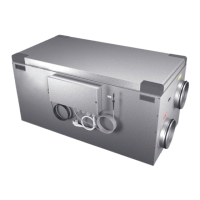
The energy recovery units HERU S and HERU T are designed for supply air and exhaust air ventilation with cooling and heat recovery.

1.2 Control functions

Details temperature regulation modes and fan capacity control methods for the HERU units.

1.2.1 Regulating the temperature

The air temperature can be regulated for constant supply, room, or exhaust air. Five modes are available.

1.2.2 Fan capacity

Describes minimum airflow, basic setting, maximum airflow, and control via program planner or sensors.

Safety

2.1 Warnings

Defines WARNING for personal injury risk and CAUTION for equipment damage risk.

2.2 General safety

Covers user restrictions, sharp edges, protective gloves, power disconnection, and qualified electricians.

2.3 Declaration of conformity

Confirms product compliance with EU directives and harmonised standards.

Warranty

3.1 Extent of the warranty

Covers manufacturing and material faults occurring during the warranty period.

3.2 General limitations in the warranty

Limits provider's liability and excludes injury/damage to people or property.

3.3 Limitations in the warranty

Applies to normal use; excludes transport, misuse, user errors, and unauthorized repairs.

3.4 Service conditions during the warranty period

Conditions apply according to the agreement with the local dealer.

3.5 Corrective measures in the event of detected faults

Steps for notifying faults to dealer, shipping damage, and requirements for warranty repair.

Operation

4.1 Installing the IQ Control App

Guide to downloading and setting up the IQ Control App for unit control.

4.2 Pairing units

Instructions for pairing the smartphone app with the HERU Bluetooth gateway using PIN 123456.

4.3 Entering the basic settings

Procedure for setting language, time, measurement system, and time zone.

4.4 IQ Control App

Overview of the IQ Control App interface, including home screen, status bar, and hotkeys.

4.4.1 Home screen

Shows status and hotkeys. Symbols for cloud connection, Bluetooth, air quality, modes, and alarms are displayed.

4.5 Temperature regulation

How to set desired temperature using the thermometer icon and adjust comfort/economy temperatures.

4.6 Boost - used for temporarily increased ventilation needs

Explains how to activate boost mode, change its operating time, and its purpose.

4.6.1 Boosting the unit

Press the Boost icon to activate boost mode. A green circle indicates active mode.

4.6.2 Change operating time for boost

Procedure to change boost operating time via Settings > Service > code 1199.

4.7 Overpressure - is used to facilitate the lighting of a fireplace

Details on activating overpressure mode and changing its operating time and offset value.

4.7.1 Activate overpressure

Press the Overpressure icon to activate. A green circle indicates active mode.

4.7.2 Change operating time and compensation for overpressure function

Procedure to change overpressure time and offset value via Settings > Service > code 1199.

4.8 Activate Away mode

How to activate and deactivate Away mode, which overrides program planner if active simultaneously.

4.9 Scheduling

Setting up weekday and holiday schedules for comfort or economy modes.

4.10 Activate night cooling

Temperature regulated boost using cold outdoor air for cooling when conditions are met.

4.11 Activate Heater

Guides on activating the internal electric heater and the aftercooling function.

4.12 Turn the unit off and on

Steps for starting and stopping the unit using the safety switch or IQ Control App.

4.13 Use the Alarm menu

How to view, reset, and manage active and historical alarms via the Alarms menu.

4.14 Change settings

Procedure to modify various unit settings through the Settings menu.

4.15 Update firmware in the ventilation unit

Methods for updating the unit's firmware using the IQ Control App or other devices.

Maintenance

5.1 Maintenance schedule

Schedule for regular inspections: supply/exhaust air check every six months, fan/filter cleaning annually.

5.2 Maintenance

Detailed procedures for six-month and annual maintenance tasks.

5.2.1 Maintenance every six months

Visually inspect the function of supply air and exhaust air systems.

5.2.2 Maintenance every year

Annual task involves cleaning fans and replacing filters.

5.3 Preparations

Lists necessary tools and disposable items required for maintenance procedures.

5.4 Open doors and lid

Steps to safely open the unit's covers and doors for HERU S and HERU T models.

5.5 Remove filters and fans

Procedure for removing filters and fans, including safety precautions.

5.6 Accessories and spare parts

Information on available accessories and spare parts and where to find them.

Technical Data

Technical data

For current technical data, please see www.ostberg.com.

Troubleshooting

7.1 Alarm

Explains alarm types (A, B) and provides a table of alarms, causes, and operations.

7.2 Other malfunctions

Lists common hardware failures, their causes, and recommended operations for resolution.

7.3 Troubleshooting chart

A flowchart to diagnose and resolve unit issues by following a decision tree.

IQ Control App - Setup Wizard

1.1 Step 1 - RH;CO2;VOC Boost

Configure sensor type and limit value for fan compensation based on air quality.

1.2 Step 2 - Heating and cooling

Set up after-heater, pre-heater, and cooling functions based on installed components.

1.3 Step 3 - Temp regulation

Define temperature regulation type (Supply, Exhaust, Room) and control parameters.

1.4 Step 4 - Temp set point & Supply temp low

Set maximum temperature limits, economy set points, and supply air low temperature thresholds.

1.5 Step 5 - Switches

Configure external inputs for contact functions and signal types for various operational modes.

1.6 Step 6 - Alarm class

Assign alarm classes (critical or non-critical) to specific alarms.

1.7 Step 7 - Filter measurement

Select filter control type: Period, Diff. switch, Diff. sensor, or Speed increase.

1.8 Step 8 - Dampers

Set opening time for dampers as a start-up delay for the extract air fan.

1.9 Step 9 - Flow and regulation

Configure flow direction (Standard/Opposite) for ventilation units.

1.10 Step 10 - Standard fan speed

Set standard fan speeds for supply and exhaust airflow.

1.11 Step 11 - Min fan speed

Set minimum fan speeds for supply and exhaust airflow.

1.12 Step 12 - Max fan speed

Set maximum fan speeds for supply and exhaust airflow.

1.13 Step 13 - Save settings

Option to save or discard settings made during the setup wizard.

Summary

Product Overview and Use

1.1 Product description

The energy recovery units HERU S and HERU T are designed for supply air and exhaust air ventilation with cooling and heat recovery.

1.2 Control functions

Details temperature regulation modes and fan capacity control methods for the HERU units.

1.2.1 Regulating the temperature

The air temperature can be regulated for constant supply, room, or exhaust air. Five modes are available.

1.2.2 Fan capacity

Describes minimum airflow, basic setting, maximum airflow, and control via program planner or sensors.

Safety

2.1 Warnings

Defines WARNING for personal injury risk and CAUTION for equipment damage risk.

2.2 General safety

Covers user restrictions, sharp edges, protective gloves, power disconnection, and qualified electricians.

2.3 Declaration of conformity

Confirms product compliance with EU directives and harmonised standards.

Warranty

3.1 Extent of the warranty

Covers manufacturing and material faults occurring during the warranty period.

3.2 General limitations in the warranty

Limits provider's liability and excludes injury/damage to people or property.

3.3 Limitations in the warranty

Applies to normal use; excludes transport, misuse, user errors, and unauthorized repairs.

3.4 Service conditions during the warranty period

Conditions apply according to the agreement with the local dealer.

3.5 Corrective measures in the event of detected faults

Steps for notifying faults to dealer, shipping damage, and requirements for warranty repair.

Operation

4.1 Installing the IQ Control App

Guide to downloading and setting up the IQ Control App for unit control.

4.2 Pairing units

Instructions for pairing the smartphone app with the HERU Bluetooth gateway using PIN 123456.

4.3 Entering the basic settings

Procedure for setting language, time, measurement system, and time zone.

4.4 IQ Control App

Overview of the IQ Control App interface, including home screen, status bar, and hotkeys.

4.4.1 Home screen

Shows status and hotkeys. Symbols for cloud connection, Bluetooth, air quality, modes, and alarms are displayed.

4.5 Temperature regulation

How to set desired temperature using the thermometer icon and adjust comfort/economy temperatures.

4.6 Boost - used for temporarily increased ventilation needs

Explains how to activate boost mode, change its operating time, and its purpose.

4.6.1 Boosting the unit

Press the Boost icon to activate boost mode. A green circle indicates active mode.

4.6.2 Change operating time for boost

Procedure to change boost operating time via Settings > Service > code 1199.

4.7 Overpressure - is used to facilitate the lighting of a fireplace

Details on activating overpressure mode and changing its operating time and offset value.

4.7.1 Activate overpressure

Press the Overpressure icon to activate. A green circle indicates active mode.

4.7.2 Change operating time and compensation for overpressure function

Procedure to change overpressure time and offset value via Settings > Service > code 1199.

4.8 Activate Away mode

How to activate and deactivate Away mode, which overrides program planner if active simultaneously.

4.9 Scheduling

Setting up weekday and holiday schedules for comfort or economy modes.

4.10 Activate night cooling

Temperature regulated boost using cold outdoor air for cooling when conditions are met.

4.11 Activate Heater

Guides on activating the internal electric heater and the aftercooling function.

4.12 Turn the unit off and on

Steps for starting and stopping the unit using the safety switch or IQ Control App.

4.13 Use the Alarm menu

How to view, reset, and manage active and historical alarms via the Alarms menu.

4.14 Change settings

Procedure to modify various unit settings through the Settings menu.

4.15 Update firmware in the ventilation unit

Methods for updating the unit's firmware using the IQ Control App or other devices.

Maintenance

5.1 Maintenance schedule

Schedule for regular inspections: supply/exhaust air check every six months, fan/filter cleaning annually.

5.2 Maintenance

Detailed procedures for six-month and annual maintenance tasks.

5.2.1 Maintenance every six months

Visually inspect the function of supply air and exhaust air systems.

5.2.2 Maintenance every year

Annual task involves cleaning fans and replacing filters.

5.3 Preparations

Lists necessary tools and disposable items required for maintenance procedures.

5.4 Open doors and lid

Steps to safely open the unit's covers and doors for HERU S and HERU T models.

5.5 Remove filters and fans

Procedure for removing filters and fans, including safety precautions.

5.6 Accessories and spare parts

Information on available accessories and spare parts and where to find them.

Technical Data

Technical data

For current technical data, please see www.ostberg.com.

Troubleshooting

7.1 Alarm

Explains alarm types (A, B) and provides a table of alarms, causes, and operations.

7.2 Other malfunctions

Lists common hardware failures, their causes, and recommended operations for resolution.

7.3 Troubleshooting chart

A flowchart to diagnose and resolve unit issues by following a decision tree.

IQ Control App - Setup Wizard

1.1 Step 1 - RH;CO2;VOC Boost

Configure sensor type and limit value for fan compensation based on air quality.

1.2 Step 2 - Heating and cooling

Set up after-heater, pre-heater, and cooling functions based on installed components.

1.3 Step 3 - Temp regulation

Define temperature regulation type (Supply, Exhaust, Room) and control parameters.

1.4 Step 4 - Temp set point & Supply temp low

Set maximum temperature limits, economy set points, and supply air low temperature thresholds.

1.5 Step 5 - Switches

Configure external inputs for contact functions and signal types for various operational modes.

1.6 Step 6 - Alarm class

Assign alarm classes (critical or non-critical) to specific alarms.

1.7 Step 7 - Filter measurement

Select filter control type: Period, Diff. switch, Diff. sensor, or Speed increase.

1.8 Step 8 - Dampers

Set opening time for dampers as a start-up delay for the extract air fan.

1.9 Step 9 - Flow and regulation

Configure flow direction (Standard/Opposite) for ventilation units.

1.10 Step 10 - Standard fan speed

Set standard fan speeds for supply and exhaust airflow.

1.11 Step 11 - Min fan speed

Set minimum fan speeds for supply and exhaust airflow.

1.12 Step 12 - Max fan speed

Set maximum fan speeds for supply and exhaust airflow.

1.13 Step 13 - Save settings

Option to save or discard settings made during the setup wizard.

OSTBERG HERU 100 S EC Specifications

General IconGeneral
Airflow Capacity100 m³/h
Voltage230 V
Frequency50 Hz
Weight12 kg
MotorEC Motor
Max. ambient temperature40°C
Duct connection diameter125 mm
Power Consumption15 W

Related product manuals