12
Traveling with your OxyGo NEXT System
The FAA allows the OxyGo NEXT onboard all U.S. aircraft, here are a few points to make air travel
easy.
• Ensure your OxyGo NEXT is clean, in good condition and free from damage or other signs
of excessive wear or abuse.
• Bring enough charged batteries with you to power your OxyGo NEXT for no less than
150% of the expected duration of your ight, ground time before and after the ight,
security screenings, connections and a conservative estimate for unanticipated delays.
• FAA regulations require that all extra batteries to be individually wrapped and protected to
prevent short circuits and carried in carry-on baggage onboard aircraft only.
• Some airlines may equip their aircraft with onboard electrical power. However, availability
varies by airline, type of aircraft and class of service. You must check with your airlines
for availability and any specic requirements for battery life duration 48 hours before
traveling. In this case, the following procedure regarding transition from battery power to
aircraft electrical power must be followed:
º Remove the battery from the OxyGo NEXT.
º Connect the DC power plug to the OxyGo NEXT and plug into available airline power.
NOTE: The AC Power Supply cannot be used to charge the OxyGo NEXT battery when
onboard aircraft. Traveling by bus, train or boat, contact your carrier to nd out about power
port ability.
5. Audible and Visible Signals
Display
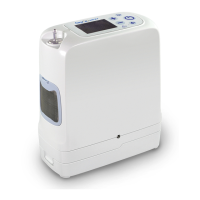
The OxyGo NEXT display contains power status icons, mode icons, informational icons and
notication icons.
Power Status Icons
These icons are examples of those shown in the display’s window when the OxyGo NEXT
is operating on battery power.
Battery is Empty
Battery has less than 10% charge
remaining. The icon ashes.
Battery has approximately 40% to 50% charge remaining.
Battery is full.


 To Next Page