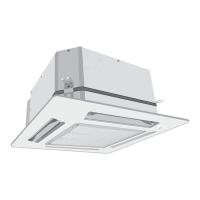
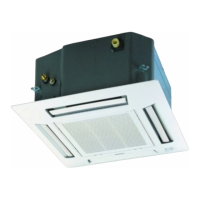
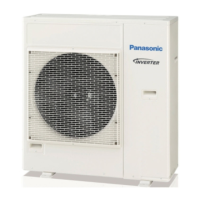
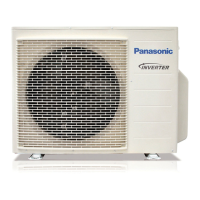
CU-5~10MX1SPP
Urban Multi air conditioner
4PW12337-1
Operation manual
5
OPTIMUM OPERATION
Observe the following precautions to ensure the system operates
properly.
■ Adjust the air outlet properly and avoid direct air flow to room
inhabitants.
■ Adjust the room temperature properly for a comfortable environ-
ment. Avoid excessive heating or cooling.
■ Prevent direct sunlight from entering a room during cooling
operation by using curtains or blinds.
■ Keep doors and windows closed. If the doors and windows
remain open, air will flow out of your room causing a decrease in
the cooling or heating effect.
■ Never place objects near the air inlet or the air outlet of the unit.
It may cause deterioration in the effect or stop the operation.
■ Turn off the main power supply switch to the unit when the unit is
not used for longer periods of time. If the switch is on, it uses
electricity. Before restarting the unit, turn on the main power
supply switch 6 hours before operation to ensure smooth
running. (Refer to "Maintenance" in the indoor unit manual.)
■ When the display shows (time to clean the air filter), ask a
qualified service person to clean the filters. (Refer to
"Maintenance" in the indoor unit manual.)
FOLLOWING SYMPTOMS ARE NOT AIR
CONDITIONER TROUBLES
Symptom 1: The system does not operate
■ The air conditioner does not start immediately after the ON/OFF
button on the remote controller is pushed.
If the operation lamp lights, the system is in normal condition.
To prevent overloading of the compressor motor, the air
conditioner starts 5 minutes after it is turned ON again in case it
was turned OFF just before. The same starting delay occurs
after the operation mode selector button was used.
■ The system does not start immediately after the power supply is
turned on.
Wait one minute until the micro computer is prepared for
operation.
Symptom 2: Cool/Heat cannot be changed over
■ When the display shows (changeover under control), it
shows that this is a slave remote controller.
■ When the cool/heat changeover remote control switch is
installed and the display shows (changeover under
control).
This is because cool/heat changeover is controlled by the cool/
heat changeover remote control switch. Ask your Panasonic
dealer where the remote control switch is installed.
Symptom 3: White mist comes out of a unit
Symptom 3.1: Indoor unit
■ When humidity is high during cooling operation
If the interior of an indoor unit is extremely contaminated, the
temperature distribution inside a room becomes uneven. It is
necessary to clean the interior of the indoor unit. Ask your
Panasonic dealer for details on cleaning the unit. This operation
requires a qualified service person.
■ Immediately after the cooling operation stops and if the room
temperature and humidity are low
This is because warm refrigerant gas flows back into the indoor
unit and generates steam.
Symptom 3.2: Indoor unit, outdoor unit
■ When the system is changed over to heating operation after
defrost operation
Moisture generated by defrost becomes steam and is
exhausted.
Symptom 4: Noise of air conditioners
Symptom 4.1: Indoor unit
■ A "zeen" sound is heard immediately after the power supply is
turned on.
The electronic expansion valve inside an indoor unit starts
working and makes the noise. Its volume will reduce in about
one minute.
■ A continuous low "shah" sound is heard when the system is in
cooling operation or at a stop
When the drain pump (optional accessories) is in operation, this
noise is heard.
■ A "pishi-pishi" squeaking sound is heard when the system stops
after heating operation.
Expansion and contraction of plastic parts caused by
temperature change make this noise.
■ A low "sah", "choro-choro" sound is heard while the indoor unit
is stopped.
When the other indoor unit is in operation, this noise is heard. In
order to prevent oil and refrigerant from remaining in the system,
a small amount of refrigerant is kept flowing.
Symptom 4.2: Indoor unit, outdoor unit
■ A continuous low hissing sound is heard when the system is in
cooling or defrost operation.
This is the sound of refrigerant gas flowing through both indoor
and outdoor units.
■ A hissing sound which is heard at the start or immediately after
stopping operation or defrost operation
This is the noise of refrigerant caused by flow stop or flow
change.
Symptom 4.3: Outdoor unit
■ When the tone of operating noise changes
This noise is caused by the change of frequency.
Symptom 5: The units can give off odours
■ The unit can absorb the smell of rooms, furniture, cigarettes,
etc., and then emit it again.
Symptom 6: The display shows .
■ This is the case immediately after the main power supply switch
is turned on and means that the remote controller is in normal
condition. This continues for one minute.
Symptom 7: The compressor in the outdoor unit does not stop after a
short heating operation
■ This is to prevent oil and refrigerant from remaining in the
compressor. The unit will stop after 5 to 10 minutes.
Symptom 8: The inside of an outdoor unit is warm even when the unit has
stopped
■ This is because the crankcase heater is warming the
compressor so that the compressor can start smoothly.
1B_OM_4PW12337-1 Page 5 Monday, September 16, 2002 9:25 AM



 To Next Page
 Loading...