3.1 Composition of High-level Instructions
3-3
3.1 Composition of High-level Instructions
3.1.1 Composition
Each high-level instruction is composed of a high-level instruction number, boolean and
operands.
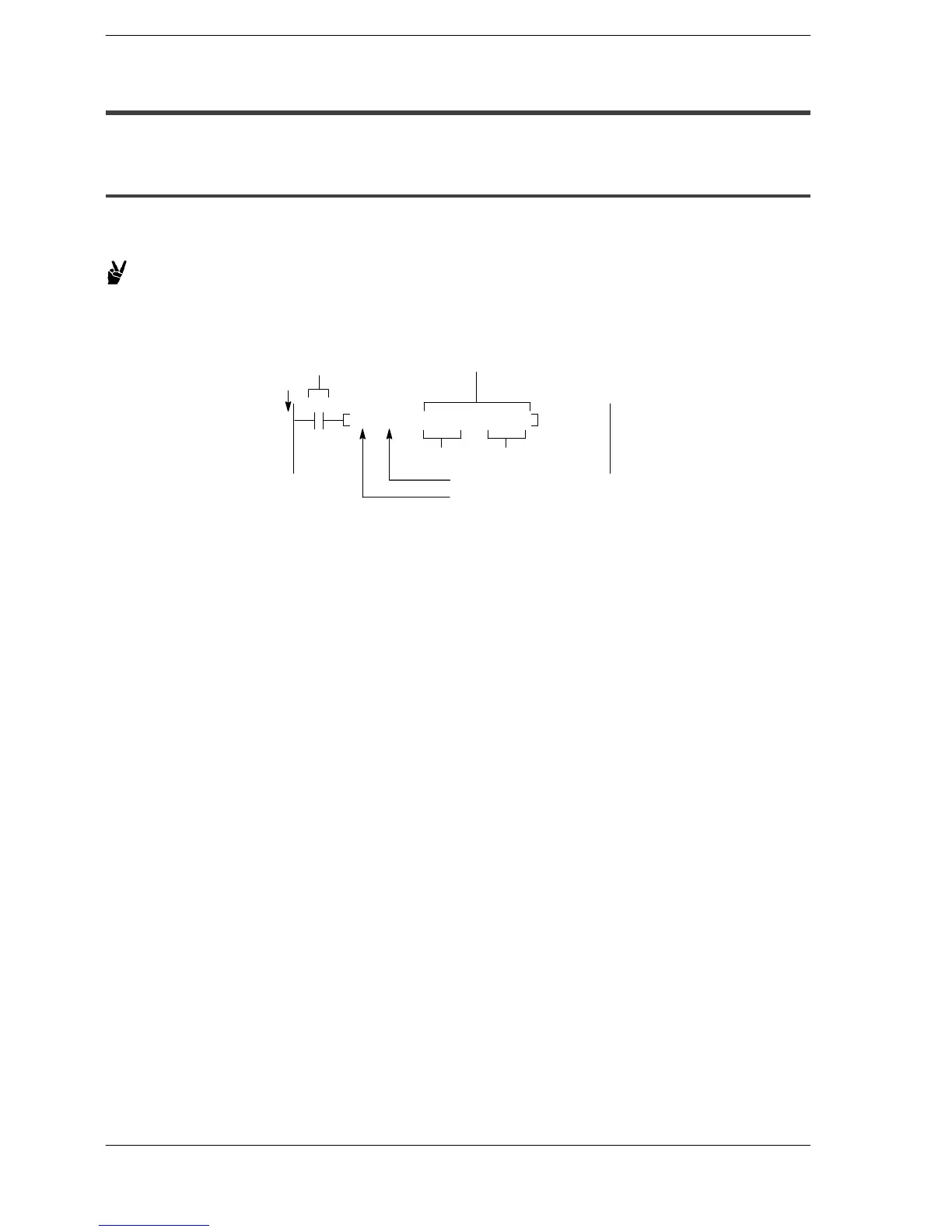
Example: F0 (MV) instruction
The K0 (S) is copied to DT0 (D)
0
Address
F0 MV , K0 , DT 0
X0
Execution condition
(Trigger)
D
Operand
Boolean
High−level instruction number
S
High−level instruction number
High−level instruction numbers are used for inputting the high-level instructions.
Boolean
Boolean indicate the processing content of each instruction.
Operand
Operands are used to specify the processing method and the storage area for processed
data, etc. Operands are classified into three types: S (source), D (destination) and n
(number).
The number of operands differ depending on the instruction.
Operand types
(Source): Data which is to be processed or data which sets the processing method.
(Destination): Location where result of processing is stored.
(number): Numeric data which is to be processed or which sets the processing method.
S
D
n
Operands are specified using constants or memory areas (registers) as explained in
section 1.3 and 1.4.
Refer to the explanations of the instructions as only certain memory areas (registers) and
constants can be used with each instruction.









 To Next Page