Need help?
Do you have a question about the Paradox TM50 and is the answer not in the manual?
Details the Arm/Disarm button on the main screen for system control.
Indicates the status of various security zones on the main screen.
Provides access to the panic function for emergency alerts.
Allows navigation to the system's main menu for further options.
Accesses security-related functions and settings within the menu.
Allows for managing user codes for system access.
Enables configuration of connected control devices.
Manages or configures add-on modules for expanded functionality.
Leads to the system settings screen for adjustments.
Provides options for personalizing system appearance or behavior.
Accesses advanced settings or features of the system.
Configure the system's current time and date.
Adjust display parameters such as brightness or contrast.
Activate a function to clean the touchscreen interface.
Manage audio output levels and mute functionality.
Control user access permissions and levels.
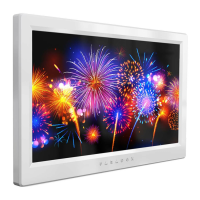
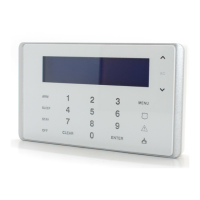
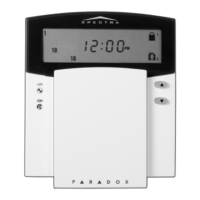
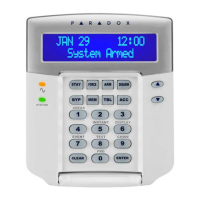
The Paradox TM50 & TM70 are advanced user interfaces designed for managing security systems, offering a blend of intuitive control and comprehensive features. These devices serve as the central point for interacting with a Paradox security system, providing users with the ability to arm and disarm their system, monitor zones, and access various system settings. The user manual highlights the main screen, arming/disarming procedures, menu navigation, user programming, and system settings, all presented through a clear, graphical interface.
At its core, the Paradox TM50 & TM70 function as a touchscreen keypad for a security system. It allows users to control the armed status of their premises, view real-time information, and configure system parameters. The main screen provides an immediate overview of the system's status, including whether it is armed or disarmed, the current date and time, and the outside/inside temperature. This quick-glance information ensures users are always aware of their system's state and environmental conditions.
The primary function of arming and disarming the system is made straightforward. Users can initiate this process directly from the main screen by pressing the "Arm/Disarm" button. The device then guides the user through selecting an arming method and entering a personal code, typically a 4 to 6-digit number, to authorize the action. This multi-step process enhances security by requiring explicit user input and authentication.
Beyond basic arming and disarming, the device offers detailed zone monitoring. The "Zones" button on the main screen provides access to information about individual security zones, allowing users to check their status. This is crucial for identifying open windows, doors, or other triggered sensors, ensuring the system is ready for arming or to pinpoint the location of an alarm.
The "Menu" button serves as the gateway to a broader range of system functionalities, categorized for easy navigation. These categories include "Security Functions," "User Codes," "Control Devices," "Add-on," "System Settings," "Personalize," and "Advanced." Each category groups related features, making it simple for users to locate and adjust specific settings. For instance, "Security Functions" might include options related to alarm responses or system partitions, while "Control Devices" would manage connected modules or accessories.
The "Info" button on the main screen provides additional details, potentially including system events, alerts, or status messages. This feature, along with "OneScreen Monitoring" and "Slide Show" options, suggests a rich visual experience, possibly displaying security camera feeds or system status updates in an engaging manner. The "SpotOn Locator" feature further hints at advanced monitoring capabilities, perhaps for locating specific events or devices within the system.
The Paradox TM50 & TM70 are designed for ease of use, employing a touchscreen interface that minimizes the learning curve for new users. The graphical icons and clear text labels on the screen make navigation intuitive.
The process begins by pressing the "Arm/Disarm" button on the main screen. Users then select their desired arming method, which could include options like "Stay," "Away," or "Night" arming, each with specific zone bypass settings. The final step involves entering a valid 4 to 6-digit code for authorization. The on-screen keypad is large and responsive, reducing the chance of input errors.
Accessing the menu is as simple as pressing the "Menu" button. The menu options are presented as distinct buttons, each with an icon and label, making it easy to identify their purpose. For example, "System Settings" is clearly labeled and accompanied by a gear icon. The "Back" button is consistently available to return to the previous screen, ensuring users can navigate without getting lost.
To manage user accounts and permissions, users navigate to "Menu," then "User Codes," and finally enter the "Master Code." This hierarchical access control ensures that only authorized personnel can modify critical user settings.
Adding a new user involves a step-by-step process:
The "System Settings" screen, accessed via the main menu, consolidates various configuration options. These include:
The clear presentation of these settings, with distinct icons and labels, simplifies the process of customizing the system to individual preferences.
While the manual primarily focuses on operational aspects, several features contribute to the ongoing maintenance and usability of the device:
Clean Screen Function: This dedicated feature under "System Settings" is a direct maintenance utility. By temporarily disabling touch input, it allows users to safely clean the touchscreen surface without inadvertently activating functions or entering incorrect commands. This helps in preserving the screen's clarity and responsiveness over time.
Time & Date Adjustment: Maintaining accurate time and date settings is crucial for event logging and scheduling. The ability to easily adjust these parameters ensures that all system records are precise, which can be vital for reviewing security events or for systems that rely on time-based automation.
Volume/Mute Control: The option to adjust the keypad's volume or mute it entirely can be considered a maintenance feature for user comfort and system discretion. It allows users to control auditory feedback, preventing disturbances or ensuring the system operates silently when desired.
User Code Management: The ability to easily add, edit, and delete user codes is a key security maintenance feature. It ensures that only authorized individuals have access to the system and that access can be revoked promptly when necessary, such as when an employee leaves or a code is compromised. This proactive management of user credentials is fundamental to maintaining system integrity.
Permissions Management: Closely related to user code management, the "Permissions" setting allows administrators to define what each user can and cannot do within the system. This granular control helps in maintaining security by limiting access to sensitive functions to only those who require it, thereby reducing the risk of unauthorized changes or actions.
The overall design, with its intuitive interface and clearly labeled functions, contributes to the ease of maintaining the system. Users can quickly identify and address issues, update settings, or manage access without requiring specialized technical knowledge, thus empowering them to keep their security system running optimally. The visual feedback and logical flow of operations reduce the likelihood of user errors, which in turn minimizes the need for troubleshooting and support.
 General
| Resolution | 480 x 272 pixels |
|---|---|
| Power Supply | 12Vdc |
| Languages | Multiple |
| Internal Siren | No |
| SD Media Reader | No |
| Type | Touchscreen keypad |
| Backlight | Yes |
| Operating Voltage | 12 Vdc |
| Operating Temperature | 0°C to 50°C (32°F to 122°F) |
| Display Type | Color |
| Compatibility | EVO, Spectra |
| Memory Keys | No |
| Dimensions (alternative) | 14.4 x 9.6 x 2.1 cm |


 To Next Page