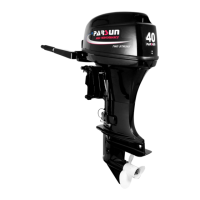
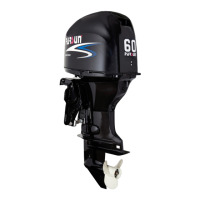
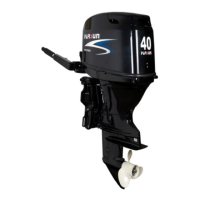
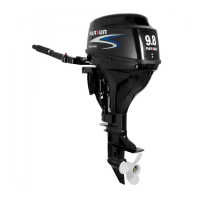
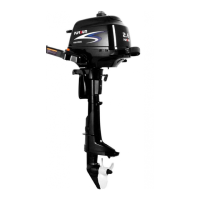
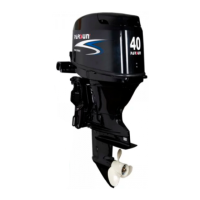
This document is an owner's manual for PARSUN outboard motors, specifically models T90BM/BE/FE, T85BM/BE/FE, T75BM/BE/FE, and T60BM/BE/FE. It provides comprehensive information on the function, technical specifications, usage, and maintenance of these devices.
The manual begins by thanking the owner for choosing a PARSUN outboard motor, emphasizing that these motors are powerful, economic, and safe with advanced technology and processing techniques. It advises owners to read the manual thoroughly for proper operation, maintenance, and care under various conditions. PARSUN is committed to continuous improvement in product quality, and while the manual contains the most current product information at the time of printing, minor discrepancies between the machine and the manual may exist. Owners are encouraged to consult their local PARSUN dealer for any questions. The manual also states that data, illustrations, or explanations within the Owner's Manual do not constitute a basis for any legal claim against the company.
Engine Identification Numbers
The outboard motor serial number is located on a label found on the bracket's left assembly or the upper part of the bracket swivel. Owners are advised to record their outboard motor serial number in the spaces provided to assist in ordering spare parts or for reference if the outboard motor is stolen. The engine serial number is carved on the aluminum casting of the engine.
Main Components and General Information
The manual details the main components of the outboard motor, including the throttle grip, tiller handle, cooling water inlet, top cowling lock handle, anti-cavitation plate, propeller, top cowling, manual starter handle (BM models), choke knob, engine stop button/lanyard switch, main switch/choke switch (FE models), clamp bracket, clamp screw, fuel joint, fuel tank, and remote control.
Portable Fuel Tank
If the model includes a portable fuel tank, its parts are identified as the fuel tank cap, fuel joint, air vent screw, and fuel gauge. A warning states that the supplied fuel tank is only for fuel supply during operation and should not be used as a storage container.
Remote Control
The remote control lever actuates both the shifter and the throttle, with electrical switches mounted on the remote control box. The remote control lever allows moving the lever forward from neutral for forward gear, pulling back for reverse, and operating at idle. A detent is felt at about 35° for acceleration. The neutral interlock trigger is pulled to shift out of neutral. The neutral throttle lever is used to open the throttle without shifting into either forward or reverse. A note emphasizes that the neutral throttle lever operates only when the remote control lever is in neutral.
Specifications
The manual provides detailed specifications for the outboard motors:
- Type of engine: 2-stroke L
- Displacement: 1141 cm³
- Bore X stroke: 82.0 mm × 72.0 mm
- Gear ratio: 2.00 (26/13)
- Overall length (BM/EX): 1337 mm/726 mm
- Overall width (BM/FW): 398 mm/374 mm
- Overall height L (BM/BE/FE): 1623 mm/1548 mm/1548 mm
- Overall height X (BM/BE/FE): 1497 mm/1422 mm/1422 mm
- Weight L (BM/BE/FE): 118 kg/122 kg/122 kg
- Weight X (BM/BE/FE): 115 kg/119 kg/119 kg
- Transom L: 508 mm
- Transom X: 635 mm
- Recommended fuel: Unleaded regular gasoline
- Recommended engine oil: 2-stroke engine oil
- Recommended gear oil: Hypoid gear oil SAE#90
- Gear oil quantity: 610 cm³
- Spark plug: BR8HS-10
- Spark plug gap: 0.9–1.0 mm
- Maximum output:
- (90HP) 66.2 kW/5000 rpm
- (85HP) 62.5 kW/5000 rpm
- (75HP) 55.2 kW/5000 rpm
- (60HP) 44.1 kW/5000 rpm
- Idling speed (in neutral): 800±50 rpm
- Tightening torque for engine: Spark plug 25.0 Nm, Propeller nut 35.0 Nm
- Full throttle operating range: 4500–5500 rpm
Fueling Instructions
Recommended gasoline is regular unleaded. If not available, premium unleaded gasoline can be used. If knocking or pinging occurs, a different brand of gasoline or premium unleaded fuel should be used. Engine valves and related parts should be inspected after every 100 hours of operation if leaded gasoline is used.
Warnings and Cautions for Fueling:
- Do not smoke when refueling, and keep away from sparks, flames, or other sources of ignition.
- Stop the engine before refueling.
- Refuel in a well-ventilated area.
- Refuel portable fuel tanks off the boat.
- Do not overfill the fuel tank.
- Take care not to spill gasoline; if gasoline spills, wipe it up immediately.
- Tighten the filler cap securely after refueling.
- If gasoline is swallowed, inhale a lot of gasoline vapor, or get gasoline in your eye, seek immediate medical attention.
- If any gasoline spills onto skin, immediately wash with soap and water. Change clothing if gasoline spills on it.
- Touch the fuel nozzle to metal components to prevent electrostatic sparks.
- Use only new clean gasoline stored in clean containers, not contaminated with water or foreign matter.
Engine Oil and Gasoline Mixing:
- Engine oil: Recommended 2-stroke outboard motor oil.
- Gasoline and oil mixing:
- Break-in period (25:1 ratio):
- Gasoline: 1L, 12L, 14L, 24L
- Engine oil: 0.04L, 0.48L, 0.56L, 0.96L
- After break-in (50:1 ratio):
- Gasoline: 1L, 12L, 14L, 24L
- Engine oil: 0.02L, 0.24L, 0.28L, 0.48L
- Caution: Be sure to mix gasoline and oil completely; otherwise, the engine may be damaged.
Propeller Selection
The performance of the outboard motor is critically affected by propeller choice. An incorrect choice can adversely affect performance. PARSUN dealers stock a range of propellers and can advise on installation. For a greater boat load and a low engine speed, a smaller-pitch propeller is more suitable. Conversely, a large-pitch propeller is more suitable for a smaller operating load as it enables the correct engine speed to be maintained.
Operation and Installation
The outboard motor should be mounted on the center line (keel line) of the boat. For boats without a keel or which are asymmetrical, consult your dealer. The manual includes a diagram illustrating the center line (keel line) for mounting.
Notes for Installation:
- During water testing, check the buoyancy of the boat at its maximum load.
- Ensure the static water level on the exhaust housing is low enough to prevent water entry into the power head when water rises due to waves.
- Warning: Overpowering a boat can cause severe instability. Do not install an outboard motor with more horsepower than the maximum rating on the capacity plate of the boat. If the boat does not have a capacity plate, consult the boat manufacturer. Improper mounting of the outboard motor could result in hazardous conditions.
- For permanently mounted models, your dealer or other person experienced in proper rigging should mount the motor. If mounting the motor yourself, you should be trained by an experienced person.
- For portable models, your dealer or other person experienced in proper outboard motor mounting should show you how to mount your motor.
- The information presented in this section is intended as reference only. Proper mounting depends on experience and the specific boat and motor combination.
Mounting Height
The mounting height of the outboard motor greatly affects boat running efficiency. If the mounting height is too high, cavitation tends to occur, thus reducing propulsion. If the mounting height is too low, the water resistance will increase and thereby reduce engine efficiency. Mount the outboard motor so that the anti-cavitation plate is between the bottom of the boat and a level 25mm below it.
Note on Optimum Mounting Height:
The optimum mounting height of the outboard motor is affected by the boat and motor combination and the desired use. Test runs at different heights can help determine the optimum mounting height. For further information, consult your PARSUN dealer or boat manufacturer.
Clamping the Outboard Motor
- Tighten the transom clamp screw evenly and securely. Occasionally check the clamp screws for tightness during operation of the outboard motor because they could become loose due to engine vibration.
- Caution: Outboards that use clamp bracket screws alone are INSUFFICIENT to properly and safely secure the outboard to the Transom. Proper installation of the outboard includes bolting the engine to the boat through the transom.
- Warning: Loose clamp screws could allow the outboard motor to fall off or move on the transom. This could cause loss of control.
- Make sure the clamp screws are tightened securely. Occasionally check the screws for tightness during operation.
- If the engine restraint cable attachment is equipped on your engine, an engine restraint cable or chain should be used. Attach to a secure mounting point on the boat to avoid the engine being completely lost if it accidentally falls off the transom.
- Secure the clamp bracket to the transom using the appropriate bolts. For details, consult your PARSUN dealer.
- Warning: Avoid using bolts, nuts, or washers inappropriately. After tightening, test running the engine and check their tightness.
Breaking in Engine
Your new engine requires a period of break-in to allow mating surfaces of moving parts to wear in evenly.
Gasoline and oil mixing: (Refer to previous section for ratios)
Caution: Failure to follow the break-in procedure could result in reduced engine life or even severe engine damage.
- First 10 minutes: Run the engine at idle.
- Next 50 minutes: Run the engine at 3000 r/min or at approximately half throttle.
- Next 2 hours of operation: Run the engine at 4000 r/min or at approximately three-quarter throttle.
- Next 7 hours of operation: Avoid continuous operation at full throttle for more than five minutes at a time.
- Operate the engine normally.
Pre-operation Checks
Fuel:
- Check to be sure you have plenty of fuel for your trip.
- Make sure there are no fuel leaks or gasoline fumes.
- Check fuel line connections to be sure they are tight.
- Be sure the fuel tank is positioned on a secure, flat surface, and that the fuel line is not twisted or flattened, or likely to contact sharp objects.
Controls:
- Check throttle, shift, and steering for proper operation before starting the engine.
- The controls should work smoothly, without binding or unusual free play.
- Look for loose or damaged connections.
- Check operation of the starter and stop switches when the outboard motor is in the water.
Engine:
- Check the engine and engine mounting.
- Look for loose or damaged fasteners.
- Check the propeller for damage.
- Warning: If any item in the pre-operation check is not working properly, have it inspected and repaired before operating the outboard motor. Otherwise, an accident could occur.
- Caution: Do not start the engine out of water. Overheating and serious engine damage can occur.
Filling Fuel
- Warning: Gasoline and its vapors are highly flammable and explosive. Keep away from sparks, cigarettes, flames, or other sources of ignition.
- Remove the fuel tank cap.
- Carefully fill the fuel tank.
- Securely close the cap after filling the tank. Wipe up any spilled fuel.
Starting Engine
For BM models:
- Loosen the air vent screw on the fuel tank cap (2 or 3 turns).
- Connect fuel joints securely and squeeze the primer pump with the outlet end up until you feel it become firm (if equipped with the fuel joint).
- Place the gear shift lever in neutral.
- Place the throttle grip in the "START" (start) position.
- Pull out the choke knob fully.
- Pull the manual starter handle slowly until you feel resistance. Then give a strong pull straight out to crank and start the engine. Repeat if necessary.
- After the engine starts, slowly return the manual starter handle to its original position before releasing it.
- Slowly return the throttle grip to the fully closed position.
Caution:
- When the engine is cold, it needs to be warmed up.
- If the engine does not start on the first try, repeat the procedure.
- If the engine fails to start after 4 or 5 tries, open the throttle a small amount (between 1/8 and 1/4), and try again.
For BW models:
- Connect fuel joints securely after loosening the air vent screw on the fuel tank cap (2 or 3 turns).
- Connect fuel joints securely and squeeze the primer pump with the outlet end up until you feel it become firm (if equipped with the fuel joint).
- Place the remote control lever in neutral.
- Place the throttle grip in the "START" (start) position. Turn the main switch to "ON" (on).
- Turn the main switch to "START" (start) and hold it for a maximum of 5 seconds.
- After the engine starts, slowly return the manual starter handle to its original position before releasing it. Immediately after the engine starts, release the main switch and allow it to return to "ON" (on).
- Slowly return the throttle grip to the fully closed position.
Note:
- Never turn the main switch to "START" (start) while the engine is running.
- Do not keep the starter motor turning for more than 5 seconds. If the starter motor is turned continuously for more than 5 seconds, the battery will be quickly discharged, thus making it impossible to start the engine. The starter can also be damaged. If the engine will not start after 5 seconds of cranking, return the main switch to "ON" (on), wait 10 seconds, then crank the engine again.
- When the engine is cold, it needs to be warmed up.
- If the engine does not start on the first try, repeat the procedure.
- If the engine fails to start after 4 or 5 tries, open the throttle a small amount (between 1/8 and 1/4), and try again.
For T36J/40JFW models:
- Loosen the air vent screw on the fuel tank cap (2 or 3 turns).
- Connect fuel joints securely and squeeze the primer pump with the outlet end up until you feel it become firm (if equipped with the fuel joint).
- Place the gear shift lever in neutral.
- Turn the main switch to "ON" (on).
- Open the throttle slightly without shifting using the neutral throttle lever or free accelerator. You may need to change the throttle opening slightly depending on engine temperature. After the engine starts, return the throttle to the original position.
- Turn the main switch to "START" (start) and hold it for a maximum of 5 seconds.
- After the engine starts, slowly return the manual starter handle to its original position before releasing it. Immediately after the engine starts, release the main switch and allow it to return to "ON" (on).
- Slowly return the throttle grip to the fully closed position.
Note:
- Never turn the main switch to "START" (start) while the engine is running.
- Do not keep the starter motor turning for more than 5 seconds. If the starter motor is turned continuously for more than 5 seconds, the battery will be quickly discharged, thus making it impossible to start the engine. The starter can also be damaged. If the engine will not start after 5 seconds of cranking, return the main switch to "ON" (on), wait 10 seconds, then crank the engine again.
- On remote controls equipped with a neutral throttle lever, a good starting point is to lift the lever just until you feel resistance, then lift slightly more.
- The neutral throttle lever or free accelerator can only be used when the remote control lever is in neutral.
- It is not necessary to use the choke when starting a warm engine.
- If the choke is left in the home position while the engine is running, the engine will run poorly or stall.
- When the engine is cold, it needs to be warmed up.
Warming up Engine
- After starting the engine, allow it to idle for 3 minutes to warm up. Failure to do so will shorten engine life. Gradually return the choke knob to its home position as the engine warms up.
- Check for steady flow of water from the cooling water pilot hole.
Caution:
- If water is not flowing out of the hole at all times while the engine is running, stop the engine and check whether the cooling water inlet on the lower case or the cooling water pilot hole is blocked.
- If the problem cannot be located and corrected, consult your dealer.
Shifting
- Warning: Before shifting, make sure there are no swimmers or obstacles in the water near you.
- Caution: To shift from forward to reverse or vice versa, first close the throttle so that the engine idles (or runs at low speeds).
Forward (For BM/BW models):
- Place the throttle grip in the fully closed position.
- Move the gear shift lever quickly and firmly from neutral to forward.
Forward (For FW models):
Pull up the neutral interlock trigger and move the remote control lever quickly and firmly from neutral to forward.
Reverse:
- Warning: When operating in reverse, go slowly. Do not open the throttle more than half. Otherwise, the boat could become unstable, which could result in loss of control and an accident.
For BM/BW models:
- Place the throttle grip in the fully closed position.
- Move the gear shift lever quickly and firmly from neutral to reverse.
Note: Make sure the tilt lock lever is in the lock/down position.
For FW models:
Pull up the neutral interlock trigger and move the remote control lever quickly and firmly from neutral to reverse.
Tiller
- Change direction: To change direction, move the tiller handle to the left or right as necessary.
- Change speed: Turn the grip counterclockwise to increase speed and clockwise to decrease speed.
- Throttle indicator: The throttle indicator is on the throttle grip. The fuel consumption curve on the throttle indicator shows the relative amount of fuel consumed for each throttle position. Choose the setting that offers the best performance and fuel economy for the desired operation.
- Throttle friction adjuster: The throttle friction adjuster is on the tiller handle, which provides adjustable resistance to movement of the throttle grip, and can be set according to operator preference. To increase resistance, turn the adjuster clockwise. To decrease resistance, turn the adjuster counterclockwise. When constant speed is desired, tighten the adjuster to maintain the desired throttle setting.
- Warning: Do not over-tighten the friction adjuster. If there is too much resistance, it could be difficult to move the throttle lever or grip, which could result in an accident.
Stopping Engine
Note: Before stopping the engine, first let it cool off for a few minutes at idle or low speed. Stopping the engine immediately after operating at high speed is not recommended.
Procedure (For BM/BW models):
- Push and hold the engine stop button until the engine comes to a complete stop.
Note: If the outboard motor is equipped with an engine stop switch lanyard, the engine can also be stopped by pulling the lanyard and removing the lock plate from the engine stop switch.
- Tighten the air vent screw on the fuel tank cap.
- Disconnect the fuel line if you are using an external fuel tank.
Procedure (For FW models):
- Turn the main switch to "OFF" (off).
- Tighten the air vent screw on the fuel tank cap.
- Disconnect the fuel line.
Trimming Outboard Motor
There are 4 or 5 holes provided in the clamp bracket to adjust the outboard motor trim angle.
- Stop the engine.
- Remove the trim rod from the clamp bracket while slightly tilting the outboard motor up.
- Reposition the rod in the desired hole. Make test runs with the trim set to different angles to find the position that works best for your boat and operating conditions.
- Warning:
- Stop the engine before adjusting the trim angle.
- Use care to avoid being pinched when removing or installing the rod.
- Use caution when trying a trim position for the first time. Increase speed gradually and watch for any signs of instability or control problems.
- Improper trim angle can cause loss of control.
Tilting Up and Down
If the engine will be stopped for some time or if the boat is moored in shallows, the outboard motor should be tilted up to protect the propeller and casing from damaged by collision with obstructions, and also to reduce corrosion.
- Warning:
- Be sure all people are clear of the outboard motor when tilting up and down, also be careful not to pinch any body parts between the drive unit and engine bracket.
- Tighten the air vent screw and place the fuel cock in the closed position if the outboard motor will be tilted for more than a few minutes. Otherwise, fuel may leak.
- Note:
- Do not tilt up the engine by pushing the tiller handle because this could break the handle.
- The outboard motor cannot be tilted when in reverse.
Tilting Up (For BM/BW models):
- Place the gear shift lever in neutral (if equipped) and face the outboard motor forward.
- Pull up the tilt lock lever (if equipped) to the up position.
- Tighten the air vent screw. Disconnect the fuel joint from the outboard motor.
- Place the tilt lock lever (if equipped) in the up position.
- Hold the rear of the top cowling, tilt the engine up, and turn the tilt support lever toward you and then place the tilt lock lever in the down position.
Tilting Up (For FW models):
- Place the gear shift lever in neutral (if equipped) and face the outboard motor forward.
- Pressing the switch "UP" trims the outboard motor up.
Tilting Down (For BM/BW models):
- Slightly tilt the outboard motor up.
- Place the tilt lock lever (if equipped) in the up position.
- Hold the rear of the top cowling, tilt the engine up slightly and return the tilt support lever.
- Slowly tilt the outboard motor down.
- Place the tilt lock lever in the down position.
- Warning: If there is too much resistance, it could be difficult to steer, which could result in an accident.
Tilting Down (For FW models):
- Place the gear shift lever in neutral (if equipped) and face the outboard motor forward.
- Pressing the switch "DN" trims the outboard motor down.
Cruising in Other Conditions
Cruising in shallow water:
The outboard motor can be tilted up partially to allow operation in shallow water.
- Warning:
- The tilt lock mechanism does not work while the shallow water cruising system is being used. Run the boat at the lowest possible speed to avoid the outboard motor being lifted out of the water, resulting in loss of control.
- Return the outboard motor to its normal position as soon as the boat is back in deeper water.
- Caution: The cooling water inlet on the lower unit should not be above the surface of the water when setting up for and cruising in shallow water. Otherwise, severe damage from overheating can result. For tilting procedure, see section 2.11.
Cruising in salt water:
After operating in salt water, wash out the cooling water passages with fresh water to prevent them from becoming clogged with salt deposits.
Maintenance
While using the outboard motor, periodic maintenance is necessary to ensure its performance.
- Warning: Be sure to turn off the engine when performing maintenance unless otherwise specified. If you or the owner is not familiar with machine servicing, this work should be done by your PARSUN dealer or other qualified mechanic.
- Caution: If replacement parts are necessary, use only genuine PARSUN parts or parts of the same type and of equivalent strength and materials.
Greasing
The manual includes diagrams showing various points on the engine that require greasing.
Cleaning and Adjusting Spark Plug
You should periodically remove and inspect the spark plug because heat and deposits will cause the spark plug to slowly break down and erode. If necessary, replace the spark plug with another of the correct type. Before fitting the spark plug, measure the electrode gap with a wire thickness gauge; adjust the gap to specification (0.9–1.0 mm). When fitting the plug, always clean the gasket surface and use a new gasket. Wipe off any dirt from the threads and screw in the spark plug to the correct torque.
Checking the Fuel System
- Check the fuel lines for leaks, cracks, or malfunction. If a problem is found, your PARSUN dealer or other qualified mechanic should repair it immediately.
- Check the fuel filter periodically. If foreign matter is found in the filter, clean it.
- Warning:
- Check for fuel leakage regularly.
- If any fuel leakage is found, the fuel system must be repaired by a qualified mechanic.
Cleaning the Fuel Filter
- Remove the nut holding the fuel filter assembly (if equipped).
- Unscrew the filter cup, catching any spilled fuel in a rag.
- Remove the filter element and wash it in solvent. Allow it to dry. Inspect the filter element and O-ring of the filter cup to make sure they are in good condition. Change them if necessary. If any water is found in the fuel, check and clean the portable fuel tank.
- Reinstall the filter element in the cup. Make sure the O-ring is in position in the cup. Firmly screw the cup onto the filter housing.
- Attach the filter assembly to the bracket so that the fuel hoses are attached to the filter assembly. Run the engine and check the filter and lines for leaks.
Inspecting Idling Speed
A diagnostic tachometer should be used for this procedure. Results may vary depending on whether testing is conducted with the flushing attachment in a test tank or with the outboard motor in the water.
- Start the engine and allow it to warm up fully in neutral until it is running smoothly.
- Verify whether the idle speed is set to specification (800±50 rpm).
- Caution: Correct idling speed inspection is only possible if the engine is fully warmed up. If not warmed up fully, the idle speed will measure higher than normal. If you have difficulty verifying the idle speed or if the idle speed requires adjustment, consult a PARSUN dealer or other qualified mechanic.
Checking Wiring and Connectors
Check that each grounding wire is properly secured and each connector is engaged securely.
Checking for Leakage
Check that no exhaust or water leaks from the joints between the exhaust cover, cylinder head, and body cylinder. Check for oil leaks on and around the engine.
- Caution: If any leaks are found, consult your PARSUN dealer.
Checking Propeller
- Warning: Before inspecting, removing, or installing the propeller, always take actions to ensure the engine will not accidentally start, such as removing the spark plug caps from the spark plugs, placing the shift control in neutral, and removing the lanyard from the engine stop switch. A serious accident could occur if the engine starts when you are nearby. Do not use your hand to hold the propeller when loosening or tightening the propeller nut. Put a wood block between the anti-cavitation plate and the propeller to prevent the propeller from turning.
- Check each of the propeller blades for wear, erosion from cavitation or ventilation, or other damage.
- Check the propeller shaft for damage.
Removing the Propeller
- Straighten the cotter pin and pull it out using a pair of pliers.
- Remove the propeller nut, washer, and spacer (if equipped).
- Remove the propeller and thrust washer.
The components are: 1. Cotter pin, 2. Propeller nut, 3. Washer, 4. Propeller, 5. Thrust washer.
Installing the Propeller
- Caution: Be sure to install the thrust washer before installing the propeller; otherwise, the lower case and propeller boss could be damaged. Be sure to use a new cotter pin and bend the ends over securely. Otherwise, the propeller could come off during operation and be lost.
- Apply marine grease or corrosion-resistant grease to the propeller shaft.
- Install the spacer (if equipped), thrust washer, and propeller on the propeller shaft.
- Install the spacer (if equipped) and the washer.
- Tighten the propeller nut. Align the propeller nut with the propeller shaft hole. Insert a new cotter pin in the hole and bend the cotter pin ends.
Changing Gear Oil
- Warning: Be sure the outboard motor is securely fastened to the transom or a stable stand. Never get under the lower unit while the outboard motor is tilted, even when the tilt support lever or knob is locked. Serious injury could occur if the motor falls.
- Tilt the outboard motor so that the gear oil drain screw is at the lowest point possible.
- Place a suitable container under the gear case.
- Remove the gear oil drain screw.
The components are: 1. Gear oil drain screw, 2. Oil level plug.
- Caution: Change the gear oil after the first 10 hours of operation, and every 100 hours or at 6-month intervals thereafter. Otherwise, the gear will wear quickly.
- Remove the oil level plug to allow the oil to drain completely.
- Caution: Inspect the used oil after it has been drained. If the oil is milky, water is getting into the gear case, which can cause gear damage. Consult a PARSUN dealer.
- Use a flexible or pressurized filling device and inject the gear oil into the gear oil drain screw hole.
- When the oil begins to flow out of the oil level plug hole, insert and tighten the oil level plug (if necessary, change the seal spacer).
- Insert and tighten the gear oil drain screw (if necessary, change the seal spacer).
Cleaning Fuel Tank
- Warning:
- Keep away from sparks, cigarettes, flames, or other sources of ignition when cleaning the fuel tank.
- Clean the fuel tank in a well-ventilated open air.
- Empty the fuel tank into an approved container.
- Pour a small amount of suitable solvent into the tank. Install the cap and shake the tank. Drain the solvent completely.
- Pull the fuel joint assembly out of the tank.
- Clean the filter in a suitable cleaning solvent and allow it to dry.
- Replace the gasket with a new one. Reinstall the fuel joint assembly and tighten the screws firmly.
Checking and Replacing Anode(s)
Inspect the external anodes periodically. Remove scales from the surfaces of the anodes. Consult a PARSUN dealer for replacement of external anodes.
- Caution: Do not paint anodes, as this would render them ineffective and can cause more rapid engine corrosion.
Checking Top Cowling
Check the fitting of the top cowling by pushing it with both hands. If it is loose, have it repaired by your PARSUN dealer.
Maintenance Table
When utilized under normal conditions, maintained and repaired properly, the motor can work normally within its normal life period. Frequency of maintenance operations may be adjusted according to operating conditions, but the following table gives general guidelines.
- "●" symbol indicates check-ups you may carry out yourself.
- "○" symbol indicates work to be carried out by your PARSUN dealer.
| Item |
Operations |
Initial (10 hours/1 month) |
Every (50 hours/3 months) |
Every (100 hours/6 months) |
Every (200 hours/1 year) |
| Anode(s) (external) |
Check/replacement |
|
●/○ |
●/○ |
|
| Anode(s) (internal) |
Check/replacement |
|
|
|
○ |
| Cooling water passages |
Cleaning |
|
● |
● |
|
| Cowling clamp |
Check |
|
|
|
● |
| Fuel filter (disposable) |
Check/cleaning |
● |
● |
● |
|
| Fuel system |
Check |
● |
● |
● |
|
| Fuel tank (portable tank) |
Check/cleaning |
|
|
|
● |
| Gear oil |
Change |
● |
|
● |
|
| Greasing points |
Greasing |
|
|
● |
|
| Idling speed (carburetor models) |
Check/adjustment |
●/○ |
|
●/○ |
|
| Propeller and cotter pin |
Check/replacement |
|
● |
● |
|
| Shift link/shift cable |
Check/adjustment |
|
|
|
○ |
| Thermostat |
Check |
|
|
|
○ |
| Throttle link/throttle cable/throttle pick-up timing |
Check/adjustment |
|
|
|
○ |
| Water pump |
Check |
|
|
|
○ |
| Spark plug (s) |
Cleaning/adjustment/Replacement |
● |
|
|
● |
- Note: When operating in salt water, turbid, or muddy water, the engine should be flushed with clean water after every use.
Transporting and Storing
Transporting:
The outboard motor should be trailed and stored in the normal running position. If there is insufficient road clearance in this position, then trailer the outboard motor in the tilt position using a motor support device.
- Caution: Do not use the tilt support lever or knob when trailing the boat. The outboard motor could shake loose from the tilt support and fall.
- Warning:
- Never get under the lower unit while it is tilted, even if a motor support bar is used.
- When transporting or storing the outboard motor while removed from a boat, keep the outboard motor in the attitude shown.
- Caution: Place a towel or something similar under the outboard motor to protect it from damage.
Storing:
When storing your PARSUN outboard motor for prolonged periods (2 months or longer), several important procedures must be performed to prevent excessive damage. It is advisable to have your outboard motor serviced by an authorized PARSUN dealer prior to storage. However, you, the owner, with a minimum of tools, can perform the following procedures.
- Caution:
- Do not place the outboard motor on its side before the cooling water has drained from it completely.
- Store the outboard motor in a dry, well-ventilated place, not in direct sunlight.
- Wash the outboard motor body using fresh water.
- Disconnect the fuel line and tighten the air vent screw.
- Remove the engine top cowling and silencer cover.
- Install the outboard motor on the test tank.
The manual indicates: 1. Lowest water level, 2. Water surface.
- Fill the tank with fresh water to above the level of the anti-cavitation plate.
- Caution: If the fresh water level is below the level of the anti-cavitation plate, or if the water supply is insufficient, engine seizure may occur.
- Start the engine. Flush the cooling system. Perform the flushing and fogging at the same time, as fogging/lubricating of the engine is mandatory to prevent engine rust.
- Warning:
- Do not touch or remove electrical parts when starting or during operation.
- Keep hands, hair, and clothes away from the flywheel and other rotating parts while the engine is running.
- Run the engine at a fast idle for a few minutes in neutral position.
- Just prior to turning off the engine, quickly spray "Fogging Oil" alternately into each carburetor or the fogging hole of the silencer cover, if equipped.
- If "Fogging Oil" is not available, run the engine at a fast idle until the fuel system empties and the engine stops.
- If "Fogging Oil" is not available, remove the spark plug(s). Pour a teaspoonful of clean engine oil into each cylinder. Crank several times manually. Replace the spark plug(s).
- Drain the fuel from the fuel tank completely.
- Caution: Portable fuel tank equipped models: Store the portable fuel tank in a dry, well-ventilated place, not in direct sunlight.
Actions in Emergency
Impact damage:
If the outboard motor hits an object in the water, follow the procedure below.
- Stop the engine immediately.
- Inspect the control system and all components for damage.
- Whether damage is found or not, return to the nearest harbor slowly and carefully.
- Have a PARSUN dealer inspect the outboard motor before operating it again.
Starter will not operate:
If the starter mechanism does not operate, the engine can be started with an emergency starter rope.
- Warning:
- Use this procedure only in an emergency and only to return to port for repairs.
- When the emergency starter rope is used to start the engine, the start-in-gear protection device does not operate. Make sure the remote control lever is in neutral.
- Be sure no one is standing behind you when pulling the starter rope. It could whip behind you and injure someone.
- Do not install the starter mechanism or top cowling after the engine is running. Keep loose clothing and other objects away when starting the engine. Do not touch the flywheel or other moving parts when the engine is running.
- Do not touch the ignition coil, spark plug wire, spark plug cap, or other electrical components when starting or operating the motor.
The procedure is as follows:
- Remove the top cowling.
- Remove the start-in-gear protection cable. (Illustrated as "1. Start-in-gear protection cable")
- Remove the starter cover after removing the three bolts.
- Prepare the engine for starting. For further information, see section 2.5.
- Insert the knotted end of the emergency starter rope into the notch in the flywheel rotor and wind the rope several turns around the flywheel clockwise.
- Pull the rope slowly until resistance is felt.
- Give a strong pull straight out to crank and start the engine. Repeat if necessary.
Treatment of submerged motor:
If the outboard is submerged, immediately take it to a PARSUN dealer. Otherwise, some corrosion may begin almost immediately.
- Thoroughly wash away contaminants with fresh water.
- Remove the spark plug(s), then face the spark plug hole downward to allow any mud or contaminants to drain.
- Fill the sump with fresh engine oil.
- Feed engine fogging oil or engine oil through the carburetor(s) and spark plug holes while starting the engine.
- Take the outboard motor to a PARSUN dealer as soon as possible.
- Caution: Do not attempt to run the outboard motor until it has been completely inspected.
Troubleshooting
The manual provides a detailed troubleshooting table for common issues:
| Trouble type | Possible reason | Recovery action

 Need help?
 General

 To Next Page