ISSUED: 03-23-00 SHEET #: 170-9011-8 10-28-04
For customer service call 1-800-729-0307 or 708-865-8870.
3 of 13
Visit the Peerless Web Site at www.peerlessindustries.com
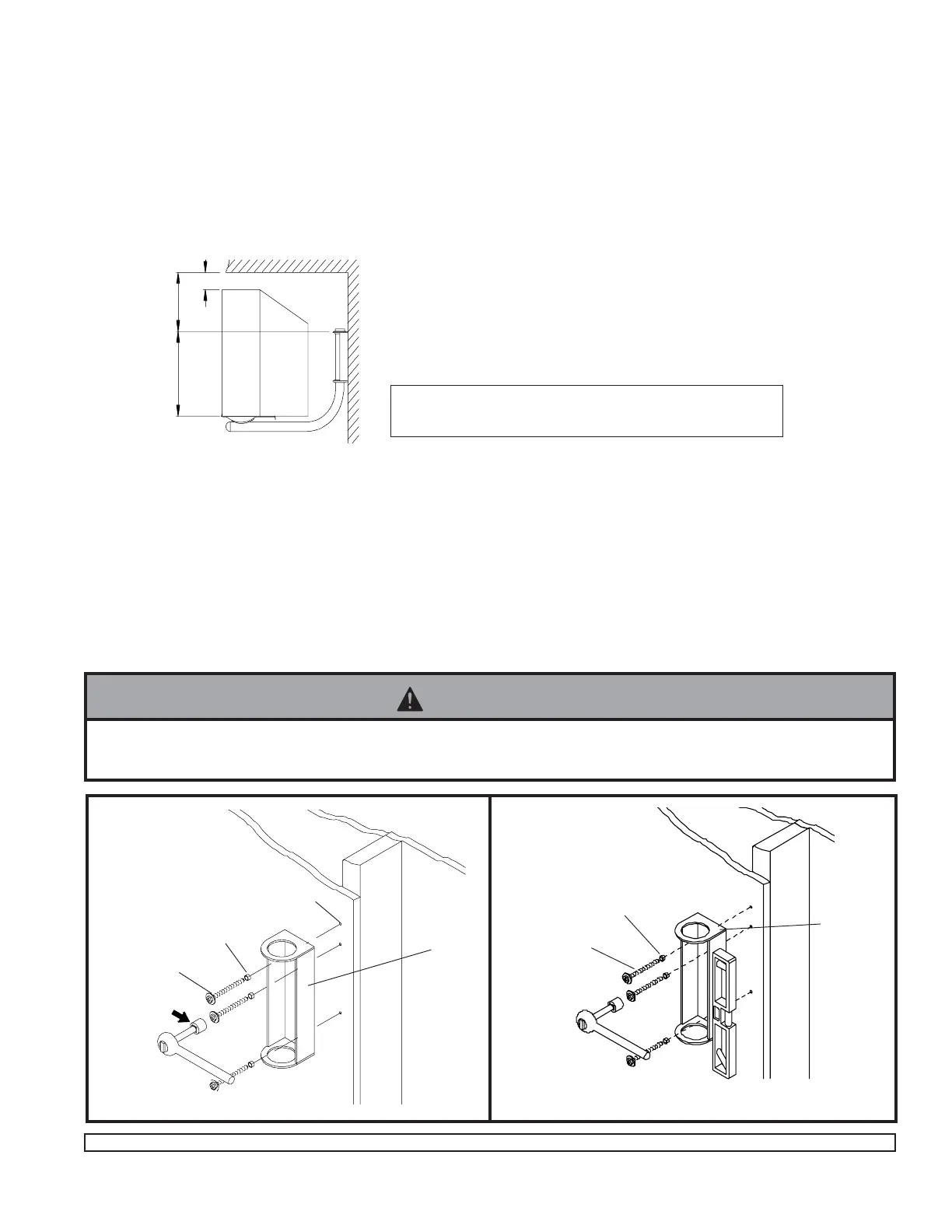
1. Determine which type of wall you are mounting to and that you have the right hardware for that wall type.
This mount includes hardware for mounting into wood studs behind drywall (never mount to drywall alone!) and for mounting
to concrete or concrete block.
This mount should never be mounted directly into a corner. It may be mounted as close to the corner as possible while still
mounting directly into a stud center. The arm can then be swiveled so that the mount appears to be coming out of the corner.
General instructions for all wall types
HINT: Putting the TV as high as possible often seems like a
good idea, but it may not provide the best viewing angle.
PLAN AHEAD! Give some thought to where you want to
locate your TV mount. Think about where you will be
watching TV and what will be the most comfortable
viewing angle. Also, make sure you are leaving sufficient
clearance between the top of the TV and the ceiling.
For wood stud wall
1. Critical Step: use a stud finder and follow the directions that come with it to locate the center point of the stud. Never mount into
drywall alone!
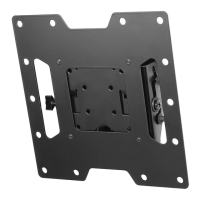
2. Using the wall bracket (G) as a guide, mark and drill the three 5/32" (4mm) dia. mounting holes in the center of the stud, 2 1/2"
deep. At this point, it is essential to use a level to level your wall bracket (G). If it is only a few degrees off level, your TV mount
will not sit straight and the arm will not stay in center position.
3. Insert the three wood screws (K), adding the plastic bushing for the screws (P).
HINT: you can prepare the top hole first, put in the screw (K), leaving it somewhat less than completely tight, then use
the wall bracket (G) to locate the middle and lower holes.
3/8" (10 mm)
5/32" (4 mm) dia.
G
G
K
P
K
P
WARNING
• Do not overtighten wood screws. Tighten so that wall plate is firmly attached but do not tighten further. Overtight-
ening of wood screws can cause stress damage to them, greatly reducing their holding power!


 To Next Page