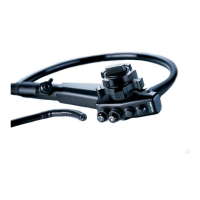
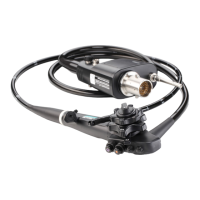
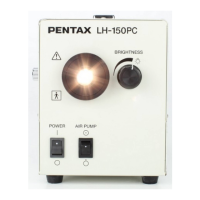
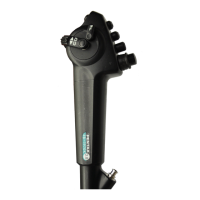
The PENTAX Medical Rigid Laryngostroboscopes, Models 9106 and 9108, are medical instruments designed for optimal viewing of the vocal folds with maximum light transmission. These devices feature a continuous fiberoptic cable from the distal end to the tip, ensuring bright, clear, and high-quality imaging. They are specifically intended to observe glottic action when used with a stroboscopic light source, and are inserted perorally when observation is indicated.
Important Warnings and Precautions:
- Users must read and understand the instructions in this manual before performing any procedures to prevent patient injury or instrument damage.
- Failure to follow maintenance instructions can render the device unusable and void the warranty.
- The 9106 and 9108 are provided in a non-sterilized condition and must be cleaned, disinfected, and sterilized before use to avoid bodily harm to the patient.
- Meticulous cleaning is required for effective high-level disinfection or sterilization.
- Do not immerse the device in disinfectant solution longer than recommended, as this can cause damage, including lens clouding and loosening of gluing agents.
- Do not autoclave the device; temperatures exceeding 60°C (140°F) can damage it.
- Thoroughly inspect the device before each use for proper function, moisture, or contamination. Avoid dropping or subjecting it to sudden impact.
- Never insert the device into water or any substance with a temperature greater than 65°C (150°F). Hot beads should not be used for anti-fogging.
- Loosen the screw on the adaptor before removing it from the eyecup to prevent damage.
Technical Specifications:
Model 9106:
- Total Length: 252 mm
- Working Length: 189 mm
- Outer Diameter: 9.5 mm
- Actual Visual Field Angle: 35 degrees
- Angled View: 70 degrees
- Depth of Field: 2 mm - 40 mm
- Integral Light Cable: Yes
- Light Guide Length: 1727 mm
Model 9108:
- Total Length: 226 mm
- Working Length: 186 mm
- Outer Diameter: 6 mm
- Actual Visual Field Angle: 35 degrees
- Angled View: 70 degrees
- Depth of Field: 2 mm - 40 mm
- Integral Light Cable: Yes
- Light Guide Length: 1750 mm
Environmental and Storage Conditions:
Operating Conditions:
- Temperature: 10°C to 40°C (50°F to 104°F)
- Relative Humidity: 20% to 80% (non-condensing)
- Atmospheric Pressure: 700mb to 1060mb (0.69atm to 1.05atm)
Storage/Transportation Conditions:
- Temperature: -10°C to 60°C (14°F to 140°F)
- Relative Humidity: 20% to 80% (non-condensing)
- Atmosphere Pressure: 700mb to 1060mb (0.69atm to 1.05atm)
Usage Features:
Components:
The 9106 and 9108 include:
- Rigid Laryngostroboscope
- PENTAX Medical Laryngeal Stroboscope Adaptor, Model 7175-4200
Assembly:
The devices can be connected to various light sources.
- Without a camera: Insert the cable into a light source (an adaptor may be required). For the PENTAX Medical Laryngeal Stroboscope, Model 9400, use the provided 7175-4200 adaptor. Adjust brightness using the light source's front panel.
- With a C-mount camera and attachment lens (e.g., PENTAX Medical's 3-CCD HD Camera, Model 9214HD, and Lens Coupler, such as Model 9118B):
- Screw the attachment lens into the camera's C-mount.
- Insert the rigid Laryngostroboscope eyecup into the lens coupler.
- Align and lock the eyecup and adaptor with the screw.
- Optimal Working Distance: For visual use, the optimal working distance from the distal window is 5 to 50 mm.
- Angle of Entry: The 70-degree rigid Laryngostroboscope angles downward, providing a closer view of the vocal fold, which differs from the upward-pointing 90-degree models.
Anti-fogging:
To prevent fogging:
- Apply various anti-fogging solutions to the lens.
- Dip the working end into hot tap water for 10-20 seconds.
- Blot with a soft tissue before insertion. This may need to be repeated during the procedure.
Potential Risks (rare):
- Laryngospasm
- Blood pressure elevation
- Bleeding due to improper scoping
- Adverse reaction to anesthetic
Maintenance Features:
Prolonging Device Life:
- Minimize bending of the fiberoptic cable to prevent breakage and diminished light transmission. The cable cannot be replaced; if fibers break, the entire device must be replaced.
- Avoid scratching the lenses.
Cleaning, High-Level Disinfection, and Sterilization:
Cleaning (After every use):
- Prepare an enzymatic detergent solution (e.g., Klenzyme™ from Steris Corporation) according to manufacturer recommendations.
- Soak devices for two minutes at the recommended temperature to remove proteinaceous material.
- Rinse thoroughly under lukewarm, running tap water for at least one minute.
- Clean with a general-purpose detergent for healthcare facilities (e.g., Manu-Klenz® from Steris Corporation) using a soft-bristled brush, focusing on crevices and seams.
- Rinse thoroughly under lukewarm, running tap water for at least one minute.
- Dry with a clean, soft cloth.
- Note: Avoid harsh materials that can scratch optical and outer surfaces. Remove detachable items and process them similarly.
High-Level Disinfection:
- Option 1: Totally immerse in 2.4% Glutaraldehyde solution for 45 minutes at 25°C.
- Option 2: Totally immerse in CIDEX® OPA for 12 minutes at 20°C.
Sterilization:
- Option 1 (Liquid Chemical Sterilization): Totally immerse in 2.4% Glutaraldehyde solution for the time and temperature recommended by the manufacturer.
- Option 2 (Ethylene Oxide - EtO):
- EtO concentration: 600 ± 30 mg/L
- Humidity: 70% ± 5%
- Exposure: 240 minutes
- Degas at standard cycle: 12 hours at 55°C ± 2°C
- Option 3 (STERRAD® 100S): Compatible when following the sterilant manufacturer's procedures and guidelines.
Disposal:
This product is a medical device and must be disposed of in accordance with European Directive 2002/96/EC on Waste Electrical and Electronic Equipment. It should not be disposed of as unsorted waste but collected separately for proper treatment, recovery, and recycling. Contact your local PENTAX distributor for correct disposal. Follow local, state, and federal guidelines for waste product disposal.
Warranty:
All devices are guaranteed against defective materials and workmanship for one (1) year. This is a sealed unit, and all repairs must be performed by factory-trained personnel only. Improperly treated, misused, mishandled, or out-of-warranty products will be repaired or replaced for a fee.

 Need help?
 General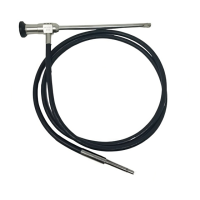

 To Next Page