Shock Advisory System
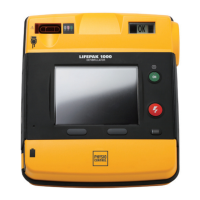
LIFEPAK 1000 Defibrillator Operating Instructions B-1
©2018 Physio-Control, Inc.
OVERVIEW OF THE SHOCK ADVISORY SYSTEM
The Physio-Control patented Shock Advisory System (SAS™) is an ECG analysis system built
into the LIFEPAK 1000 defibrillators that advises the operator whether it detects a shockable or
nonshockable rhythm. This system makes it possible for individuals not trained to interpret ECG
rhythms to provide potentially-lifesaving therapy to victims of ventricular fibrillation or pulseless
ventricular tachycardia.The Shock Advisory System contains the following features:
• Electrode contact determination
• Automated interpretation of the ECG
• Operator control of shock therapy
• Motion detection
Electrode Contact Determination
The patient's transthoracic impedance is measured through the defibrillation electrodes. If the
baseline impedance is higher than a maximum limit, it is determined that the electrodes are not
in sufficient contact with the patient or not properly connected to the defibrillator. ECG analysis
and shock delivery are inhibited. The responder is advised to connect electrodes any time
electrode contact is inadequate.
Automated Interpretation of the ECG
The defibrillator recommends a shock if either of the following rhythms is detected:
• Ventricular fibrillation
• Ventricular tachycardia (see below for definition)
The defibrillator recommends no shock for nonshockable ECG rhythms as indicated in the
Shock Advisory System Performance Report in this document.
The defibrillator is designed to detect and remove pacemaker pulses from the ECG so that an
accurate decision can be reached while a pacemaker is functioning. Some pacemaker pulses
may prevent advisement of an appropriate shock, regardless of the patient’s underlying rhythm.
If this occurs, the rescuer is advised to continue chest compressions.
PERFORMANCE VERIFICATION
The Shock Advisory System (SAS) in the LIFEPAK 1000 defibrillator was verified by inputting
specific ECG waveform segments from Physio-Control databases through the electrode
connector and recording the SAS decision of 'shock' or 'no shock.' The 'shock' or 'no shock'
decision made by the SAS for each ECG waveform segment was compared to the treatment
recommendation by clinical experts when they classified these individual ECG segments into
rhythm groups and made a treatment recommendation of 'shock' or 'no shock.'
The main ECG database used to verify the performance of the LIFEPAK 1000 defibrillator for
SAS is named the Physio-Control Test Set. In addition, the ECG database named SAS Test Set
was used to provide samples of shockable rapid ventricular tachycardia from pulseless patients
for verification purposes. The following information about the test sets and the Summary
Performance Report is provided in accordance with AHA recommendations
1
and IEC
requirements
2
for reporting performance data for a rhythm recognition detector.
To Purchase, Visit Avobus.com or call 1-800-674-3655


 To Next Page