Safety Information
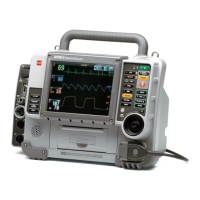
1-2 LIFEPAK 12 Defibrillator/Monitor Operating Instructions
TERMS
The following terms are used either in these Operating Instructions or on the LIFEPAK 12 defibrillator/
monitor:
Danger: Immediate hazards that will result in serious personal injury or death.
Warning: Hazards or unsafe practices that may result in serious personal injury or death.
Caution: Hazards or unsafe practices that may result in minor personal injury, product damage, or
property damage.
GENERAL WARNINGS AND CAUTIONS
The following are general warning and caution statements. Other specific warnings and cautions are
provided as needed in other sections of these Operating Instructions.
WARNINGS!
Shock hazard.
The defibrillator delivers up to 360 joules of electrical energy. Unless properly used as described in
these Operating Instructions, this electrical energy may cause serious injury or death. Do not attempt
to operate this device unless thoroughly familiar with these Operating Instructions and the function of
all controls, indicators, connectors, and accessories.
Shock hazard.
Do not disassemble the defibrillator. It contains no operator serviceable components and dangerous
high voltages may be present. Contact authorized service personnel for repair.
Shock or fire hazard.
Do not immerse any portion of this device in water or other fluids. Avoid spilling any fluids on device or
accessories. Spilled liquids may cause the defibrillator and accessories to perform inaccurately or fail.
Do not clean with ketones or other flammable agents. Do not autoclave or sterilize this device or
accessories unless otherwise specified.
Possible fire or explosion.
Do not use this device in the presence of flammable gases or anesthetics. Use care when operating
this device close to oxygen sources (such as bag-valve-mask devices or ventilator tubing). Turn off
gas source or move source away from patient during defibrillation.
Possible electrical interference with device performance.
Equipment operating in close proximity may emit strong electromagnetic or radio frequency
interference (RFI), which could affect the performance of this device. RFI may result in distorted ECG,
incorrect ECG lead status, failure to detect a shockable rhythm, cessation of pacing, or incorrect vital
sign measurements. Avoid operating the device near cauterizers, diathermy equipment, or other
portable and mobile RF communications equipment. Do not rapidly key EMS radios on and off. Refer
to Appendix H for recommended distances of equipment. Contact Physio-Control Technical Support if
assistance is required.
Possible electrical interference.
This defibrillator may cause electromagnetic interference (EMI) especially during charge and energy
transfers. EMI may affect the performance of equipment operating in close proximity. Verify the effects
of defibrillator discharge on other equipment prior to using the defibrillator in an emergency situation, if
possible.


 To Next Page