Need help?
Do you have a question about the Pioneer PL-A35 and is the answer not in the manual?
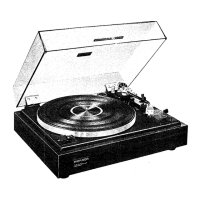
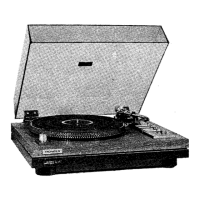
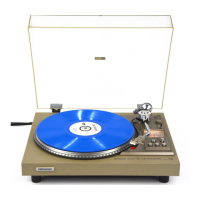
Combines studio quality with fully automatic operation for ease of use.
Describes the stable 4-pole synchronous motor and precision belt drive for minimal wow/flutter.
Explains the device that counteracts skating for perfect stylus tracking in the groove.
Details the adjustable tracking force with a built-in gauge for easy setting.
Mentions the supplied PC-50 magnetic cartridge with good frequency response and diamond stylus.
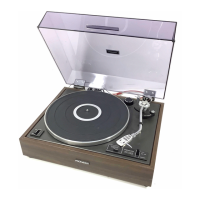
Describes the dust cover with spring-loaded hinges that can be arrested or removed.
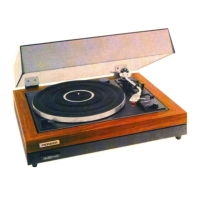
Notes the oiled walnut base adds elegance to the stereo installation.
Explains how to locate and set the line voltage selector switch for proper operation.
Discusses how AC frequency affects speed and how to readjust the turntable if needed.
Provides guidance on identifying motor pulleys based on AC frequency (50Hz vs 60Hz).
Instructions on attaching the plastic dust cover using hinge pegs.
Suggests reversing the AC plug to eliminate hum if it occurs.
Details how to balance the tonearm and set the tracking force using the counterweight dial.
Explains how to set the anti-skating device based on tracking force using different weights.
Describes how to adjust the arm elevator's travel height by loosening a screw.
Advise on quick, immediate movement of the function lever and avoiding touching the tonearm.
Emphasizes cleaning the stylus and records for optimal sound quality and stylus life.
Explains that speed change requires the turntable to be rotating for belt shifting.
Warns against stopping the turntable by hand to prevent belt damage.
Advises stable placement and keeping the unit away from speakers to avoid issues with low tracking force.
Notes that speed can only be changed while the turntable is rotating.
Explains the function of the arm lifting lever for raising and lowering the tonearm.
Instruction to adjust the arm rest height to match the tonearm elevator.
Guide to manually initiating playback at a specific point on the record.
Instructions on how to pause or stop playback using the function lever.
Explains how to set the unit to repeatedly play the same record.
Further details on using the arm lifting lever for tonearm movement.
Lists motor type, drive system, speeds, accuracy, S/N, and platter details.
Details tonearm type, length, cartridge weight capacity, and furnished cartridge.
Lists features like anti-skating, automatic tonearm, head shell, dust cover, base, and cueing.
Lists included accessories such as lubricator, EP adaptor, screwdriver, and bias weights.
Covers power requirements, consumption, dimensions, and weight.
Details the specifications of the supplied PC-50 cartridge, including frequency response and tracking force.
 General
| Type | Belt Drive |
|---|---|
| Tonearm | Static Balance |
| Dimensions | 450 x 360 x 120 mm |
| Weight | 4.1 kg |
| Drive method | Belt Drive |
| Motor | 4-pole synchronous motor |
| Platter | Aluminum |
| Overhang | 15 mm |
| Speed | 33 1/3, 45 RPM |
| Speeds | 33 1/3, 45 RPM |


 To Next Page