Page 8
For technical questions, please call 1-888-866-5797.
70476
SAFETY OPERATION MAINTENANCESETUP
40. Dress properly. Do not wear loose clothing or
jewelry. Keep hair, clothing and gloves away
from moving parts. Loose clothes, jewelry or
long hair can be caught in moving parts.
41. Parts, especially exhaust system components,
get very hot during use. Stay clear of hot parts.
42. Keep the stop / start remote control away from
children. Do not place in tight spaces with other
objects that may actuate the remote buttons and
send an undesired start signal to the generator.
43. Do not cover the generator during operation.
44. Keep the generator and surrounding
area clean at all times.
45. Do not smoke, or allow sparks, flames,
or other sources of ignition around the
equipment, especially when refuelling.
46. Use the equipment, accessories, etc.,
in accordance with these instructions and in
the manner intended for the particular type of
equipment, taking into account the working
conditions and the work to be performed.
Use of the equipment for operations different from
those intended could result in a hazardous situation.
47. Do not operate the equipment with known
leaks in the engine’s fuel system.
48. When spills of fuel or oil occur, they must be
cleaned up immediately. Dispose of fluids and
cleaning materials as per any local, state, or
federal codes and regulations. Store oil rags in
a bottom-ventilated, covered, metal container.
49. Keep hands and feet away from moving parts. Do
not reach over or across equipment while operating.
50. Before use, check for misalignment or binding of
moving parts, breakage of parts, and any other
condition that may affect the equipment’s operation.
If damaged, have the equipment serviced
before using. Many accidents are caused
by poorly maintained equipment.
51. Use the correct equipment for the application.
Do not modify the equipment and do not use the
equipment for a purpose for which it is not intended.
52. Extension Cord - Make sure your extension cord
is in good condition. When using an extension
cord, be sure to use one heavy enough to carry
the current your product will draw. An undersized
extension cord will cause a drop in line voltage
resulting in loss of power and overheating.
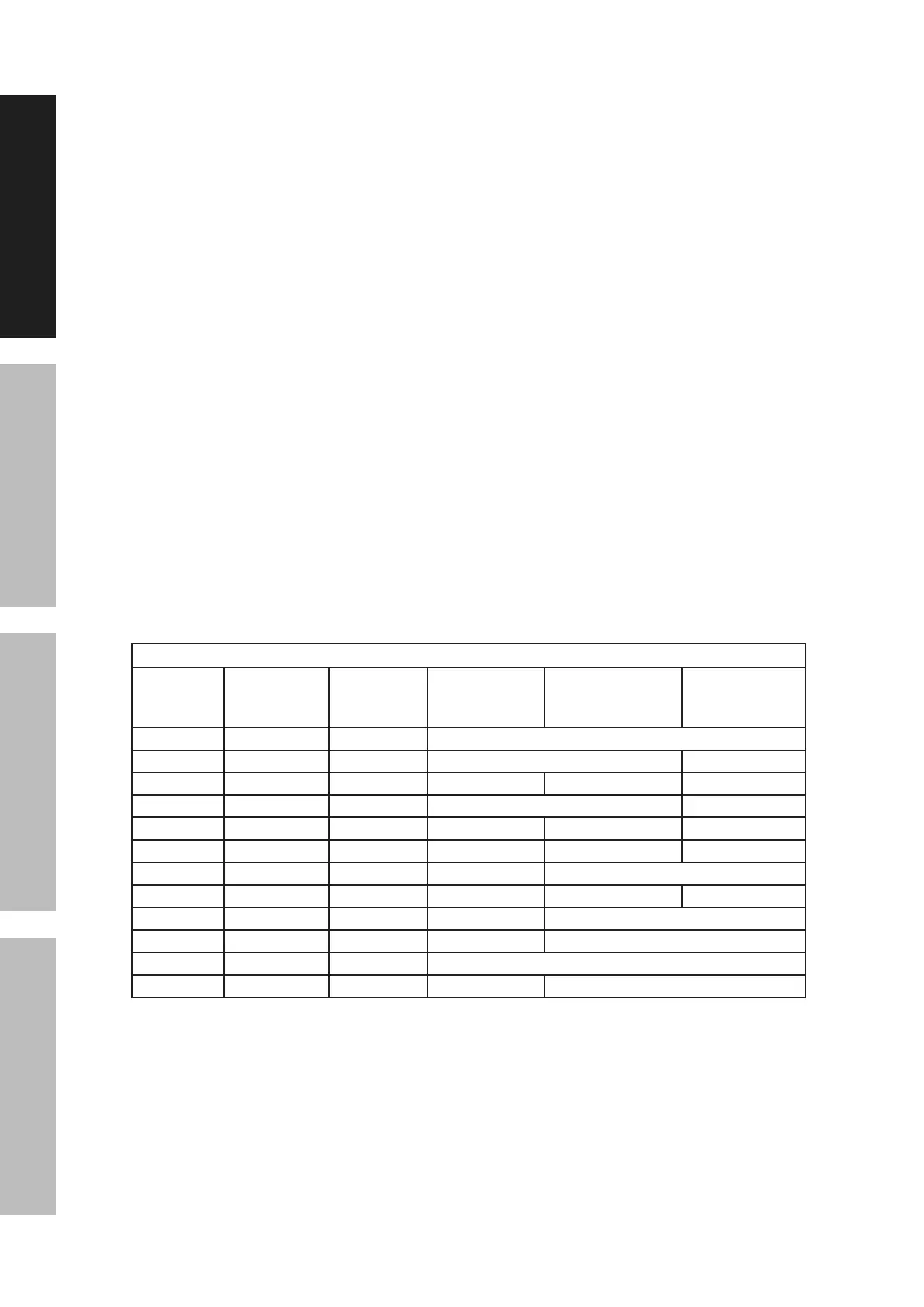
The table below shows the correct cord size to use
depending on cord length and nameplate ampere
rating. If in doubt, use the next heavier gauge.
The smaller the gauge number, the heavier the cord.
RECOMMENDED MINIMUM WIRE GAUGE FOR EXTENSION CORDS
CURRENT
(AMPS)
Load @
120 V
(WATTS)
Load @
240 V
(WATTS)
20 ~ 50 ft 50 ~ 75 ft 75 ~ 100 ft
2 240 480 18 AWG
4 480 960 18 AWG 16 AWG
6 720 1440 18 AWG 16 AWG 14 AWG
8 960 1920 16 AWG 12 AWG
10 1200 2400 16 AWG 14 AWG 12 AWG
15 1800 3600 14 AWG 12 AWG 10 AWG
20 2400 4800 12 AWG 10 AWG
25 3000 6000 12 AWG 10 AWG 8 AWG
30 3600 7200 10 AWG 8 AWG
35 4200 8400 8 AWG 6 AWG
40 4800 9600 6 AWG
45 5400 10,800 6 AWG 4 AWG
Do not use extension cords less than 20 feet in length.


 To Next Page
 Loading...