50
Packaged and Split Rooftop Ventilator
© 2021 Mitsubishi Electric US, Inc.
Routine Maintenance
Maintenance Procedures
Lubrication - Check all moving components for
proper lubrication. Apply lubricant where required.
Any components showing excessive wear should be
replaced to maintain the integrity of the unit and ensure
proper operation.
Dampers - Check all dampers to ensure they open and
close properly and without binding. Backdraft dampers
can be checked by hand to determine if blades open
and close freely. Apply power to motorized dampers to
ensure the actuator opens and closes the damper as
designed.
Gas Furnace - Maintain furnace in accordance with
instructions in the Indirect Gas-Fired Heat IOM shipped
with this unit.
Fan Motors - Motor maintenance is generally limited
to cleaning and lubrication. Cleaning should be limited
to exterior surfaces only. Removing dust and grease
buildup on the motor housing assists proper cooling.
Never wash-down the motor with high pressure spray.
Greasing of motors is only intended when ttings are
provided. Fan motors typically have two grease ttings.
Each motor manufacturer has dierent lubrication
schedules for dierent models. Go to the motor
manufacturer’s website and download their maintenance
requirements. Do not over-lubricate motors or use
an incompatible grease. Many fractional motors are
permanently lubricated for life and require no further
lubrication.
Fan Wheel and Fasteners - Wheels require very little
attention when moving clean air. Occasionally oil and
dust may accumulate on the wheel causing imbalance.
When this occurs, the wheel and housing should be
cleaned to assure smooth and safe operation. Inspect
fan impeller and housing for fatigue, corrosion, or wear.
Routinely check all fasteners, set screws and locking
collars on the fan, bearings, drive, motor base and
accessories for tightness. A proper maintenance
program will help preserve the performance and
reliability designed into the fan.
Internal Filter Maintenance - The unit will typically be
provided with 2-inch thick pleated paper lters in the
airstream. These lters should be checked according
to a routine maintenance schedule and replaced as
necessary to ensure proper airow through the unit.
Replacement lters shall be of same performance and
quality as factory installed lters. Filter must be pleated
design with integral metal grid. Two acceptable lter
replacements are Aerostat Series 400 or Farr 30/30®.
Filters upstream of the coil should be checked regularly.
If the lters are dirty, they should be cleaned or replaced.
It is important the lters stay clean to maintain desired
airow.
WARNING
REFER TO GENERAL SAFETY INFORMATION
Do not operate this unit without the lters and
birdscreen installed. They prevent the entry of foreign
objects such as leaves, birds, etc.
Do not remove access panels or other unit
components while standing on a ladder or other
unsteady base. Access panels and unit components
are heavy and serious injury may occur.
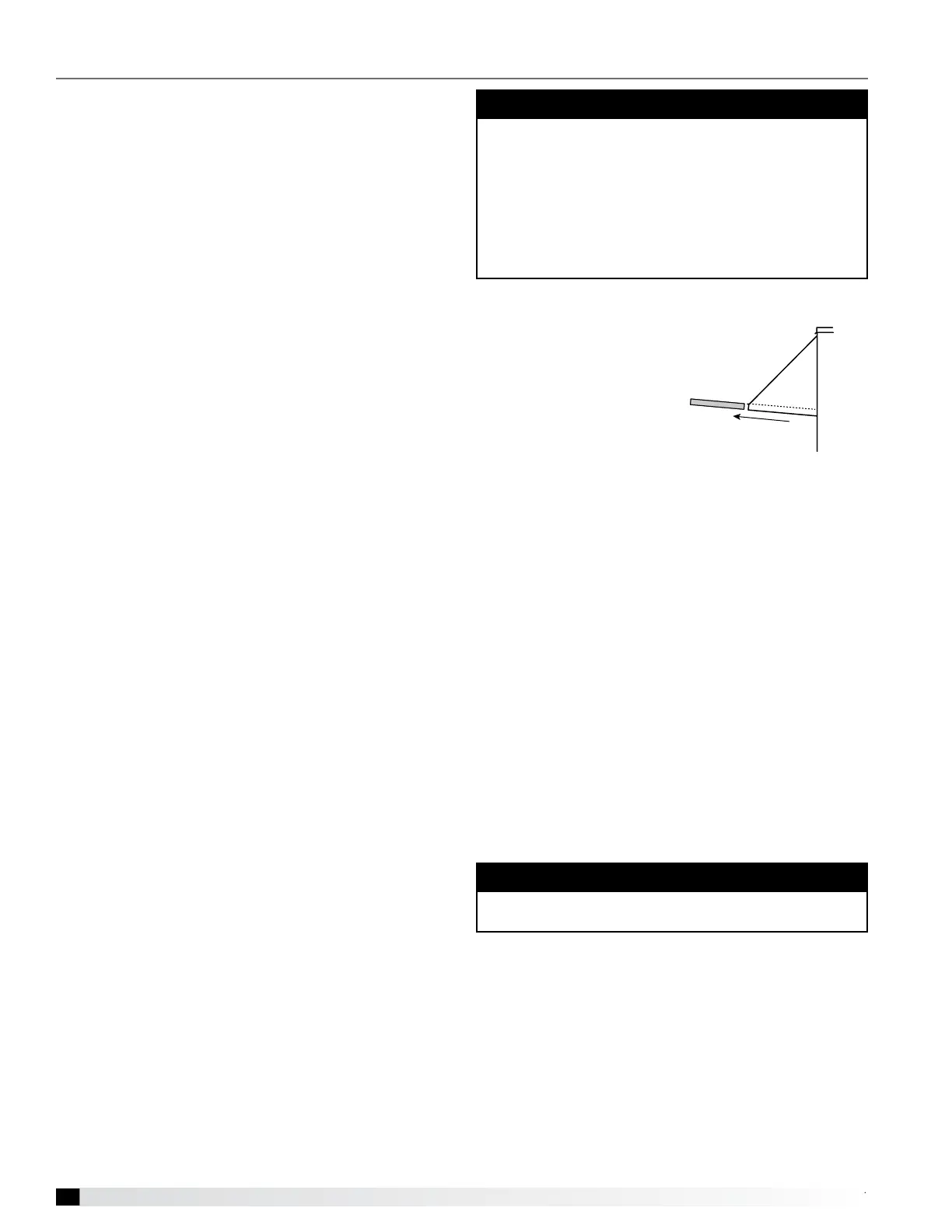
External Filter Maintenance- Aluminum mesh, 2-inch
thick lters are located in the supply weatherhood
(if the weatherhood
option was purchased).
These lters should be
checked and cleaned
on a regular basis for
best eciency. The
frequency of cleaning
depends upon the
cleanliness of the
incoming air. These lters should be cleaned by rinsing
with a mild detergent in warm water prior to start-up.
Coil Maintenance - Coils must be cleaned to maintain
maximum performance. Check coils once per year
under normal operating conditions and if dirty, brush or
vacuum clean. Soiled ns reduce the capacity of the
coil, demand more energy from the fan and create an
environment for odor and bacteria to grow and spread
through the conditioned zone. High pressure water
(700 psi or less) may be used to clean coils with a n
thickness over 0.0095 inches thick. TEST THE SPRAY
PRESSURE over a small corner of the coil to determine
if the ns will withstand the spray pressure.
For coils with fragile ns or high n density, foaming
chemical sprays and washes are available. Many coil
cleaners use harsh chemicals, so they must be used
with caution by qualied personnel only. Care must be
taken not to damage the coils, including the ns, while
cleaning. Caution: Fin edges are sharp!
Outdoor Air Intake Hood
Mesh Filter Access
WARNING
Biological hazard. May cause disease. Cleaning
should be performed by qualied personnel.
Drain pans in any air conditioning unit will have some
moisture in them, therefore, algae and other organisms
will grow due to airborne spores and bacteria. Periodic
cleaning is necessary to prevent this buildup from
plugging the drain and causing the drain pan to overow.
Inspect twice a year to avoid the possibility of overow.
Also, drain pans should be kept clean to prevent the
spread of disease. Cleaning should be performed by
qualied personnel.


 To Next Page
 Loading...