Appendix B
Notes on system measurement
The measurement of the response of audio systems can be carried out either with a real-time spectrum
analyzer or with an instrument capable of revealing the complex response, including modulus and phase.
If we model the system to be measured as a Linear Time-Invariant system
1
, it is possible to analyze
its operation by means of the character of its frequency response.
B.1 Time-Frequency Relationship
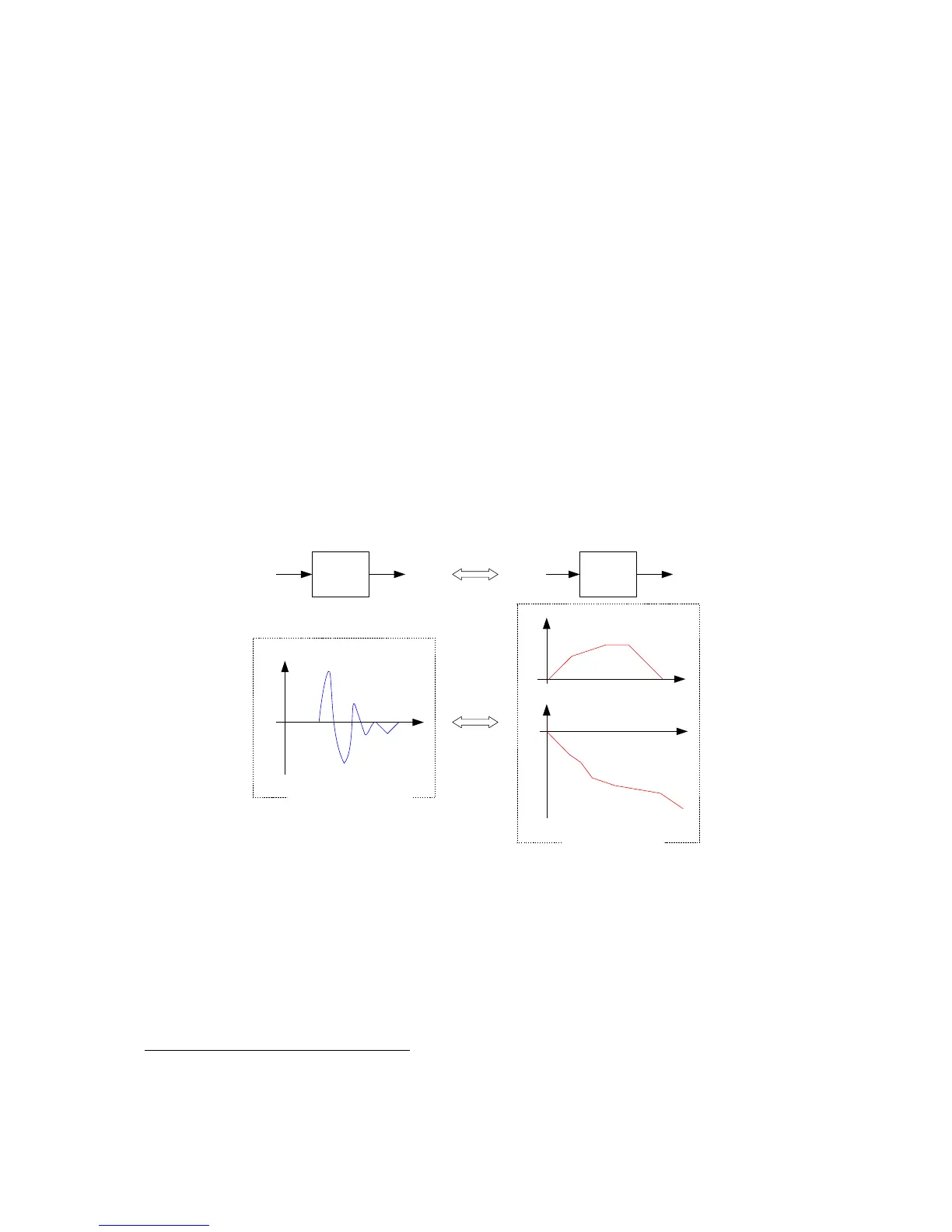
Figure B.1: Time-Frequency Relationship and system representation in both domains
A Linear Time-Invariant (LTI) system can be described by both its frequency response and its impulse
response (see Figure B.1). There is a mathematical tool, the Fourier Transform, which allows you to pass
easily from one domain to the other. A ver y effective numerical implementation of this is called the Fast
Fourier Transform (FFT).
The advantage of analyzing the frequency response is due to the fact that while in the time domain
the correlation between input signal and output signal is rather complex, in the frequency domain it is
simple multiplication.
1
This assumption could be correct only if the system were driven to levels excluding non linear operations. The condition of
time invariance guarantee system performance stability through time. A typical phenomenon introducing variance on time is power
compression.
95


 To Next Page