EasyManua.ls Logo

Rainfresh R1245 - User Manual

Rainfresh R1245
6 pages
Print Icon
To Next Page IconTo Next Page
Loading...
Ultraviolet (UV) Water Disinfection System
Model - R1245 Installation & Maintenance Instructions
( Please save for future reference)
INTRODUCTION
Rainfresh water disinfection systems utilize the proven properties of ultraviolet light (UV). UV emitted at 254 nm wavelength
kills/inactivates harmful bacteria (i.e. coliforms, fecal coliforms & E.Coli), viruses, fungi, algae, spores and other microorganisms
in water. UV purification is a natural, non-chemical, environmentally safe technique which does not form any harmful disinfection
by-products.
HOW
YOUR UV DISINFECTION WORKS
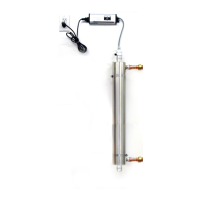
Your Rainfresh UV system consists of a low-pressure UV lamp enclosed in a
transparent quartz dome, housed in a stainless steel disinfection chamber. As
untreated water enters the chamber from one end, microorganisms like bacteria,
viruses, fungi, algae etc in the water are exposed to ultraviolet light being emitted by
the UV lamp. The UV light kills/inactivates these microorganisms and treated water
flows out of the chamber and is ready for consumption. See Fig. 1
SAFETY
INSTRUCTIONS
* To avoid possible electric shock, extra care should be taken since water may be
present near electrical equipment. Unless specifically referred to in these
instructions, do not attempt repairs yourself. Contact the manufacturer for service
advice.
* Do not plug the unit in if any electrical surfaces or electrical parts are wet.
* DO NOT LOOK DIRECTLY AT UV LAMP WHEN LAMP IS ON. UV light can
cause serious burns to unprotected eyes and skin.
Do not operate the UV lamp outside the UV disinfection chamber.
* Do not use this unit for any purpose other than its intended use for potable water
disinfection. The use of attachments not recommended, approved or sold by the
manufacturer may result in improper performance of the unit or an unsafe
condition.
* Do not operate the system if it has a damaged electrical cord or plug, is malfunctioning, or has been damaged in any way.
* Do not touch the lamp or quartz dome with dirty or moist hands. Hold the lamp and dome by the ends with soft dry gloves
or cloth.
* Before any cleaning or maintenance on the system, always unplug the unit from the power source. Disconnect from the
power outlet by holding the plug. Never pull the cord.
* You must connect your UV unit to a grounded (3-pronged) receptacle (a GFI is preferred) and ensure that the lamp connector
ground wire is connected to the stainless steel end of the main chamber. Use of extension cords is not recommended.
* Installation of the UV disinfection system and water filter will interrupt electrical grounding continuity of your plumbing system.
For directions on restoring the electrical grounding continuity, consult your local electrical inspector.
* Power source for applications outside North America must match requirements of the unit (For example 220V, 50Hz or other).
* Protect your unit from freezing. Drain all water from the unit if freezing temperatures exist.
* The UV lamp inside of the disinfection system is rated at an effective life of approximately 9000 hours. To ensure continuous
protection, REPLACE UV LAMP ANNUALLY.
BEFORE
YOU INSTALL THE SYSTEM
1.
Fig. 1
The unit should only be operated with water that meets the following minimum criteria:
* Turbidity/Suspended Solids: Less than 5 PPM (mg/L). Ideally less than 1 NTU (Nephelometric Turbidity Unit). A 5 micron
sediment filter should be installed before the UV system at all times. We recommend Rainfresh Model FC150
(5 micron sediment
filter and housing assembly)
If the feed water has fine sediment, a finer pre-filter (1 micron or smaller) may be used. If the
water has very high turbidity, a backwashable multi-media filter is recommended.
* Hardness: Less than 7 gpg (120 mg/L). Hard water causes scale build-up on the quartz sleeves thereby reducing the UV
transmittance in the water and in turn reduced performance. For high hardness water, a water softener should be installed
prior to the UV system.
* Iron & Manganese: Iron less than 0.3 PPM (mg/L) and Manganese (less than 0.05 mg/L) is desirable. At higher
concentrations, a suitable water conditioner (e.g a greensand filter) should be installed prior to the UV system to prevent
iron build-up on the quartz dome.
* Tannins and Colour: Water with tannins or colour has low UV transmissivity that reduces UV system performance.
A tannin-removal / colour-removal activated carbon system should be installed to improve UV performance.

Questions and Answers

Summary

Introduction to UV Disinfection and Safety

How Your UV Disinfection Works

Explains the mechanism of UV light killing microorganisms.

Safety Instructions

Essential safety precautions and warnings for operating the UV system.

Pre-Installation Requirements

Before You Install the System

Water quality criteria and system prerequisites before installation.

System Installation Steps

Fittings and Pre-filter Installation

Details on required fittings and pre-filter installation.

UV Unit Mounting and Plumbing

Instructions for mounting the UV chamber and connecting plumbing.

Lamp and Dome Installation

Steps for correctly installing the UV lamp and quartz dome.

Operation and Maintenance Procedures

Disinfection Procedure

Method for disinfecting plumbing lines.

UV Ballast Features and Alarms

Explains ballast functions, alarms, and timer operations.

Annual Lamp Replacement and Dome Cleaning

Guidance for yearly UV lamp replacement and quartz dome cleaning.

Troubleshooting and Technical Specifications

Troubleshooting Common Issues

Identifies common problems, causes, and solutions.

Technical Specifications

Lists key product specifications and ratings.

Parts List and Warranty Information

Parts List and Diagram

Lists system components and provides a visual diagram.

Limited Warranty Details

Outlines the warranty terms and conditions for the system.

Overview

The Rainfresh Ultraviolet (UV) Water Disinfection System, Model R1245, is designed to purify water by utilizing ultraviolet light. This system effectively kills or inactivates harmful bacteria, viruses, fungi, algae, spores, and other microorganisms in water without the use of chemicals, making it an environmentally safe method that produces no harmful disinfection by-products.

Function Description

The R1245 system operates by exposing untreated water to UV light emitted at a 254 nm wavelength. The core components include a low-pressure UV lamp, a transparent quartz dome, and a stainless steel disinfection chamber. As water flows into the chamber, it passes through the quartz dome, where it is exposed to the UV light from the lamp. This exposure inactivates microorganisms, rendering them harmless. The treated water then flows out of the chamber, ready for consumption.

The system is designed for point-of-entry (POE) installation on the cold water line, ensuring that all water entering the household is disinfected. For optimal performance, the unit should be wall-mounted vertically with the lamp connector at the top, and the water inlet at the bottom. Bypass piping with a shut-off valve is highly recommended around the unit to allow for water access during maintenance or service.

The UV ballast, which powers the lamp, is micro-processor controlled and includes both audio and visual alarm indicators. Upon initial power application, the green lamp-ON LED illuminates, accompanied by three buzzer beeps and three red timer LED flashes, indicating a self-test sequence. During normal operation, only the green lamp-ON LED remains lit.

The system incorporates a lamp-change timer that alerts users when the UV lamp needs replacement. After one year of continuous operation, the red lamp-change timer LED will flash, and a buzzer will sound, signaling a 28-day grace period. The buzzer can be silenced for seven days by pressing the timer button, but the LED continues to flash. If the lamp is not replaced after the grace period, the red timer LED will illuminate continuously, and the buzzer will sound until the lamp is replaced. It's important to note that the UV lamp is not shut down in this alarm mode, and water flow is not interrupted unless a solenoid valve is connected.

In the event of a lamp failure or if the system enters an auto-shutdown mode due to abnormal operating conditions, the alarm buzzer will sound, and the green lamp-ON LED will switch off. If an optional solenoid valve (Model R1245S) is connected, it will shut off the water flow to the house, preventing untreated water from entering the plumbing system. The UV ballast is also designed to shut down if the AC input voltage falls outside operating limits. In such cases, unplugging the unit for fifteen seconds and then reconnecting it may resolve the issue.

Usage Features

The R1245 system is intended for continuous operation. However, during periods of non-use (e.g., overnight), water inside the UV unit can become hot. Therefore, it is recommended to flush the cold water line for approximately 30-45 seconds before use after such periods. The unit should be installed indoors in a protected area where temperatures do not fall below 4°C (40°F) to prevent freezing. If freezing temperatures are anticipated, all water should be drained from the unit.

For optimal performance and longevity, the feed water should meet specific criteria:

  • Turbidity/Suspended Solids: Less than 5 PPM (mg/L), ideally less than 1 NTU. A 5-micron sediment filter (such as Rainfresh Model FC150) is recommended before the UV system. Finer pre-filters (1 micron or smaller) may be needed for very fine sediment, and a backwashable multi-media filter for very high turbidity.
  • Hardness: Less than 7 gpg (120 mg/L). Hard water can cause scale build-up on the quartz sleeves, reducing UV transmittance. A water softener should be installed for high hardness water.
  • Iron & Manganese: Iron less than 0.3 PPM (mg/L) and Manganese less than 0.05 mg/L are desirable. Higher concentrations may require a suitable water conditioner (e.g., a greensand filter) to prevent iron build-up on the quartz dome.
  • Tannins and Colour: Water with tannins or color has low UV transmissivity. An activated carbon system for tannin/color removal should be installed to improve UV performance.

It is strongly recommended to install a dedicated electrical circuit for the UV system. If power fluctuations or surges are common, a CSA or equivalent certified surge protector with specific ratings (clamping voltage less than 400 Volts, response time less than one nanosecond, energy absorption at least 600 Joules) should be used.

Maintenance Features

Regular maintenance is crucial for the effective and safe operation of the Rainfresh UV system.

Plumbing Disinfection: Before initial service, and periodically (at least once a year, or after power outages/shut-offs lasting several hours), all household plumbing lines should be disinfected to prevent re-contamination. This involves shutting off the supply valve, depressurizing the lines, removing the filter from its housing, adding unscented household bleach (5-6% sodium hypochlorite) to the empty filter housing, and then reinstalling the filter head. The supply valve is then opened, and faucets (hot and cold) are slowly opened until the smell of chlorine is detected, then shut off. This bleach solution should remain in the plumbing system for 6-8 hours (preferably overnight). After this period, aerators should be removed from faucets, and all outlets thoroughly flushed until the chlorine smell is minimal. Finally, the supply valve is shut off, the system depressurized, the filter housing opened, and the filter cartridge re-installed before slowly opening the supply valve again.

Annual UV Lamp Replacement: The UV lamp has an effective life of 9000 hours of continuous operation and should be replaced annually, regardless of its apparent condition. To reset the lamp-change timer after installing a new lamp, depress the timer button while reconnecting the ballast to the electrical outlet, keeping the button depressed until the ballast emits a solid three-second beep. This confirms the timer has been reset to zero.

Quartz Dome Cleaning and Replacement: As a good maintenance procedure, the quartz dome should be cleaned at the time of lamp replacement. Some water conditions may necessitate more frequent cleaning. The quartz dome should be handled by its ends with soft, dry gloves or cloth to avoid contamination. It is recommended to replace the quartz dome every three years, regardless of its apparent condition.

Troubleshooting: The manual provides guidance for common issues:

  • Ballast in alarm: Check lamp connections and tighten if necessary, or replace the lamp.
  • UV Lamp will not light: Verify input voltage, check the UV lamp, and if necessary, replace the lamp or ballast. If the input voltage is outside operating limits, disconnect power for 15 seconds and plug back in; if the problem persists, a voltage regulator may be needed.
  • Leak at gland nut: Hand-tighten the gland nut firmly or replace the O-ring set.
  • Bad Water Test: This could indicate the lamp has not been replaced on time, the quartz dome is dirty, or re-contamination in plumbing lines. Solutions include annual lamp replacement, more frequent quartz dome cleaning (especially with high hardness or iron water), and disinfection of plumbing lines.

When handling the UV lamp and quartz dome during replacement or cleaning, it is crucial to use soft, dry gloves or cloth and hold them by their ends to prevent contamination and damage. The quartz dome is fragile and can break if pushed too hard or bent. Ensure the gland nut O-rings are properly seated during reassembly to prevent leaks.

Rainfresh R1245 Specifications

General IconGeneral
Filter Life12 months or 1, 000 gallons
ModelR1245
CategoryWater Filtration Systems
BrandRainfresh
Micron Rating5 microns
Connection Size1/4 inch

Related product manuals