EasyManua.ls Logo

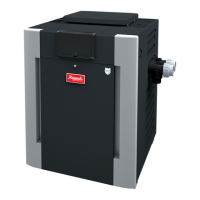
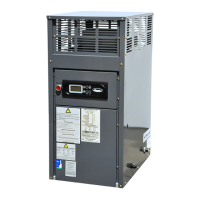
Raypak 266A - User Manual

Raypak 266A
60 pages
Print Icon
To Next Page IconTo Next Page
Loading...
INSTALLATION & OPERATING
INSTRUCTIONS
Gas-Fired
Pool & Spa
Heater
Catalog No. 6000.59U Effective: 10-06-10 Replaces: 06-10-10 P/N 241236 Rev. 22
WARNING: If these instructions are not followed exactly, a fire or explosion may result
causing property damage, personal injury or death.
WHAT TO DO IF YOU SMELL GAS:
Do not try to light any appliance.
Do not touch any electrical switch; do not use any phone in your building.
Immediately call your gas supplier from a neighbor's phone. Follow the gas sup-
plier's instructions.
If you cannot reach your gas supplier, call the fire department.
Installation and service must be performed by a qualified installer, service agency or
the gas supplier.
This manual should be maintained in legible condition and kept adjacent to the heater or in a safe place for future
reference.
Atmospheric Models
206A, 266A, 336A & 406A
Lo NOx Models
207A, 267A, 337A & 407A
Do not store or use gasoline or other flammable vapors and liquids in the vicinity of
this or any other appliance.

Table of Contents

Other manuals for Raypak 266A

Questions and Answers

  • L
    Lucas SchwartzSep 23, 2025
    Why is the gasket brittle and leaking and the heater running after pump shuts off in my Raypak 266A Gas Heater?
    • J
      jillcruzSep 23, 2025
      The gasket may be brittle and leaking, and the heater running after the pump shuts off can be caused by refractory damage, so replace the refractory. The heater may also be sooted, so determine the cause of sooting and correct it.
  • F
    fbraunAug 23, 2025
    Why does my Raypak Gas Heater have a yellow lazy flame?
    • G
      Gregory MorganAug 25, 2025
      If your Raypak Gas Heater is producing a yellow, lazy flame, it could be due to low gas pressure, in which case you should adjust the gas pressure. Another potential cause is insects or debris clogging the burner intake ports; if this is the case, clean the burners.
  • T
    Thomas BernardAug 25, 2025
    What to do if the combustion fan is not running on my Raypak 266A?
    • B
      Brenda SmithAug 26, 2025
      If the combustion fan in your Raypak Gas Heater is not running, it could be due to several reasons. The fan relay might be faulty, so replace it. There might be a loose connection or a failed motor in the fan itself. A burned motor due to incorrect wiring could also be the cause, so replace the blower. Finally, the air pressure switch might need replacement.
  • F
    Frank RuizAug 26, 2025
    What to do if my Raypak Gas Heater takes too long to heat pool or spa?
    • T
      Tanya ObrienAug 27, 2025
      If your Raypak Gas Heater is taking too long to heat your pool or spa, consider these potential causes: * The heater might be undersized. Calculate the heating capacity of the heater using the formula: Heater output (BTUH) = Pool gallonage x 8.33, or refer to the heater sizing chart. * The filter might not be running long enough; reset the time clock. * The filter could be dirty; clean the filter. * The gas line or meter may be undersized; refer to the installation instructions.
  • N
    Nathaniel BrownAug 27, 2025
    What to do if Raypak 266A Gas Heater combustion fan is not running?
    • C
      Caleb BeanAug 27, 2025
      If the combustion fan in your Raypak Gas Heater isn't running, it could be due to a few reasons. The fan relay might be faulty, requiring replacement. There could be a loose connection or a failed motor in the fan itself. A burned motor due to incorrect wiring could also be the cause, necessitating blower replacement. Finally, the air pressure switch might need replacing.
  • W
    William CarsonSep 15, 2025
    How to resolve harmonics or whining noise in Raypak Gas Heater?
    • M
      Michelle CookSep 15, 2025
      Harmonics or whining noise in your Raypak Gas Heater could be due to several reasons: * If the Underwriters Group (U.G.) is inoperative, check its movement by putting it in hot water (110°F or higher); if there's no movement, replace it. * Debris or a restriction in the system may be the cause. Locate and remove the restriction, then flush and clean the system. * Debris in the gas line can also cause this issue. Remove the debris or blow out the gas line. * Low flow can lead to this problem. Scale may be forming in the heat exchanger; clean the heat exchanger and check the pool's pH and total alkalinity.
  • A
    adamsdevinSep 12, 2025
    What causes a pilot outage or weak flame signal in a Raypak 266A?
    • J
      jonealSep 13, 2025
      A pilot outage or weak flame signal in your Raypak Gas Heater can stem from a few potential issues. Low gas pressure could be the culprit; adjust the gas pressure accordingly. The pilot itself might be restricted or dirty, necessitating cleaning of the pilot and/or electrode. In some cases, the pilot generator may be weak, requiring replacement of the pilot.
  • B
    Brandy MackSep 14, 2025
    Why is my Raypak Gas Heater's outer jacket very hot?
    • D
      Derek WatkinsSep 14, 2025
      If the outer jacket of your Raypak Gas Heater is very hot, causing the paint to blister, it could be due to a broken refractory caused by shipping damage or improper combustion; in this case, replace the refractory panels. Another potential cause is excessive sooting of the heat exchanger; determine the cause of sooting and correct it.
  • B
    Brent FisherSep 5, 2025
    What causes a Raypak Gas Heater to leak at the well?
    • C
      Christopher FlynnSep 5, 2025
      If you find a leak at the well of your Raypak Gas Heater, it may be due to overacidic conditions. Replace the well and maintain proper water chemistry to resolve this issue.
  • D
    Daniel KimSep 2, 2025
    How to fix harmonics or whining noise coming from my Raypak 266A?
    • C
      Casey MorenoSep 2, 2025
      If your Raypak Gas Heater is producing harmonics or a whining noise, it could be due to several reasons. The U.G. might be inoperative; check its movement by putting it in hot water (110°F or higher), and replace it if there's no movement. There might be debris or a restriction in the system; locate the restriction and remove it, then flush and clean the system. Debris in the gas line could also be the cause; remove the debris or blow out the gas line. Low flow could also be the problem; scale may be forming in the heat exchanger, so clean the heat exchanger and check the pool's pH and total alkalinity.

Summary

Owners Operating Instructions

Section 1 Start-Up Procedures

Step-by-step guide for safely starting up the pool or spa heater.

Before Start-Up

Pre-operation checks for burners and water flow to ensure safe startup.

Lighting Instructions and Shut-Off Procedures - Millivolt System

What to Do If You Smell Gas (Millivolt)

Safety steps for gas leaks specific to millivolt system operation.

Lighting Instructions (Millivolt)

Detailed steps for manually lighting the pilot light on the millivolt system.

Shut-Off Procedure (Millivolt)

Steps to safely turn off the millivolt system heater.

Operating Instructions and Shut-Off Procedures - Electronic Ignition System

What to Do If You Smell Gas (Electronic Ignition)

Safety steps for gas leaks specific to electronic ignition system.

Operating Instructions (Electronic Ignition)

Steps to operate the heater with electronic ignition.

Shut-Off Procedures (Electronic Ignition)

Steps to safely turn off the electronic ignition system heater.

After Start-Up

Visual Inspection - Atmospheric Heaters

Performing a visual check of the pilot and burner flames for proper operation.

Water Pressure Switch

Importance and function of the water pressure switch for heater operation.

Section 2 Caution

Elevated Water Temperatures

Safety guidelines regarding elevated water temperatures and health risks.

Section 3 - Maintenance and Care Procedures

Pool & Spa Water Chemistry

Maintaining balanced water chemistry to protect the heater and equipment.

Automatic Chlorinators and Chemical Feeders

Proper use of chemical feeders and chlorinators with the heater.

If Heater Will Not Fire

Troubleshooting steps when the heater fails to ignite.

Cold Weather Operation

Important Freeze Information

Guidelines for operating the heater during cold weather and freeze prevention.

Winterizing the Pool & Spa Heater

Procedures for shutting down and winterizing the heater for cold climates.

Part Two Installation and Service Instructions

Section 1 - Receiving Equipment

Instructions for checking the heater upon receipt for damage and contents.

Model & Serial No. Location

Information on where to find the heater's model and serial number.

Section 2 - General Specifications

Ambient Temperature Rating of Heater Components

Specifies the operating temperature range for heater components.

Important Notice

Emphasizes that installation and service require qualified, trained personnel.

Code Requirements

Outlines installation compliance with national and local codes.

Clearances

Clearance From Combustible Construction

Specifies minimum clearances from combustible surfaces for installation.

Outdoor Heater Installation

Design certification and warnings for outdoor heater installations.

Florida Building Code 2001

Wind Speed = 150 MPH, 3 Second Gust

Specifies wind load requirements for installations in Florida.

206;266;336;406 Atmospheric

Installation diagram and anchor bracket details for atmospheric models.

Indoor Heater Installation

Outdoor Stack; Indoor Stack

Details on optional outdoor and indoor stack kits and their components.

Specifications and Dimensions

Atmospheric Units

Table of dimensions, BTUH input, and shipping weights for atmospheric models.

Amp Draw

Electrical current draw specifications for digital models.

Specifications and Dimensions

Lo NOx Units

Table of dimensions, BTUH input, and shipping weights for Lo NOx models.

Amp Draw

Electrical current draw specifications for Lo NOx models.

Combustion and Ventilation Air

(Indoor Units Only)

Requirements for combustion and ventilation air for indoor installations.

Power Vent Kit

Details on the optional D-2 Power Vent kit for venting applications.

Gas Supply Connections

Caution: Heater and manual shut-off valve

Warning regarding pressure testing gas supply lines to prevent valve damage.

Supply Pressures

Required minimum and maximum gas supply pressures for natural and propane gas.

Gas Pressure Adjustment Locations

Millivolt Gas Valves

Illustration showing gas pressure adjustment for millivolt gas valves.

Electronic Ignition Gas Valves

Illustrations of gas pressure adjustment for electronic ignition gas valves.

Pipe Sizing for Gas Connections

Table for sizing gas piping based on BTU input and pipe length.

Flow Rates

Heat Exchanger Pressure Drop Tables

Tables showing pressure drop for polymer and cast iron heat exchangers.

Polymer Header (Standard Models)

Cast Iron Headers (ASME Models)

Notes on installing ASME models and using CPVC adapters.

Unitherm Governor Operation

Operational details and precautions for the Unitherm Governor.

Internal Automatic Bypass Valve

Pressure Relief Valve Installation

Instructions for installing a pressure relief valve according to local codes.

Auxiliary Bypass Valve Adjustment

Procedure for adjusting the auxiliary bypass valve for optimal flow.

Plumbing-Water Connections

Single Pool Heater Installation

Diagram and recommended plumbing for a single pool heater setup.

Multiple Pool Heater Installation

Diagram and recommended plumbing for multiple pool heater setups.

Caution: An additional source of heated water

Advice on connecting other heat sources and their impact on heater operation.

Heat Exchanger Reversal Procedure - Standard Models

For ASME Models

Instruction to contact the factory representative for ASME model procedures.

Electrical Wiring

Millivolt Models

Description of the self-generating electrical system for millivolt models.

Digital and Advanced Flame Technology (AFT) Models

Wiring instructions and warnings for digital and AFT models.

Caution: Heater must be electrically grounded and bonded.

Importance of proper electrical grounding and bonding for safety.

Transformer Wiring

120 VAC Wiring

Wiring diagram and instructions for 120 VAC power input.

240 VAC Wiring

Wiring diagram and instructions for 240 VAC power input.

Warning: Do Not Attempt to Operate the Heater at 208 VAC.

Critical warning against operating the heater at 208 VAC.

Wiring Diagram - Millivolt (Mechanical Thermostat)

Key

Explanation of wire colors and temperature ratings used in wiring diagrams.

Wiring Diagram - Digital Models - Atmospheric

Key

Explanation of wire colors and terminal types used in diagrams.

Wiring Diagram - Digital and AFT Models - Lo NOx

Note:

Notes on wire replacement and location of parts for Lo NOx models.

Section 4 - Servicing Instructions

General Location of Controls

Diagrams showing the location of key controls on Atmospheric and Lo NOx units.

Control Panel Removal

Control Adjustments - Millivolt Models

How to adjust temperature limits on millivolt heater thermostats.

Control Adjustments - Digital and Advanced Flame Technology (AFT) Models

Using temp adjust and mode buttons on digital/AFT control panels.

Thermostat Operation - Digital Board

Mode Button

How to use the Mode button to select POOL, SPA, or OFF operation.

Temp Buttons

How to adjust the desired water temperature using UP/DOWN buttons.

Fault History File

Procedure to access and view fault codes stored in the heater's memory.

Program Button

Set Factory Defaults

How to reset the heater's operating program to factory default settings.

Clear Faults

Procedure to clear all stored fault codes from the history file.

Spa Max Temp - Spa Set Point Maximum Adjustment

Setting the maximum allowable temperature for spa operation.

Diagnostics

Status Codes

List and definition of status messages displayed during normal operation.

Fault Codes

List and definition of fault codes displayed during safety or operational issues.

Reading a Fault

How to interpret fault codes displayed on the heater's interface.

Remote Control Installation and Operation

Activating the Remote

Steps to activate or deactivate the remote control function.

Remote Operation

How external remote controls interface with the heater.

Note: When in remote operation, the keypad mode and temp buttons are disabled.

Note on keypad functionality when a remote is active.

Thermostat Operation - Advanced Flame Technology (AFT) Board

Service Menu and Fault History

Accessing service menu for flame strength and supply voltage.

Flame Strength Indicator

Interpreting the flame strength indicator for proper burner operation.

Supply Voltage Indicator

Checking the supply voltage supplied to the control board.

Program Button

Set Factory Defaults

How to reset the heater's operating program to factory default settings.

Clear Faults

Procedure to clear all stored fault codes from the history file.

Spa Max Temp - Spa Set Point Maximum Adjustment

Setting the maximum allowable temperature for spa operation.

Status and Diagnostics

Status Messages

Displayed messages indicating heater status (Heating, Spark, No Demand).

Fault Conditions

Conditions displayed during Pool, Spa, and Remote modes indicating issues.

Remote Control Installation and Operation

Activating the Remote

Steps to activate or deactivate the remote control function.

Remote Operation

How external remote controls interface with the heater.

Note: When in remote operation, the keypad mode and temp buttons are disabled.

Note on keypad functionality when a remote is active.

Remote Control Wiring

2-Wire Remote Control (On-Off)

Wiring instructions for a 2-wire remote control system.

3-Wire Remote Control Using Three-Position Switch (Pool-Off-Spa, or Low-Off-High)

Wiring instructions for a 3-wire remote with a three-position switch.

Time Clock;Firemans Switch

Water Pressure Switch

Function and adjustment of the water pressure switch.

Caution: Do not operate the heater without the function of a properly adjusted water pressure switch or flow switch.

Warning about operating the heater without a properly functioning pressure/flow switch.

High Limit Removal

Pilot Safety - Millivolt Models

Safety function of pilot generators in millivolt systems.

Pilot Safety - Digital;AFT Models

Pilot safety function in digital/AFT systems for main gas valve control.

Burner Tray Removal - Atmospheric Models

Step-by-step procedure for removing the burner tray on atmospheric models.

Heat Exchanger Removal

Tube Cleaning Procedure

Recommended schedule and methods for cleaning heat exchanger tubes.

Desooting Procedure

Steps to remove soot buildup that can clog heat exchanger fins.

Combustion Chamber Removal

Procedure for removing the combustion chamber after heat exchanger removal.

Unitherm Governor (U.G.) Replacement

Lo NOx Pool Heaters

Certification and installation requirements for Lo NOx pool heaters.

Operation

Description of the startup sequence for Lo NOx pool heaters.

Visual Inspection

How to visually inspect burner flames for proper operation.

Main Burner and Orifice Removal

Pilot Removal

Procedure for removing and cleaning the pilot assembly.

Combustion Blower Removal

Steps to remove the combustion blower assembly.

Section 5 - Troubleshooting

Mechanical

Troubleshooting common mechanical problems and their solutions.

Problem

Table listing common heater problems and their corresponding causes and solutions.

Electrical - Standing Pilot Millivolt

Electrical Check with Millivolt Gas Valve

Diagnostic steps for troubleshooting millivolt gas valve electrical issues.

Electrical - Electronic Ignition IID

Warning High Voltage

Warning for technicians regarding high voltage hazards during service.

Note: Before troubleshooting, familiarize yourself with the start-up and check-out procedure.

Reminder to review startup procedures before troubleshooting electronic ignition.

Digital;AFT Control Logic - Flow Chart

Diagnostic Readouts

Explains various diagnostic readouts like Sensor Failure and Water Sw Open.

Section 6 - Replacement Parts

Manufacturer:

Contact information for the manufacturer.

Atmospheric Heaters

Sheetmetal

Exploded view diagram of sheet metal parts for atmospheric heaters.

Venting

Diagram of indoor and outdoor stack kits.

Lo NOx Heaters

Sheetmetal

Exploded view diagram of sheet metal parts for Lo NOx heaters.

Polymer In;Out Header and Accessories

Honeywell IID Atmospheric Pilot

Diagram of the Honeywell IID atmospheric pilot assembly.

IID Lo NOx Pilot

Diagram of the IID Lo NOx pilot assembly.

Atmospheric Heaters

Burner Tray

Part numbers for various burner tray assemblies based on model and altitude.

Controls

Part numbers for thermostats, AGS, high limits, PC boards, and sensors.

Heat Exchanger - Polymer

Part numbers for polymer heat exchanger components and accessories.

Atmospheric Heaters

Heat Exchanger - Metal

Part numbers for metal heat exchanger components and accessories.

Miscellaneous Components

Part numbers for miscellaneous components like pressure switches and knobs.

Atmospheric Heaters

Sheetmetal

Part numbers for sheet metal components like jackets, doors, and panels.

Venting

Part numbers for indoor and outdoor stack kits and adapters.

Atmospheric Conversion Kits*

Part numbers for gas conversion kits for atmospheric heaters.

Lo NOx Heaters

Burner Tray***

Part numbers for burner tray assemblies for Lo NOx heaters.

Controls

Part numbers for controls specific to Lo NOx heaters.

Heat Exchanger - Polymer

Part numbers for polymer heat exchanger components for Lo NOx heaters.

Lo NOx Heaters

Control Box

Part numbers for control box components like transformers and switches.

Miscellaneous Components

Part numbers for miscellaneous Lo NOx heater components.

Pilot

Part numbers for pilot assemblies and related components for Lo NOx heaters.

Raypak 266A Specifications

General IconGeneral
BrandRaypak
Model266A
CategoryGas Heater
LanguageEnglish

Related product manuals