20
NOTE: Failure of a heat exchanger due to lime
scale build-up on the heating surface, low pH or
other chemical imbalance is non-warrantable.
NOTE: High chemical concentrates from feeders
and chlorinators that are out of adjustment will cause
rapid corrosion to the heat exchanger. Such damage
is not covered under the warranty.
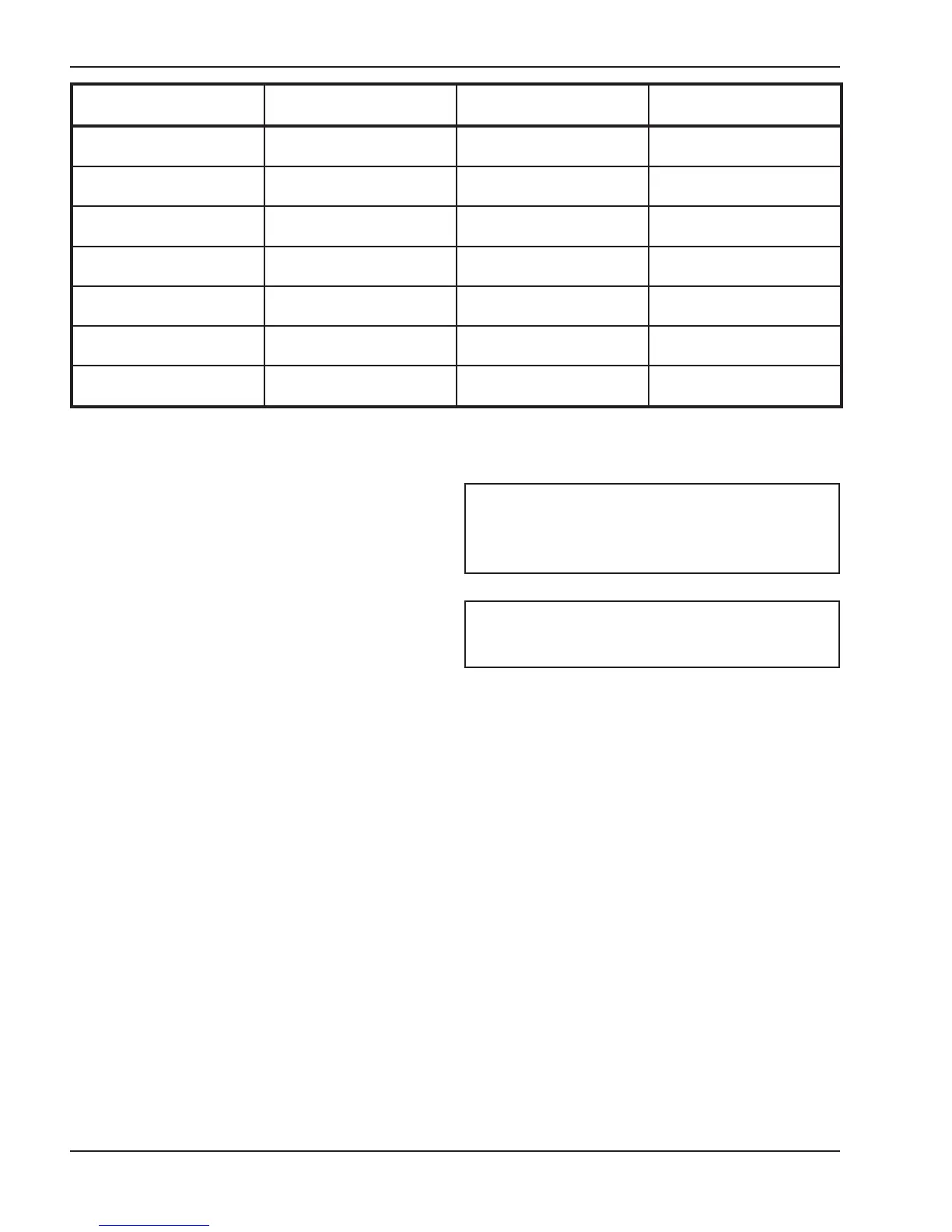
Recommended Level(s) Fiberglass Pools Fiberglass Spas
Other Pool and Spa
T
ypes
W
ater Temperature
6
8-88°F (20-31°C)
8
9-104°F (31-40°C)
6
8-104°F (20-40°C)
p
H
7
.3-7.4
7
.3-7.4
7
.6-7.8
Total Alkalinity (ppm) 120-150 120-150 80-120
Calcium Hardness (ppm) 200-300 150-200 200-400
Salt (ppm) 6000 Maximum 6000 Maximum 6000 Maximum
Free Chlorine (ppm)* 2-3 2-3 2-3
Total Dissolved Solids
(ppm)
3000 Maximum 3000 Maximum 3000 Maximum
*Free Chlorine MUST NOT EXCEED 5 ppm!
Table H: Pool Water Chemistry
For your health and the protection of your pool equip-
ment, it is essential that your water be chemically
balanced. The following levels must be used as a
guide for balanced water.
Occasional chemical shock dosing of the pool or spa
should not damage the heater providing the water is
balanced.
Automatic chemical dosing devices and salt chlorina-
tors are usually more efficient in heater water, unless
controlled, they can lead to excessive chlorine level
which can damage your heater.
Further advice should be obtained from your pool or
spa builder, accredited pool shop, or chemical suppli-
er for the correct levels for your water.
Automatic Chlorinators and
Chemical Feeders
All chemicals must be introduced and completely dilut-
ed into the pool or spa water before being circulated
through the heater. Do not place sanitizing chemicals
in the skimmer. High chemical concentrations will
result when the pump is not running (e.g. overnight).
Chlorinators must feed downstream of the heater and
have an anti-siphoning device to prevent chemical
back-up into the heater when the pump is shut off.



 To Next Page