Need help?
Do you have a question about the RCGF RCGF35CCRE and is the answer not in the manual?
Key specifications and performance data for the RCGF 35cc gasoline engine.
List of all included spare parts and their accessory numbers for the RCGF 35cc.
Critical safety instructions and warnings for operating the RCGF 35cc engine.
Recommended gasoline to 2-cycle oil mixing ratios for the RCGF 35cc engine.
Steps to prepare the engine before installing it on an aircraft.
Procedures for securely attaching the engine to the airplane's firewall.
Instructions for correctly drilling and mounting the propeller onto the engine.
Explanation of the carburetor's choke, throttle, and needle adjustment points.
How to set the engine's idle speed using the idle adjustment screw.
Adjusting the low-speed needle for optimal fuel-air mixture at low RPM.
Adjusting the high-speed needle for optimal fuel-air mixture at high RPM.
Guide to setting and adjusting the engine's ignition timing for performance.
Solutions for common carburetor problems like hesitation or stalling.
Step-by-step guide for starting the engine by hand.
Instructions for starting the RCGF 35cc engine using an electric starter.
Common engine failures and their fixes, including no-fire and flooding issues.
Essential maintenance for the fuel filter to ensure proper carburetor function.
Details regarding the two-year limited warranty for the RCGF-35RE engine.
Contact information and website for RCGF service and support.
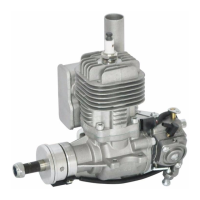
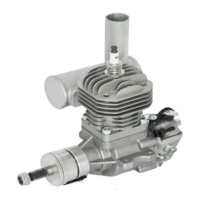
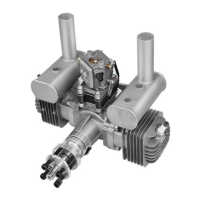
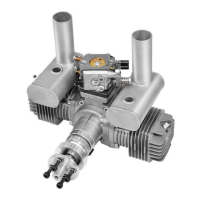
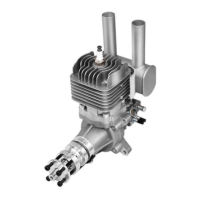
The RCGF35CCRE is a 2-cycle piston valve type gasoline engine designed for model aircraft, offering robust performance and a range of features for enthusiasts. This engine is not a toy and requires careful handling and adherence to safety guidelines during operation and maintenance.
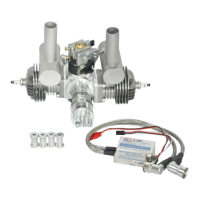
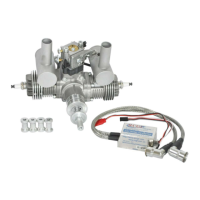
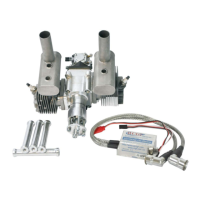
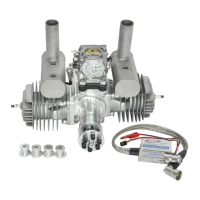
The RCGF35CCRE engine serves as the power plant for model airplanes, converting gasoline fuel into mechanical energy to drive a propeller. It utilizes a DC-CDI (Computer Controlled auto advance, electronic ignition system) for efficient and reliable ignition. The engine operates within a speed range of 1500-9000 rpm, providing a static thrust of 19.9 lb (9 kg) at 328 ft (100 m) altitude and 19.0 lb (8.6 kg) at 5,900 ft (1800 m) altitude. Its air-cooled system ensures optimal operating temperatures. The engine package includes essential components such as the electronic CDI ignition, muffler, spark plug, gaskets, bolts, standoffs, throttle arm extension, and a manual, providing a comprehensive solution for installation and operation.
Before operating the engine, it is crucial to ensure all components, including the propeller and engine mount, are securely tightened. The use of a good quality screw sealant during engine installation is highly recommended. During the break-in period, installing the engine on the aircraft or a test stand with an appropriate shock absorber is advised to mitigate vibration and prevent potential damage. Safety is paramount; operators and onlookers should never stand in front of or in line with the propeller when the engine is running, especially small children.
The engine requires a specific fuel mixture of gasoline and 2-cycle oil, with a recommended ratio of 30:1. It is important to use 90% high octane unleaded gasoline and a high-quality 2-cycle engine oil. For the break-in period (approximately the first 3-5 gallons of fuel), a petroleum-based 2-cycle motor oil like Lawn Boy All Season – Ashless, Generation II oil is suggested. For optimum performance and extended engine life, a high-quality synthetic 2-cycle oil is recommended as it produces fewer combustion byproducts and offers better fluidity at low temperatures.
Propeller selection is critical for performance and safety. Always use a balanced spinner and propeller to prevent high levels of vibration and potential propeller shaft breakage. Lightweight spinners (cone wall of 1mm or less) are recommended over heavy ones. Never use a propeller that has been damaged, nicked, cracked, or split, even if it appears fine externally, as internal damage can lead to disintegration during use. Foreign objects must be kept away from the propeller, and the engine should never be started on loose gravel or sand.
Fuel system integrity is vital. Fuel lines must be well-secured to both the engine and the fuel tank to prevent dislodging during flight. Only gasoline-approved vinyl or neoprene rubber fuel lines should be used, as silicone lines will be dissolved by the fuel. Fuel lines should be routed away from the cylinder to avoid heat damage. Before transporting the model, all fuel should be removed from the tank and lines.
Installation of electronic components requires careful consideration to avoid radio interference. Throttle and kill switch servos should not be placed inside the engine compartment, and all electronic radio devices should be at least 12 inches (305mm) away from the engine. Non-metallic pushrods should be used for throttle and choke controls. An ignition system kill switch must always be installed on the aircraft.
The engine's carburetor comes factory preset, but slight adjustments may be necessary depending on elevation to achieve optimum output. The Idle Adjustment Screw controls idle speed, while the Low-speed Needle and High-speed Needle adjust the fuel/air mixture at low and high speeds, respectively. Running the engine with a lean gas mixture can cause overheating and damage to the spark plug electrode, while a rich mixture can lead to carbon build-up. Proper adjustment ensures smooth acceleration and deceleration, which are indicators of good engine performance.
Ignition timing is preset but can be adjusted by loosening the ignition sensor screws and sliding the sensor. Advancing the timing can increase performance but also raises engine temperatures and can cause premature wear. Centering the sensor in the slot is a good starting point.
Starting the engine can be done manually or with an electric starter. For manual starting, a thick glove or heavy-duty starter stick is recommended. The propeller should be positioned at the one o'clock position at the beginning of the compression stroke. With the ignition ON, choke closed, and throttle slightly open, flip the propeller briskly until a popping sound indicates firing. Then, move the choke to the OPEN position, set the throttle to a high idle, and flip the propeller rapidly through compression until the engine starts. After starting, allow the engine to idle for 30-45 seconds, then slowly open and close the throttle to ensure smooth operation. For electric starter starting, a 12V electric starter and a good quality, lightweight aluminum spinner are recommended. The process is similar, using the starter to turn the engine over until it fires.
Regular maintenance is essential for the longevity and performance of the RCGF35CCRE engine. Periodically cleaning the fuel filter in the carburetor is crucial to prevent miss-calibration of needle adjustments. This involves removing the Phillips head screw securing the carburetor filter cover and the carburetor filter gasket. Only carburetor cleaner should be used to clean the area around the filter opening.
The engine's surface should be kept clean to ensure proper heat dissipation. Adequate cooling and ventilation around the cylinder with sufficient air exhaust are necessary. To prevent damage to the electronic ignition system, never rotate the propeller with the ignition system switched on and the spark plug not installed in the plug cap. If the engine is not to be used for more than a month, the fuel tank should be drained, and any fuel removed from the carburetor by running the engine at idle until it quits. Leaving gasoline in the carburetor for extended periods can damage the diaphragm valve and clog passages. Using a fuel filter designed for gasoline engines is important to keep the fuel clean.
Troubleshooting common issues includes checking for low ignition battery voltage, faulty battery wires, or a faulty spark plug if the engine does not fire. If the engine starts but cuts out, or if fuel is not reaching the engine, check for fuel in the tank, blocked or kinked fuel tubing, or a clogged carburetor. If the engine hesitates or stops at full throttle, or if carbon build-ups appear on the spark plug, adjustments to the high-speed needle may be required.
The RCGF-35RE comes with a two-year limited warranty through the RCGF service center, starting from the date of purchase. It is important to retain the purchase receipt as proof of warranty. For carburetor spare parts or service inquiries, contacting the local service center or visiting the RCGF website is recommended.
 General
| Displacement | 35cc |
|---|---|
| Carburetor | Walbro |
| Ignition | RCEXL |
| Spark Plug | NGK CM6 |
| Power Supply | 4.8V-8.4V |
| Fuel | Gasoline/Oil Mixture |
| Thrust | 8.5kg |
| Fuel Type | Gasoline |
| Type | 2-Stroke Gasoline Engine |
| Propeller | 18x8 |
| RPM Range | 1, 800 - 8, 500 RPM |

 To Next Page