© 2006 GE ECM by Regal-Beloit
- 38 -
Indoor Blower Motors
v0.2
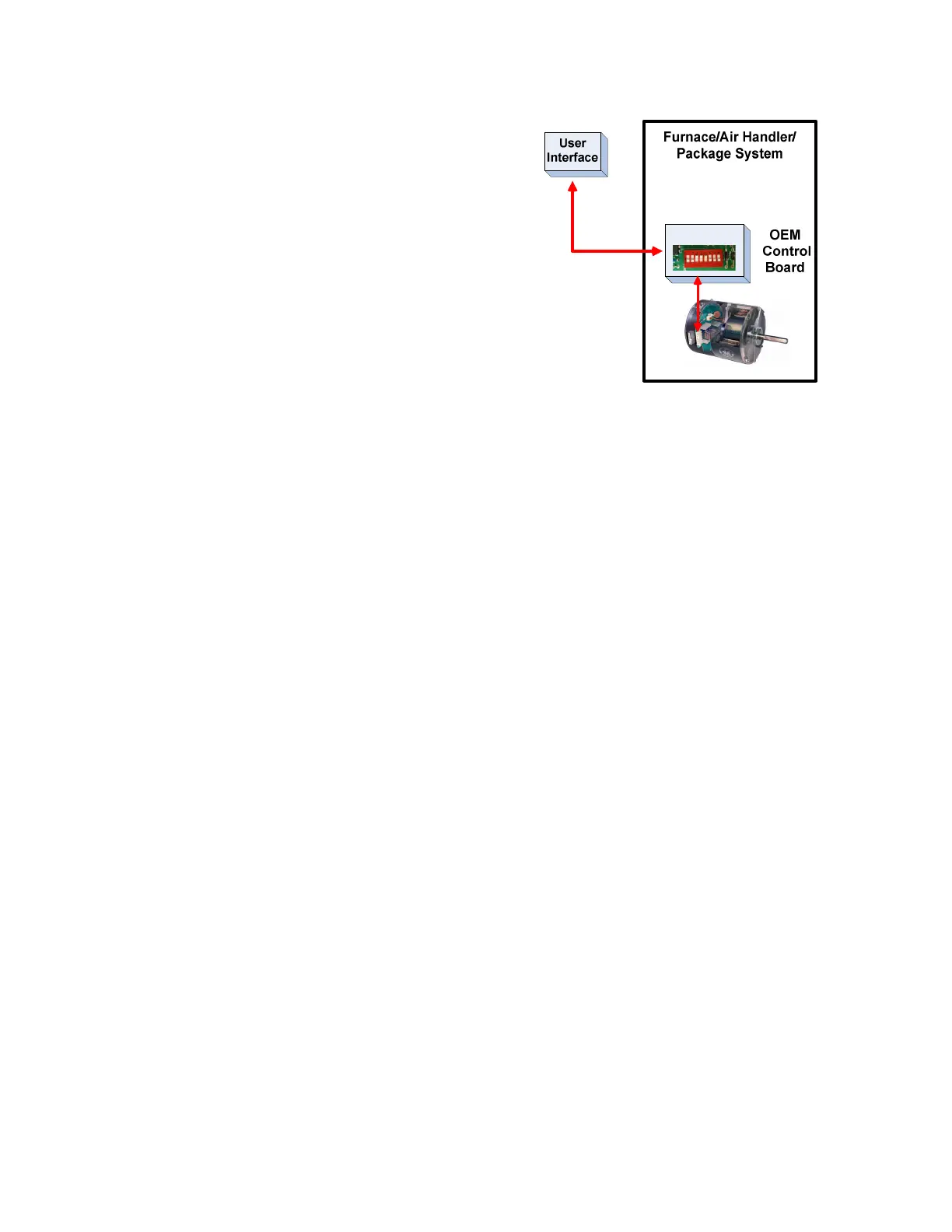
The OEM manuals are still used for set-up options and how to use the “User
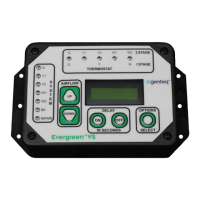
Interface” (the replacement for the thermostat). The user interface is similar to a
touch screen communication device that can be used to set-up the systems airflow
and comfort settings as well as setting other features. This device is in constant
communication with the control boards (microprocessor) in the unit and can actually
recognize what it is connected to. In most systems with DSI communication almost
all of these set-up selections that were previously made at the control board will be
made at the user interface, including diagnostics.
With the high level of communication between components, the user interface may
also be able to provide indicators such as when to change or clean the filter and
when to service the system and connected IAQ devices.
Airflow for OEM matched zoning systems can not only be tailored to the size of each
zone but may be able to set itself up, reducing time.
System to system wiring is typically reduced to four (4) or less wires since an infinite
amount of information can be communicated. Pulling extra wires through the wall
may not be necessary when converting from single stage systems to multi-stage
systems.
OEM classes are highly recommended for the specific technical knowledge of this
style equipment and the ability to educate the customer on all of the features and
how to use them.
Advantages to DSI Communication
The motor program is now stored completely
in the OEM control board. The OEM control
board can store multiple programs for
different model units. This means that one
motor (OEM specific) can be used for more
than one unit reducing parts. When a new
motor is connected to the OEM control
board, the program and settings are
automatically loaded into the motor. Just like
the “Plug and Play” feature of most
computer accessories.



 To Next Page