Page 74
To replace
1. Attach new return springs to the new shoes, ensuring the
springs are correctly located and positioned such as they are between
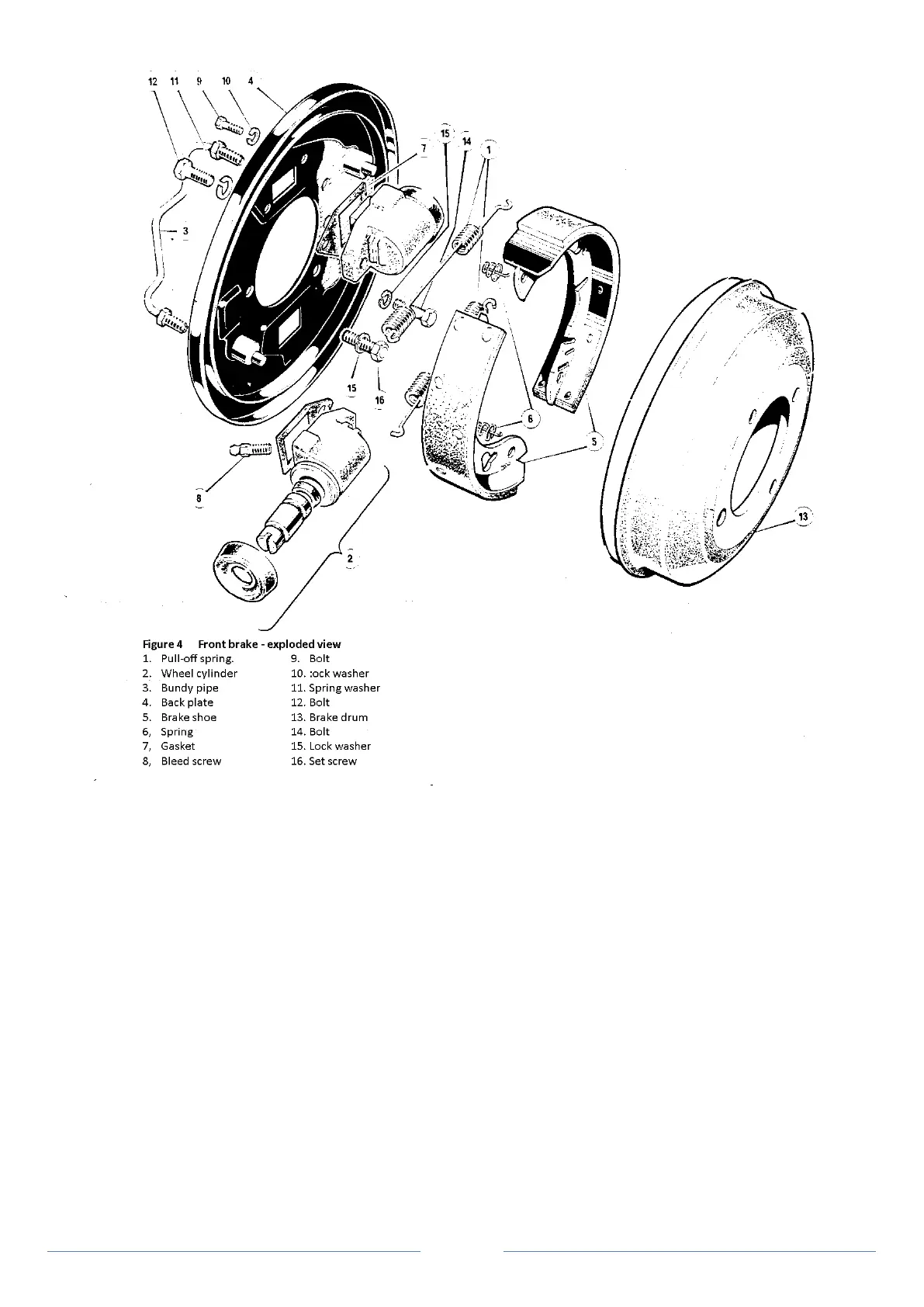
the shoe webs and the brake plate on assembly (Figure 4)
Note: Try not to touch the lining material and avoid contact with
grease and other contaminants.
2. Remove the rubber bands from the wheel cylinders.
3. Place the shoes in place with the springs attached, against
the back plate locating the tongues of the shoes in to the grooves of
the wheel cylinder bodies.
4. Locate a screwdriver under the web of one shoe against the
back plate and lever the shoe over the adjuster spindle and into the
wheel cylinder piston groove.
5. Repeat for the remaining brake shoe.
6. refit the brake drum, making sure it is clean and free from
dust or grease.
7. Refit the road wheel and adjust the brake.
Note: Brake shoes MUST be changed in axle sets. Repeat for the
opposite front wheel.
8. Lower the vehicle and road test to check braking
performance.
Operation 6 Front wheel cylinders - removal & replacement
A leaking wheel cylinder will cause fluid loss and may lead to excessive
pedal movement and contamination of the brake shoe linings, The
vehicle may also show a tendency to pull or veer under braking. A
seized wheel cylinder may also exhibit some of these characteristics.
In either case the defective cylinder must be replaced with a new one.
To remove(Figure 4)
1. Remove the brake shoes as previously described.
2. Disconnect the hydraulic pipes from the wheel cylinders
and plug them to avoid fluid loss or dirt ingress.
3. Remove the bleed nipple.
4. Remove the two screws and lock washers securing the
wheel cylinder and withdraw the cylinder and gasket.
Repeat for the other cylinder if necessary.
Re-assemble in reverse order. Bleed the brakes.
Safety Note: Brake shoes contaminated by leaking fluid must always
be replaced. On no account try to clean contaminants from brake
shoe linings.



 To Next Page