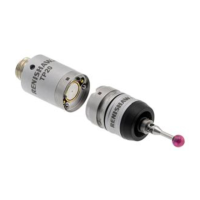
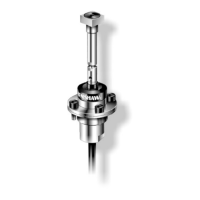
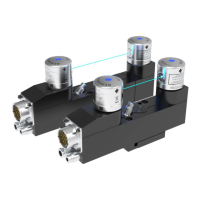
The Renishaw HPGA (High-Precision Generic Arm) system is a motorized, high-precision tool setting solution primarily designed for use on 3-axis CNC grinding machines and CNC lathes. Its main applications include workpiece inspection, tool measurement, and broken tool detection. The system is designed to integrate with Renishaw's TSI 3 (or TSI 3-C) and HSI interface units, providing a comprehensive solution for machine tool control and probing.
Function Description:
The HPGA system consists of a hub and base assembly, various arm configurations (straight or 90°), and a probe module (LP2 or MP250). The arm can be extended using LPE extension bars of different lengths (50 mm, 100 mm, 150 mm). The system's core function is to precisely position a probe for measurement tasks. The motorized arm allows for automated deployment and retraction, enhancing efficiency and repeatability in manufacturing processes.
The HPGA communicates with the machine controller via the TSI 3 (or TSI 3-C) interface for arm control and the HSI interface for probe signals. The TSI 3/TSI 3-C handles the arm's movement commands (Machine Ready Command - MRC, Arm Ready Command - ARC) and provides feedback on the arm's position (Machine Ready Output - MRO, Arm Ready Output - ARO). The HSI interface converts the probe's voltage-free solid-state relay (SSR) signals into a format compatible with the CNC machine controller. An 'inhibit' function is included in the HSI, allowing for control over probe activation and providing a facility to drive an external probe status LED.
Important Technical Specifications:
- Primary Application: Workpiece inspection and tool setting on cutter grinder machines and CNC lathes.
- Sense Directions: Probe ±X, ±Y, ±Z.
- Arm Sweep Angle: 90° (typical).
- Weight: 3.9 kg (137.57 oz), typical hub and base only.
- Uni-directional Repeatability: 3.0 µm 2 sigma*.
- ARO to MRO and MRO to ARO transition times: 2 seconds, typical.
- Power Supply Approvals: BS EN IEC 62368-1.
- Cable Protection: The installer is responsible for ensuring adequate protection of the HPGA cable during normal use in the machining environment.
- Probe Interface: LP2 or MP250.
- System Interface: TSI 3 (or TSI 3-C) and HSI.
- IP Rating: IPX8 (static).
- Storage Temperature: -25 °C to 70 °C (-13 °F to 158 °F).
- Operating Temperature: 5 °C to 55 °C (41 °F to 131 °F).
- TSI 3/TSI 3-C Interface Power Supply (VIF): 24 Vdc 18 to 30 V.
- I_MAX (interface): 100 mA (Not including output load currents).
- V_M (motor drive): 24 Vdc +20% to -10%.
- I_MAX (motor): 2.5 A while motor is running (typical 2 seconds).
- Circuit protection: Power supply protected against overcurrent and reverse connection.
- Input Specification (MRC, ARC): Internally pulled down (2K4) ACTIVE HIGH inputs.
- Output Specification (ARO, MRO): Current limited.
- ARO (PL1-6), MRO (PL1-7): VIF - 2.4 V @ 20 mA.
- HSI Interface: Hard-wired transmission interface.
- Maximum SSR output operating current: 50 mA.
- Input voltage range: 11 Vdc to 30 Vdc.
- Supply protected by a 140 mA self-resetting fuse.
Usage Features:
The HPGA system is designed for ease of installation and integration into existing CNC machine environments.
- Flexible Arm Configurations: The system supports both straight and 90° arms, allowing for adaptation to various machine geometries and measurement requirements. Extension bars (LPE1, LPE2, LPE3) further enhance reach and versatility.
- Probe Module Compatibility: It is compatible with Renishaw's LP2 and MP250 probe modules, offering choices based on specific application needs.
- Simplified Wiring: Detailed wiring diagrams are provided for connecting the HPGA to the TSI 3/TSI 3-C and HSI interfaces, and subsequently to the machine controller. This includes pin assignments for 25-way and 12-way controller connectors.
- Arm Control Logic: The arm control uses "ACTIVE HIGH" configuration for all I/O. Two separate machine tool control outputs (MRC and ARC) are required to command the arm to move to "machine ready position" and "arm ready position," respectively. A minimum time delay of 0.1 seconds (100 ms) is crucial between de-activating one command and activating the other to prevent the arm from stopping due to conflicting commands. Two machine tool control inputs (MRO and ARO) receive arm position confirmation signals.
- Calibration: The probe requires periodic recalibration to maintain accuracy. The recommended frequency of recalibration depends on the frequency of arm operations:
- <50 operations per day: Recalibrate every 6 months.
- <100 operations per day: Recalibrate every 3 months.
-
100 operations per day: Recalibrate every 1 month.
The exact calibration procedure is specific to each machine, control system, and software package.
- Fault Finding: The manual provides a comprehensive fault-finding guide, detailing symptoms, possible causes, and recommended actions for issues such as poor system repeatability, no probe output, and arm system not responding to commands.
Maintenance Features:
Maintenance routines for the HPGA system are designed to be straightforward, with some tasks performable by the user and others requiring authorized Renishaw Service Centres.
- Probe Removal: The probe module (LP2 or MP250) can be removed by unscrewing it from the arm. The M16 thread requires a normal torque of 10 Nm to 12 Nm (7.37 lbf.ft to 8.84 lbf.ft), with a maximum of 20 Nm (14.74 lbf.ft).
- Cleaning the HPGA Arm: It is essential to keep the garter spring and runner faces clean and free of swarf build-up to ensure optimal performance. Specific cleaning instructions for the LP2 and MP250 probes are referenced in their respective installation guides.
- Arm O-ring Maintenance: When installing a 90° arm, ensuring the arm O-ring is clean and lubricated is important for proper sealing and function.
- Conduit Installation: Instructions are provided for installing the conduit, including fitting the O-clip and pushing the conduit over the barbed fitting.
- Troubleshooting: The fault-finding section serves as a maintenance guide, helping users diagnose and resolve common issues, such as tightening loose screws, checking wiring, and cleaning contacts. For more complex issues or warranty-related concerns, equipment should be returned to an authorized Renishaw Service Centre.

 Need help?
 General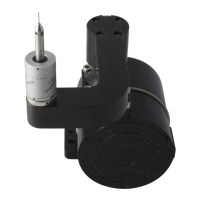

 To Next Page