EasyManua.ls Logo

Retrospec BEAUMONT - User Manual

Retrospec BEAUMONT
4 pages
Print Icon
To Next Page IconTo Next Page
Loading...
ASSEMBLY INSTRUCTIONS
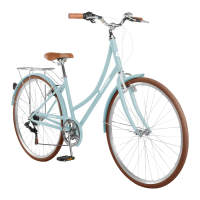
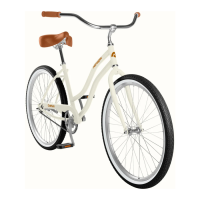
BEAUMONT 7 SPEED CITY BIKE
TOOLS
1
UNPACK YOUR BIKE
SADDLE
HANDLEBARS
WARNING
Using the bike with the minimum insertion line on the lower
portion of the seat post showing above the frame could result
in a failure of the seat post and/or the frame causing a loss of
control with potential injury to rider. Such failures are not
covered by warranty as it is improper use of the product.
WARNING
Using the bike with the minimum insertion line on the lower portion of the seat post showing above the
frame could result in a failure of the seat post and/or the frame causing a loss of control with potential
injury to rider. Such failures are not covered by warranty as it is improper use of the product.
WARNING
Installing the stem with the minimum insertion mark showing outside of the frame could create a
dangerous condition allowing the stem to break causing the rider to lose control resulting in serious
injuries to the rider (Figure 7).
What we give you: 3 Hex Wrenches (4mm, 5mm, & 6mm), a 10-function multi-tool.
What you need: Scissors, Phillips Screwdriver, 15mm wrench or crescent wrench.
Cut the shipping straps on the outside of the box.
Remove the box staples as these are sharp and can cut you as you access the bike. Lift bike out by frame and rear wheel.
Rotate the fork so that it is facing forward of the bike (Figure 1). Place the bike on the ground, so it’s standing upright on the fork dropouts and rear tire.
Cut all of the packing zip ties.
Separate the front wheel from the bike by carefully slipping it away from the crank arm, which is resting within the spokes.
Remove the accessory box and set it aside.
Examine your new bike for any visible damage that may have occurred during shipping.
Special Note: For tightening all fasteners, please refer to Appendix D in the back of your owner’s manual for all fastener torque specifications.
1 -
2 -
3 -
4 -
5 -
6 -
7 -
8 -
1 -
2 -
3 -
4 -
5 -
1 -
2 -
3 -
4 -
.
Remove the plastic shipping plug from the top of the seat tube (Figure 2).
Use the included Hex wrench to loosen the seatpost clamp at the top of the seat tube.
RECOMMENDED; Apply a thin layer of grease to the inside of the frame seat tube.
Insert the seat with the seat post into the seat tube of the frame to at least the minimum insertion line on the shaft
of the seat post. WARNING! The minimum insertion line must NOT show above the seat tube (Figure 3).
Using the Hex wrench, tighten the seatpost clamp once it is at the correct height.
Note: You can make the final adjustment to the height of the seat as needed after the bike is assembled.
Loosen the stem bolt at the top of the stem one turn and remove the plastic packing cap from the bottom of the
stem (Figure 4). RECOMMENDED; apply a thin layer of grease to the end of the stem shaft by the wedge.
Untwist the handlebars and control cables and insert the quill end of the stem into the fork steer tube. You may
have to loosen the bolt and wedge a small amount to allow the quill to fit into the steer tube (Figure 5).
Make sure that the fork is facing forward and the handlebars are lined up with the fork dropouts.
Adjust the height of the stem to your desired level and tighten the stem bolt using a 6mm wrench. You can make
final adjustments to the height of the stem after the bike is assembled (Figure 6). NOTE: Be sure that the minimum
insertion mark on the shaft of the stem is inside the frame, it must not be visible outside of the frame (Figure 7).
FRONT
2
3
4 5
6 7
MIN INSERT
25.4
MAX
HT
22.2
MAX
HT
22.2
PLASTIC
SHIPPING
PLUG
PLASTIC
PACKING
CAP
APPLY GREASE
STEM QUILL
INTO FORK
STEER TUBE
STEM ADJUST
HANDLEBAR
ADJUST
MIN INSERT
25.4

Question and Answer IconNeed help?

Do you have a question about the Retrospec BEAUMONT and is the answer not in the manual?

Summary

Assembly Instructions

Tools Required

Lists essential tools required for bicycle assembly.

Unpack Your Bike

Instructions for safely unpacking and preparing the bicycle.

Seat Post Installation Warning

Critical warning about correct seat post installation to prevent damage.

Saddle Assembly

Detailed steps for attaching the saddle to the seat post.

Handlebar Assembly

Guide for installing and aligning the bicycle handlebars.

Front Wheel and Pedal Installation

Front Wheel Installation

Instructions for securely mounting the front wheel into the fork dropouts.

Pedal Installation

Step-by-step guide for correctly threading and tightening pedals.

Component Installation and Adjustment

Reflector Attachment

Instructions for attaching safety reflectors to the bike.

Fender Installation

Steps for fitting front and rear fenders onto the bicycle.

Brakes and Gears Setup

Guidance for adjusting brakes and setting up gears.

Final Checks and Information

Tire Inflation

Guidelines for inflating bicycle tires to the correct pressure.

Serial Number Identification

Information on locating and recording the bicycle's serial number.

Pre-Ride Safety Check

Recommendation to have the bike checked by a professional before riding.

Overview

This document provides assembly instructions for the Retrospec Beaumont 7-Speed City Bike. It covers the unboxing, assembly of the saddle, handlebars, front wheel, pedals, reflectors, and fenders, as well as adjustments for brakes and tires. It also includes important safety warnings and maintenance tips.

Function Description:

The Retrospec Beaumont 7-Speed City Bike is designed for urban commuting and casual riding. It features a 7-speed gearing system, front and rear linear-pull brakes, and comes with pre-installed reflectors and fenders for safety and convenience. The assembly instructions guide the user through setting up the bike from its packaged state to a rideable condition.

Important Technical Specifications:

  • Gearing: 7-speed system.
  • Brakes: Front and rear linear-pull brakes.
  • Tools Provided: 3 Hex Wrenches (4mm, 5mm, & 6mm), a 10-function multi-tool.
  • Tools Needed: Scissors, Phillips Screwdriver, 15mm wrench or crescent wrench.
  • Pedal Threads: Right pedal threads Clockwise, Left pedal threads Counterclockwise.
  • Fasteners: All fasteners require specific torque specifications, which are referenced in Appendix D of the owner's manual.
  • Minimum Insertion Marks: Both the seat post and stem have minimum insertion marks that must remain inside the frame for safety.

Usage Features:

  • Unpacking: The process begins by cutting shipping straps, removing box staples, and carefully lifting the bike out of the box. The fork needs to be rotated forward, and all packing zip ties must be cut. The front wheel is separated from the bike, and an accessory box is removed.
  • Saddle Assembly:
    • Remove the plastic shipping plug from the seat tube.
    • Loosen the seatpost clamp with the included Hex wrench.
    • Recommended: Apply a thin layer of grease to the inside of the frame seat tube.
    • Insert the seat post into the seat tube, ensuring the minimum insertion line is NOT visible above the seat tube.
    • Tighten the seatpost clamp once the desired height is set. Final adjustments can be made after the bike is fully assembled.
  • Handlebar Assembly:
    • Loosen the stem bolt at the top of the stem by one turn and remove the plastic packing cap from the bottom.
    • Recommended: Apply a thin layer of grease to the end of the stem shaft by the wedge.
    • Untwist handlebars and control cables, then insert the quill end of the stem into the fork steer tube. Loosening the bolt and wedge slightly may be necessary for proper fit.
    • Ensure the fork faces forward and handlebars align with the fork dropouts.
    • Adjust stem height to the desired level and tighten the stem bolt with a 6mm wrench. The minimum insertion mark on the stem shaft must remain inside the frame and not be visible.
  • Front Wheel Assembly:
    • Flip the bike over to rest on the saddle and handlebars.
    • Remove small black plastic protectors from the fork dropouts.
    • Loosen axle nuts on the front wheel and insert the wheel into the fork dropouts, ensuring safety washer tabs are in the small holes.
    • Center the wheel in the fork.
    • Tighten each axle nut incrementally with a 15mm wrench, alternating sides, until securely tightened.
    • Return the bike to its wheels and align the handlebar stem with the front wheel, then tighten the stem bolt.
  • Pedal Assembly:
    • Identify the RIGHT pedal (stamped "R") and LEFT pedal (stamped "L").
    • Recommended: Apply a thin layer of grease to the pedal threads.
    • Right Pedal: Insert into the Right side crank arm and thread Clockwise. Thread by hand with minor resistance, stopping if it binds.
    • Left Pedal: Insert into the Left side crank arm and thread Counterclockwise.
    • Tighten both pedals securely with a 15mm or adjustable wrench to prevent unscrewing during riding.
  • Reflector Assembly:
    • Attach the plastic bracket of the front reflector to the handlebar. Rear and wheel reflectors are factory-installed.
  • Fender Assembly:
    • Front Fender:
      • Locate the long bolt, washer, and nut (either in parts bag or top of fork).
      • Slide the fender from the back of the fork.
      • Insert the long bolt through the fork from the front, then through the fender mounting tab, washer, and nut at the back.
      • Push the fender tab up as far as possible and tighten the bolt and nut.
      • Position fender braces to the fork drop-out mounting holes. Partially thread screws through the braces into the drop-outs, then tighten.
      • Adjust the fender by hand if it's not straight.
    • Rear Fender:
      • Install the red rear reflector if not already attached.
      • Remove fender attachment screws from rear frame drop-outs.
      • Position fender struts to match mounting holes on the rear drop-out and insert screws through the end of the brace and into the drop-out. Repeat for the other side.
      • Adjust the fender by hand if it's not straight.
  • Brake Adjustment (Linear-Pull Brakes):
    • Ensure brake pads align with the rim's curve, contacting the surface flat and evenly. Adjust brake shoe angle and height by loosening the Hex bolt attaching the shoe to the brake arm.
    • Loosen the brake cable anchor bolt on the brake arm to allow the cable to glide freely.
    • Squeeze brake arms until shoes contact the rim. Pull cable taut through its anchor and tighten the anchor bolt, ensuring cable housing is seated properly.
    • Squeeze the brake lever hard multiple times to stretch the cable. Adjust cable tension: loosen anchor bolt for more slack, tighten for less.
    • Ensure brake arms are evenly spaced from the wheel with clearance between pads and rim. Balance spacing by tightening or loosening the spring tension screw on the lower side of each brake arm.
  • Gear Shifting (7-Speed Models): Gears are factory-adjusted. If adjustment is needed, professional service is recommended. When shifting, pedal with light pressure and shift one gear at a time.
  • Tire Inflation:
    • Locate the manufacturer's recommended inflation pressure (PSI) on the tire sidewall.
    • Inflate the tire to half the recommended pressure using a hand or floor pump with a gauge. Check for proper seating on the rim.
    • If the tire is unevenly seated or bulges, release some air and reposition by hand.
    • Continue inflating to the recommended pressure. Do not exceed the maximum pressure or use compressed air, as this can cause the tire to explode.

Maintenance Features:

  • Greasing: Recommended for seat post and stem shaft to ensure smooth assembly and prevent seizing.
  • Brake Adjustment: Regular checks and adjustments are necessary to ensure proper braking performance. Professional mechanic service is recommended for initial setup and complex adjustments.
  • Tire Pressure: Regularly check and maintain tire pressure according to manufacturer specifications to prevent damage and ensure safe riding.
  • Fastener Torque: All fasteners should be tightened to the recommended torque specifications (referenced in Appendix D of the owner's manual) to prevent loosening and ensure safety.
  • Pre-Ride Check: It is strongly recommended to have a professional bike shop check and fine-tune the bike before the first ride to ensure safety.
  • Serial Number: Locate and record the bicycle's serial number (found under the crank bottom bracket) for recall purposes or in case of theft.

Safety Warnings:

  • Seat Post Insertion: Using the bike with the minimum insertion line on the seat post showing above the frame can cause seat post and/or frame failure, leading to loss of control and potential injury. Such failures are not covered by warranty.
  • Stem Insertion: Installing the stem with the minimum insertion mark showing outside of the frame can lead to stem breakage, loss of control, and serious injuries.
  • Pedal Tightness: Pedals must be tightened with considerable force to prevent them from unscrewing during riding, which can cause an unsafe condition and damage threads.
  • Tire Over-inflation: Do not exceed recommended tire pressure or use compressed air for inflation, as this can cause the tire to unexpectedly explode. Tires and tubes are not warranted against damage from over-inflation or punctures.

Retrospec BEAUMONT Specifications

General IconGeneral
BrandRetrospec
ModelBEAUMONT
CategoryBicycle
LanguageEnglish

Related product manuals