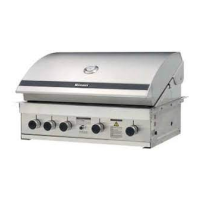
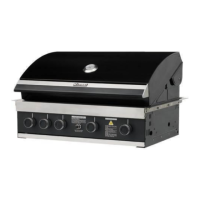
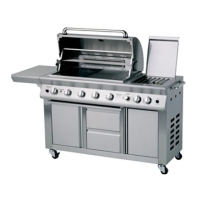
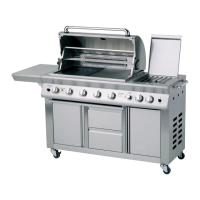
This document describes the Rinnai Outdoor Kitchen Cooking System, a range of barbecues designed for outdoor use. The manual provides comprehensive instructions for assembly, operation, and maintenance of models including Galley, Buffet, Grand Café, Grand Gourmet, and Grand Monaco.
Function Description
The Rinnai Outdoor Kitchen is a gas-powered barbecue system primarily designed for outdoor cooking. It features multiple burners, a hood for oven-style cooking, and various cooking surfaces such as hotplates, grillplates, and cooking pans. Some models include an integral side burner and a rotisserie kit, expanding the range of cooking possibilities. The system is designed to operate on either liquified petroleum gas (LPG) or natural gas, depending on the specific model and installation.
The core function of the barbecue is to provide a versatile outdoor cooking experience. The multiple burners allow for different heat zones, enabling simultaneous grilling, searing, and slow cooking. The hood, when closed, transforms the barbecue into an oven, retaining heat more evenly and conserving energy, which is ideal for roasting larger cuts of meat or poultry using indirect cooking methods.
The side burner, available on certain models, offers additional cooking flexibility, allowing for the use of woks or cooking pots up to 300 mm in diameter. This is particularly useful for preparing sauces, side dishes, or stir-fries alongside the main barbecue items.
The rotisserie kit, also available on specific models, enables slow, even cooking of meats, ensuring tender and juicy results. This feature is designed for indirect cooking, with a drip pan placed below the food to collect juices and prevent flare-ups.
An electronic multi-spark ignition system is integrated into each burner, providing convenient and reliable lighting. A temperature gauge on the hood helps monitor internal cooking temperatures when the hood is closed, aiding in precise cooking control.
Safety features are paramount, with instructions emphasizing proper gas connection, leak testing, and safe operation. The design ensures that the barbecue is only to be used outdoors, with specific clearances from combustible materials to prevent fire hazards.
Usage Features
The Rinnai Outdoor Kitchen offers several features to enhance the user's cooking experience:
Cooking Versatility:
- Multiple Burners: The 6-burner design allows for precise control over heat zones. Users can ignite specific burners for direct grilling, or use outer burners for indirect cooking with the hood down, ideal for roasts and larger items.
- Hood for Oven-Style Cooking: Closing the hood transforms the barbecue into an outdoor oven, which helps cook food more quickly, retain heat evenly, and conserve energy. This is particularly effective for slow cooking or roasting.
- Cooking Surfaces: The system includes a solid cast iron hotplate, a slotted cast iron grillplate, and a cast iron cooking pan, allowing for a variety of cooking styles, from searing to simmering.
- Side Burner: Integral side burners on some models are designed for use with woks or cooking pots, expanding the menu options to include stir-fries, sauces, or boiling.
- Rotisserie Kit: Available on Grand Monaco, Grand Gourmet, and Grand Café models, the rotisserie allows for slow, even roasting of meats, ensuring tender and juicy results. It operates with either a 240 Volt motor (Grand Monaco) or a battery-powered motor (Grand Gourmet/Grand Café).
Ignition and Control:
- Electronic Multi-Spark Ignition: Each main burner is equipped with an electronic multi-spark ignition system, activated by pushing and turning the burner control while simultaneously pressing a central igniter button.
- Rotary Piezo Ignition: Side burners on some models use a rotary piezo ignition, activated by pushing and slowly rotating the control knob.
- Burner Controls: Individual burner controls allow users to adjust flame intensity (HIGH, MEDIUM, LOW) for different cooking requirements.
- Temperature Gauge: A temperature gauge on the hood provides a guide to internal cooking temperatures when the hood is closed, aiding in precise temperature management.
Safety and Convenience:
- Gas Leak Testing: The manual provides clear instructions for performing a soap and water solution test to check for gas leaks, emphasizing that open flames should never be used for this purpose.
- Outdoor Use Only: The barbecue is explicitly designed and intended for outdoor use, with warnings against using it in enclosed spaces.
- Gas Cylinder Management: Instructions cover safe connection and disconnection of LP gas cylinders, including warnings about cylinder storage and filling levels.
- Protective Gear: Users are advised to use good quality insulated oven mitts when handling barbecue tools and protective gloves when handling hot components.
- Flare-up Management: The design allows for controlled flare-ups, which impart distinctive taste and color, while also providing guidance on how to manage uncontrolled flaring.
Maintenance Features
The Rinnai Outdoor Kitchen is designed with maintenance in mind to ensure longevity and optimal performance. The manual provides detailed instructions for routine and annual cleaning:
General Cleaning:
- Burn-off Procedure: Before first use and after cooking, a "burn-off" procedure is recommended where burners are operated at 'HIGH' setting with the hood open for approximately 10 minutes. This helps burn off residual oils, foreign matter, or food residue.
- Grillplates, Hotplates, and Cooking Pans: These surfaces should be washed with mild soap and warm water using a washcloth, vegetable brush, or steel wool. Regular seasoning with cooking oil is also recommended.
- Flametamer: The cast iron flametamer should be washed periodically with mild soap and warm water, using a wire brush to remove stubborn burnt-on residue. It must be dried thoroughly before re-installation.
- Fat/Grease Draining Tray & Receptacle: The fat/grease draining tray and receptacle should be emptied and wiped down periodically, then washed with a mild detergent and warm water solution. Lining the receptacle with aluminum foil is suggested for easier cleaning.
- Barbecue Housing (Interior): The interior of the barbecue housing should be brushed with a stiff wire brush and washed down with a mild soap and warm water solution.
- Barbecue Housing (Exterior): The exterior, made of heavy steel, may require touch-up paint for scratches to prevent material breakdown. The manual outlines a process for preparing the surface (sanding, washing) and applying touch-up paint.
Preventing Flash-Back (Burner Tubes and Ports):
- Regular Inspection: Burner tubes and ports should be inspected and cleaned periodically, at least once a month during active spider seasons or after extended periods of non-use.
- Cleaning Methods: Several methods are suggested for cleaning burner tubes:
- Using a stiff wire (e.g., coat hanger) with a hook to run through the tube.
- Using a narrow bottle brush with a flexible handle.
- Using an air hose to force air through the tube and ports (with eye protection).
- Burner Inspection: After cleaning, burners should be inspected for damage (cracks or holes) and replaced if necessary. The correct positioning of burner tubes over gas valve orifices and spark electrodes is crucial.
Ignition System Maintenance:
- Spark Electrode Check: The spark electrode should be checked for proper positioning, pointing towards the gas collector box with a gap of approximately 5 mm.
- Battery Replacement: The electronic ignition pack is powered by an 'AA' battery, which can be easily replaced by rotating and removing the chrome cap.
Storage:
- Protection from Elements: Rinnai recommends minimizing the barbecue's exposure to the elements. For units in high moisture areas (rain, mist, salt spray), regular cleaning and the use of a cover are strongly recommended to prevent material breakdown.
- Gas Cylinder Storage: When not in use, the gas cylinder should be disconnected and stored safely outdoors in a well-ventilated area, out of reach of children, and not in any enclosed building or garage.
These maintenance procedures are designed to keep the Rinnai Outdoor Kitchen in top operating condition, prolong its life, and ensure a safe and enjoyable cooking experience.

 Need help?
 General

 To Next Page